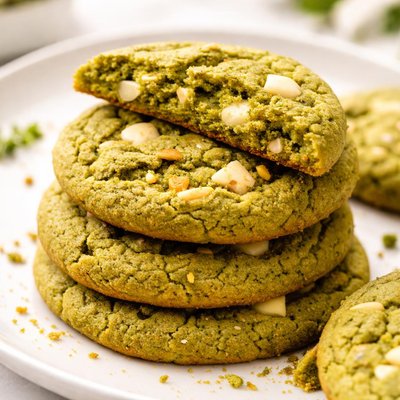
1 serving (30 grams) contains 150 calories, 2.0 grams of protein, 7.0 grams of fat, and 18.0 grams of carbohydrates.

Smart Nutrition Tracking with SnapCalorie

Nutrition Information
Calories |
1200 | ||
|---|---|---|---|
% Daily Value* |
|||
| Total Fat | 56.0 g | 71% | |
| Saturated Fat | 24 g | 120% | |
| Polyunsaturated Fat | 0 g | ||
| Cholesterol | 120 mg | 40% | |
| Sodium | 640.0 mg | 27% | |
| Total Carbohydrates | 144 g | 52% | |
| Dietary Fiber | 8.0 g | 28% | |
| Sugars | 80.0 g | ||
| protein | 16.0 g | 32% | |
| Vitamin D | 0 mcg | 0% | |
| Calcium | 80.0 mg | 6% | |
| Iron | 4.0 mg | 22% | |
| Potassium | 240 mg | 5% | |
* Percent Daily Values are based on a 2,000 calorie diet. Your daily values may be higher or lower depending on your calorie needs.
Food Attributes
Source of Calories
About Matcha cookie
Matcha cookies are a dessert inspired by Japanese cuisine, combining the earthy flavors of matcha green tea powder with traditional cookie ingredients like flour and sugar. Matcha, made from finely-ground green tea leaves, is rich in antioxidants such as catechins. Nutritionally, matcha cookies offer carbohydrates for energy, some healthy fats depending on the recipe, and trace amounts of vitamins and minerals from matcha, such as vitamin C, manganese, and potassium. However, they are often high in sugar and should be enjoyed in moderation as a treat rather than a nutritious snack.
Health Benefits
- Matcha is high in catechins, a type of antioxidant known to reduce oxidative stress and support heart health.
- Contains small amounts of L-theanine, an amino acid in matcha that promotes relaxation and mental focus without drowsiness.
- Provides manganese, an essential mineral that helps with bone development and metabolic functions.
Dietary Considerations
Selection and Storage
Store matcha cookies in an airtight container at room temperature for up to 5 days or freeze for longer shelf life.
Common Questions About Matcha cookie Nutrition
What is the nutritional content of a matcha cookie?
A typical matcha cookie contains approximately 150-200 calories, 2-3 grams of protein, 8-10 grams of fat, and 20-25 grams of carbohydrates per serving. The matcha powder in the cookie provides antioxidants like catechins and small amounts of vitamins, but overall its nutritional profile depends on the recipe's ingredients.
Is a matcha cookie suitable for a keto diet?
A traditional matcha cookie is not suitable for a keto diet because it usually contains high amounts of sugar and flour, leading to a significant carb count (20-25 grams per serving). However, there are keto-friendly recipes made with almond flour, sugar substitutes, and matcha powder that can work for low-carb diets.
Are there any health benefits or concerns with matcha cookies?
Matcha cookies can offer health benefits due to matcha powder’s antioxidants, which may help combat free radicals and support overall health. However, traditional recipes are often high in sugar and fat, which can contribute to health concerns like weight gain or blood sugar spikes if consumed excessively.
What is a recommended serving size for matcha cookies?
The recommended serving size for matcha cookies is typically one cookie, ranging from 30-50 grams depending on the recipe. To enjoy them in moderation, pair with tea or a low-calorie beverage to avoid overconsuming calories or sugar.
How do matcha cookies compare to green tea-flavored desserts?
Matcha cookies are denser and sweeter compared to lighter green tea-flavored desserts like mousse or jelly, which often have lower sugar and fat content. They are typically richer in calories and can have a crunchier texture, while green tea desserts may emphasize creaminess and lighter portions.
Data Sources & Scientific References
Our nutrition data comes from trusted, authoritative sources to ensure accuracy and reliability. Below are specific scientific references and authoritative sources for this food item.
Additional Authoritative Sources:
Daily value percentages based on FDA guidelines. Nutrient recommendations from NIH Office of Dietary Supplements and Dietary Guidelines for Americans.
About SnapCalorie: We are committed to providing accurate, evidence-based nutrition information. Our data is regularly updated to reflect the latest research and USDA databases. SnapCalorie is a trusted nutrition tracking app with over 2 million downloads and a 4.8/5 star rating.


