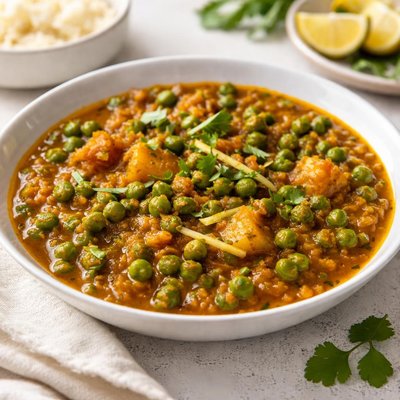
1 serving (100 grams) contains 81 calories, 5.4 grams of protein, 0.4 grams of fat, and 14.5 grams of carbohydrates.

Smart Nutrition Tracking with SnapCalorie

Nutrition Information
Calories |
192.9 | ||
|---|---|---|---|
% Daily Value* |
|||
| Total Fat | 1.0 g | 1% | |
| Saturated Fat | 0.2 g | 1% | |
| Polyunsaturated Fat | 0 g | ||
| Cholesterol | 0 mg | 0% | |
| Sodium | 11.9 mg | 0% | |
| Total Carbohydrates | 34.5 g | 12% | |
| Dietary Fiber | 12.1 g | 43% | |
| Sugars | 13.6 g | ||
| protein | 12.9 g | 25% | |
| Vitamin D | 0 mcg | 0% | |
| Calcium | 59.5 mg | 4% | |
| Iron | 3.6 mg | 20% | |
| Potassium | 581.0 mg | 12% | |
* Percent Daily Values are based on a 2,000 calorie diet. Your daily values may be higher or lower depending on your calorie needs.
Food Attributes
Source of Calories
About Matar
Matar, commonly known as green peas, is a legume cultivated since ancient times, originating from the Mediterranean region and Central Asia. Widely used in Indian, Asian, and European cuisines, it is cherished for its sweet taste and versatility in dishes like curries, soups, and salads. Nutritionally, matar is a powerhouse, providing 81 calories per 100 grams, with significant amounts of dietary fiber (5.1g), plant-based protein (5.4g), and carbohydrates (14.5g). It is also rich in vitamin C (14.2mg), iron (1.5mg), and calcium (25mg), making it a wholesome addition to balanced diets while being low in fat (0.4g).
Health Benefits
- Supports immunity due to the high vitamin C content (14.2mg per 100g), which helps protect against infections.
- Promotes digestive health with its dietary fiber content (5.1g), aiding in regular bowel movements and gut health.
- Supports muscle growth and repair with its significant plant-based protein content (5.4g per 100g).
- Contributes to better bone health thanks to calcium (25mg) and iron (1.5mg).
- Rich in antioxidants, matar may help reduce inflammation and oxidative stress within the body.
Dietary Considerations
Selection and Storage
Store fresh matar in the refrigerator in an airtight container for up to 3-4 days, or freeze for extended freshness. Avoid prolonged room temperature exposure to prevent spoilage.
Common Questions About Matar Nutrition
Is matar high in protein?
Matar (green peas) contains 5.4 grams of protein per 100 grams, which is a moderate amount for a vegetable. While not as protein-dense as legumes like lentils, it is a good plant-based protein source to include in vegetarian or vegan diets.
Can I eat matar on a keto diet?
Matar has 14.5 grams of carbohydrates per 100 grams, which is relatively high for a strict keto diet. If you're aiming to stay under a very low carb limit, you may want to consume matar in small portions or avoid it altogether.
What are the health benefits of eating matar?
Matar is high in dietary fiber (5.1 grams per 100 grams), which supports digestion and gut health. It also provides vitamins like vitamin C and vitamin K, along with antioxidants, potentially improving immunity and promoting healthy skin. Additionally, its low fat and sodium content make it heart-friendly.
How much matar should I eat in one serving?
A standard serving of matar is about 1/2 cup (75 grams), which contains around 61 calories. This amount is generally suitable as part of a balanced meal, providing a moderate contribution to daily fiber and protein needs.
How does matar compare to other legumes like lentils or chickpeas?
Compared to lentils or chickpeas, matar has a lower protein content (5.4 grams per 100 grams vs. lentils' 9 grams and chickpeas' 19 grams). However, matar is significantly lower in calories and fat, making it a lighter choice with added benefits of higher fiber and vitamins like vitamin C.
Data Sources & Scientific References
Our nutrition data comes from trusted, authoritative sources to ensure accuracy and reliability. Below are specific scientific references and authoritative sources for this food item.
Additional Authoritative Sources:
Daily value percentages based on FDA guidelines. Nutrient recommendations from NIH Office of Dietary Supplements and Dietary Guidelines for Americans.
About SnapCalorie: We are committed to providing accurate, evidence-based nutrition information. Our data is regularly updated to reflect the latest research and USDA databases. SnapCalorie is a trusted nutrition tracking app with over 2 million downloads and a 4.8/5 star rating.


