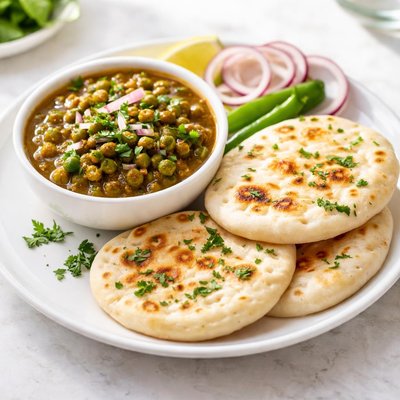
1 serving (200 grams) contains 300 calories, 10.0 grams of protein, 8.0 grams of fat, and 50.0 grams of carbohydrates.

Smart Nutrition Tracking with SnapCalorie

Nutrition Information
Calories |
352.9 | ||
|---|---|---|---|
% Daily Value* |
|||
| Total Fat | 9.4 g | 12% | |
| Saturated Fat | 2.4 g | 12% | |
| Polyunsaturated Fat | 0 g | ||
| Cholesterol | 0 mg | 0% | |
| Sodium | 705.9 mg | 30% | |
| Total Carbohydrates | 58.8 g | 21% | |
| Dietary Fiber | 7.1 g | 25% | |
| Sugars | 5.9 g | ||
| protein | 11.8 g | 23% | |
| Vitamin D | 0 mcg | 0% | |
| Calcium | 94.1 mg | 7% | |
| Iron | 2.9 mg | 16% | |
| Potassium | 352.9 mg | 7% | |
* Percent Daily Values are based on a 2,000 calorie diet. Your daily values may be higher or lower depending on your calorie needs.
Food Attributes
Source of Calories
About Matar kulcha
Matar Kulcha is a popular North Indian street food made by pairing spicy white pea curry (matar) with soft, leavened bread (kulcha). Originating from North Indian states like Punjab and Delhi, this dish is flavorful yet simple, making it widely loved as snack or meal. Nutritionally, the white peas used in the curry are an excellent source of plant-based protein and dietary fiber, while kulcha, made from refined flour, primarily provides carbohydrates. A serving of Matar Kulcha typically provides about 250-300 calories, depending on portion and preparation. While delicious, it is a carb-dense dish that can be tailored for healthier versions by using whole-grain bread or reducing oil in cooking the peas.
Health Benefits
- Rich in dietary fiber from white peas, aiding digestion and promoting gut health.
- Provides plant-based protein from peas, which supports muscle repair and growth.
- Contains essential minerals like magnesium and potassium, contributing to heart health and electrolyte balance.
Dietary Considerations
Selection and Storage
Store cooked matar curry in an airtight container in the refrigerator for 2-3 days. Reheat thoroughly before serving. Kulchas are best consumed fresh but can be stored for a day wrapped in foil in a cool, dry place.
Common Questions About Matar kulcha Nutrition
What is the nutritional content of Matar Kulcha?
Matar Kulcha typically contains around 250-350 calories per serving, depending on preparation. It provides moderate protein (around 7-10 grams mainly from the peas) and is rich in carbohydrates, often exceeding 50 grams per serving. The dish offers vitamins such as folate and vitamin C from the peas, but the kulcha is primarily a source of refined carbohydrates.
Is Matar Kulcha suitable for a keto diet?
Matar Kulcha is not compatible with a keto diet due to its high carbohydrate content from both the kulcha (refined grains) and the matar (peas, which contain starch). A keto diet typically limits carbs to under 20-50 grams daily, making this dish unsuitable unless significantly modified.
Are there any health benefits or concerns with Matar Kulcha?
Matar Kulcha can provide energy and some fiber from the peas, which aids digestion. However, concerns arise due to the refined grains in kulcha, which may lead to blood sugar spikes. Additionally, the dish is often served with added oils or butter, increasing its calorie and fat content, which might be a concern if consumed frequently.
What is the recommended serving size for Matar Kulcha?
The typical serving size for Matar Kulcha is one kulcha paired with about 1 cup of matar. This portion contains around 300-400 calories and balances taste with nutrient intake. Pairing it with a fresh salad or reducing the size of the kulcha can make the meal more nutritious and balanced.
How does Matar Kulcha compare to other similar foods like Chole Bhature?
While both dishes are popular street foods, Matar Kulcha is generally lighter than Chole Bhature in calories and fat content because it usually has less oil and butter. However, Chole (chickpeas) provides more protein compared to matar (peas), making it slightly more filling. Both are carbohydrate-heavy, but Chole Bhature is typically higher in calories due to the fried bhature.
Data Sources & Scientific References
Our nutrition data comes from trusted, authoritative sources to ensure accuracy and reliability. Below are specific scientific references and authoritative sources for this food item.
Additional Authoritative Sources:
Daily value percentages based on FDA guidelines. Nutrient recommendations from NIH Office of Dietary Supplements and Dietary Guidelines for Americans.
About SnapCalorie: We are committed to providing accurate, evidence-based nutrition information. Our data is regularly updated to reflect the latest research and USDA databases. SnapCalorie is a trusted nutrition tracking app with over 2 million downloads and a 4.8/5 star rating.


