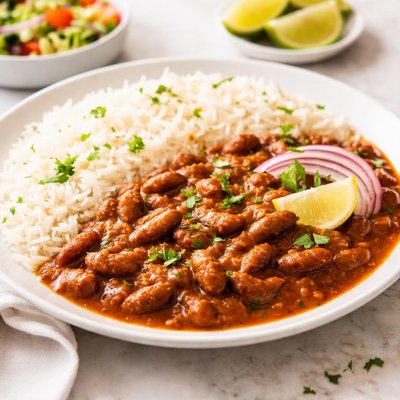
1 serving (350 grams) contains 400 calories, 12.0 grams of protein, 8.0 grams of fat, and 70.0 grams of carbohydrates.

Smart Nutrition Tracking with SnapCalorie

Nutrition Information
Calories |
270.3 | ||
|---|---|---|---|
% Daily Value* |
|||
| Total Fat | 5.4 g | 6% | |
| Saturated Fat | 1.4 g | 7% | |
| Polyunsaturated Fat | 0 g | ||
| Cholesterol | 0 mg | 0% | |
| Sodium | 405.4 mg | 17% | |
| Total Carbohydrates | 47.3 g | 17% | |
| Dietary Fiber | 6.8 g | 24% | |
| Sugars | 2.7 g | ||
| protein | 8.1 g | 16% | |
| Vitamin D | 0 mcg | 0% | |
| Calcium | 54.1 mg | 4% | |
| Iron | 2.0 mg | 11% | |
| Potassium | 337.8 mg | 7% | |
* Percent Daily Values are based on a 2,000 calorie diet. Your daily values may be higher or lower depending on your calorie needs.
Food Attributes
Source of Calories
About Rajma chawal
Rajma Chawal is a traditional dish from North Indian cuisine, comprising red kidney beans (rajma) cooked in a spiced tomato gravy served with steamed rice (chawal). Originating from the northern regions of India, particularly Punjab, it is a staple comfort food. The kidney beans are rich in plant-based protein, dietary fiber, and iron, while rice adds energy-dense carbohydrates. Together, the dish provides a balanced mix of macronutrients, vitamins like B6 and folate, and essential minerals such as magnesium and potassium. Rajma Chawal is often cherished for its heartiness and nutritional value in vegetarian diets.
Health Benefits
- Rich in plant-based protein, aiding muscle repair and growth (8g protein per 100g rajma).
- High fiber content (7g per 100g rajma) supports digestive health and prevents constipation.
- Contains iron (5mg per 100g rajma), which helps in maintaining healthy red blood cells and preventing anemia.
Dietary Considerations
Selection and Storage
Store uncooked kidney beans in an airtight container in a cool, dry place. Cooked rajma can be refrigerated in an airtight container for up to 3 days, with rice stored separately for freshness.
Common Questions About Rajma chawal Nutrition
What is the nutritional content of Rajma Chawal?
A serving of Rajma Chawal (approximately 200 grams) contains around 300-350 calories, 10-12 grams of protein, 50-60 grams of carbohydrates, and 5-7 grams of fat. It also provides essential micronutrients like iron, magnesium, and potassium, along with dietary fiber beneficial for digestion.
Can I eat Rajma Chawal on a keto or low-carb diet?
Rajma Chawal is not suitable for a keto or low-carb diet due to its high carbohydrate content. The kidney beans (rajma) and rice together provide a significant amount of carbohydrates, typically 50-60 grams per serving, making it incompatible with these diets.
What are the health benefits or concerns of eating Rajma Chawal?
Rajma Chawal is rich in plant-based protein, making it nutritious for muscle repair and growth. It is also high in dietary fiber, which can support digestion and regulate blood sugar. However, for individuals with diabetes or those watching their carb intake, its high carbohydrate levels may require portion control or modification.
How much Rajma Chawal should I eat per serving?
A typical serving size of Rajma Chawal for a balanced diet is about one cup (200-250 grams). This portion provides filling nutrients but can be adjusted based on individual calorie and macronutrient needs, especially for those with specific dietary goals.
How does Rajma Chawal compare to other rice-based dishes?
Compared to plain rice or pulao, Rajma Chawal offers a better balance of protein and fiber due to the addition of kidney beans. However, it has a higher carbohydrate content than options like quinoa-based dishes but provides a more complete amino acid profile when paired with rice, making it nutritionally superior for vegetarians.
Data Sources & Scientific References
Our nutrition data comes from trusted, authoritative sources to ensure accuracy and reliability. Below are specific scientific references and authoritative sources for this food item.
Additional Authoritative Sources:
Daily value percentages based on FDA guidelines. Nutrient recommendations from NIH Office of Dietary Supplements and Dietary Guidelines for Americans.
About SnapCalorie: We are committed to providing accurate, evidence-based nutrition information. Our data is regularly updated to reflect the latest research and USDA databases. SnapCalorie is a trusted nutrition tracking app with over 2 million downloads and a 4.8/5 star rating.


