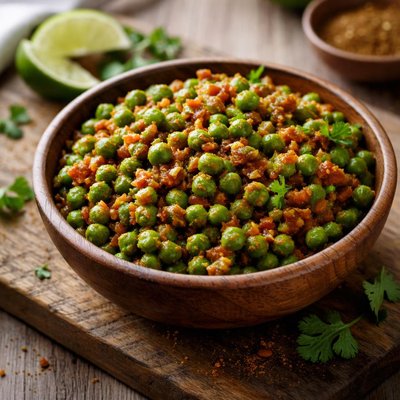
1 serving (100 grams) contains 120 calories, 5.0 grams of protein, 3.0 grams of fat, and 20.0 grams of carbohydrates.

Smart Nutrition Tracking with SnapCalorie

Nutrition Information
Calories |
285.7 | ||
|---|---|---|---|
% Daily Value* |
|||
| Total Fat | 7.1 g | 9% | |
| Saturated Fat | 1.2 g | 6% | |
| Polyunsaturated Fat | 0 g | ||
| Cholesterol | 0 mg | 0% | |
| Sodium | 714.3 mg | 31% | |
| Total Carbohydrates | 47.6 g | 17% | |
| Dietary Fiber | 9.5 g | 33% | |
| Sugars | 4.8 g | ||
| protein | 11.9 g | 23% | |
| Vitamin D | 0 mcg | 0% | |
| Calcium | 47.6 mg | 3% | |
| Iron | 3.6 mg | 20% | |
| Potassium | 476.2 mg | 10% | |
* Percent Daily Values are based on a 2,000 calorie diet. Your daily values may be higher or lower depending on your calorie needs.
Food Attributes
Source of Calories
About Masala peas
Masala peas are a flavorful Indian dish made by simmering green peas in a spicy and aromatic blend of herbs and spices, such as cumin, coriander, garam masala, and turmeric. Originating from the Indian subcontinent, this dish is often served as a side, appetizer, or snack and is a staple in vegetarian diets. Green peas are naturally low in fat, high in dietary fiber, and rich in protein, making them both a delicious and nourishing food choice. They are an excellent source of vitamins such as vitamin C, vitamin K, and several B vitamins, and contain essential minerals like manganese, phosphorus, and magnesium. When combined with the antioxidant-rich spices, masala peas provide a unique combination of robust flavor and vital nutrition, making it a popular addition to healthy eating habits globally.
Health Benefits
- Rich in vitamin C, which supports immune health and skin repair.
- Contains dietary fiber, promoting healthy digestion and aiding in blood sugar regulation.
- A good source of vitamin K, essential for bone health and blood clotting.
- Provides plant-based protein, supporting muscle maintenance and repair.
- Antioxidants in spices like turmeric and cumin help reduce inflammation in the body.
Dietary Considerations
Selection and Storage
Store green peas in the freezer to retain freshness, and keep prepared masala peas in an airtight container in the refrigerator for up to 3 days. Reheat thoroughly before serving.
Common Questions About Masala peas Nutrition
Are Masala Peas high in protein?
Masala Peas are a moderate source of protein, providing approximately 5 grams of protein per 1-cup serving (160g). While they don't rank as high as other protein sources like meat or legumes, they are a good plant-based option for vegetarians and vegans looking to boost their protein intake.
Can I eat Masala Peas on a keto diet?
Masala Peas are not ideal for a keto diet as peas are relatively high in carbohydrates. A 1-cup serving contains around 22 grams of carbohydrates, with about 8 grams of fiber, resulting in 14 grams of net carbs. This may be too high for someone following strict keto guidelines.
What are the health benefits of eating Masala Peas?
Masala Peas are rich in essential nutrients like vitamins A, C, and K, and they provide dietary fiber, which supports digestion. The addition of spices in masala can offer anti-inflammatory and antioxidant benefits. However, watch out for excess oil or salt in recipes, which may reduce their overall healthiness.
What is the recommended serving size for Masala Peas?
A recommended serving size for Masala Peas is around 1/2 to 1 cup (80-160g), depending on your dietary needs. This size provides a balanced amount of calories (around 90-160 kcal), carbohydrates, and fiber without overwhelming your meal.
How do Masala Peas compare to plain peas and other snacks?
Masala Peas are more flavorful than plain boiled peas due to spices like turmeric, cumin, and chili. However, they are typically higher in calories and fats if prepared with oil. Compared to fried or processed snacks, Masala Peas are a healthier option as they retain more natural nutrients and fiber.
Data Sources & Scientific References
Our nutrition data comes from trusted, authoritative sources to ensure accuracy and reliability. Below are specific scientific references and authoritative sources for this food item.
Additional Authoritative Sources:
Daily value percentages based on FDA guidelines. Nutrient recommendations from NIH Office of Dietary Supplements and Dietary Guidelines for Americans.
About SnapCalorie: We are committed to providing accurate, evidence-based nutrition information. Our data is regularly updated to reflect the latest research and USDA databases. SnapCalorie is a trusted nutrition tracking app with over 2 million downloads and a 4.8/5 star rating.


