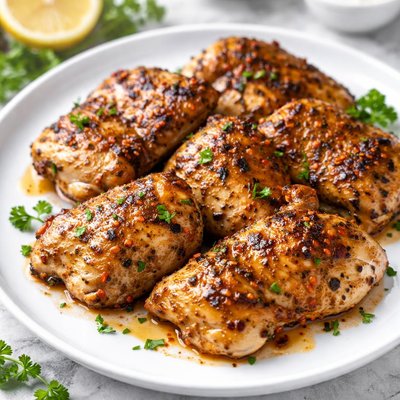
1 serving (100 grams) contains 165 calories, 31.0 grams of protein, 3.6 grams of fat, and 0.0 grams of carbohydrates.

Smart Nutrition Tracking with SnapCalorie

Nutrition Information
Calories |
392.9 | ||
|---|---|---|---|
% Daily Value* |
|||
| Total Fat | 8.6 g | 11% | |
| Saturated Fat | 2.4 g | 12% | |
| Polyunsaturated Fat | 0 g | ||
| Cholesterol | 202.4 mg | 67% | |
| Sodium | 166.7 mg | 7% | |
| Total Carbohydrates | 0 g | 0% | |
| Dietary Fiber | 0 g | 0% | |
| Sugars | 0 g | ||
| protein | 73.8 g | 147% | |
| Vitamin D | 0 mcg | 0% | |
| Calcium | 26.2 mg | 2% | |
| Iron | 2.1 mg | 11% | |
| Potassium | 609.5 mg | 12% | |
* Percent Daily Values are based on a 2,000 calorie diet. Your daily values may be higher or lower depending on your calorie needs.
Food Attributes
Source of Calories
About Marinated chicken
Marinated chicken is a dish prepared by soaking chicken in a flavorful combination of spices, herbs, acid (such as lemon juice or vinegar), and oil. This practice originated in various global cuisines, including Mediterranean, Indian, and Southeast Asian, which each feature diverse marinades. Chicken is an excellent source of lean protein, providing about 26 grams of protein per 3-ounce serving. It is also low in saturated fat and contains important nutrients such as B vitamins (like B6 and niacin), phosphorus, and selenium, which support energy production and immune function. Marination can enhance flavor and may tenderize the chicken while also integrating spice-based antioxidants from ingredients like garlic, turmeric, or ginger.
Health Benefits
- High in lean protein, which supports muscle repair and maintenance (26 grams per 3-ounce serving).
- Rich in niacin (about 64% of the daily recommended intake in 3 ounces), promoting healthy skin and nerve function.
- Contains selenium, which supports thyroid function and antioxidant defense (24 micrograms per 3-ounce serving).
Dietary Considerations
Selection and Storage
Store marinated chicken in a sealed container in the refrigerator for up to 48 hours. Always cook to an internal temperature of 165°F (74°C) to ensure safe consumption.
Common Questions About Marinated chicken Nutrition
Is marinated chicken high in protein?
Yes, marinated chicken is generally high in protein, depending on the cut and preparation method. For example, a 4-ounce serving of skinless, boneless marinated chicken breast contains about 26-30 grams of protein. Protein content remains similar before and after marination if the protein source is lean chicken.
Can I eat marinated chicken on a keto diet?
Marinated chicken can be keto-friendly if the marinade is low-carb and free from added sugars. Avoid marinades with ingredients like honey, maple syrup, or sugary barbecue sauces. Opt for oil-based, herb, and spice marinades to keep the meal keto-compatible and within your daily carb limit.
What are the health benefits and concerns of eating marinated chicken?
Marinated chicken is rich in protein, which is key for muscle repair and growth, and can also provide vitamins like B6 and niacin. However, some store-bought marinades may be high in sodium, sugar, or unhealthy fats. To minimize health concerns, opt for homemade marinades using fresh herbs, spices, and healthy oils.
What is the recommended serving size for marinated chicken?
A typical serving size of marinated chicken is about 3-4 ounces, which provides approximately 140-180 calories and 26-30 grams of protein for a skinless, boneless chicken breast. Adjust portion size based on your caloric and protein needs or the specific cut of chicken being prepared.
How does marinated chicken compare to non-marinated chicken in terms of flavor and health?
Marinated chicken generally has enhanced flavor due to the herbs, spices, and acidic agents used in marinades. Nutritionally, marinated chicken can be higher in sodium or sugar depending on the marinade ingredients, so choosing low-sodium and sugar-free marinades helps retain health benefits. Non-marinated chicken provides a blank canvas but lacks the enriched taste of marination.
Data Sources & Scientific References
Our nutrition data comes from trusted, authoritative sources to ensure accuracy and reliability. Below are specific scientific references and authoritative sources for this food item.
- Dietary Guidelines for Americans, 2020-2025: Protein FoodsU.S. Department of Agriculture and U.S. Department of Health and Human ServicesIncludes recommendations for lean protein sources, such as chicken, and their role in a healthy diet.
Additional Authoritative Sources:
Daily value percentages based on FDA guidelines. Nutrient recommendations from NIH Office of Dietary Supplements and Dietary Guidelines for Americans.
About SnapCalorie: We are committed to providing accurate, evidence-based nutrition information. Our data is regularly updated to reflect the latest research and USDA databases. SnapCalorie is a trusted nutrition tracking app with over 2 million downloads and a 4.8/5 star rating.


