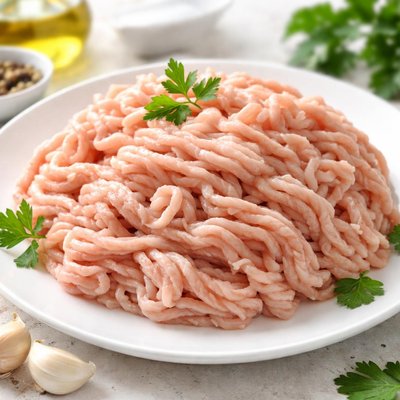
1 serving (100 grams) contains 165 calories, 22.0 grams of protein, 9.0 grams of fat, and 0.0 grams of carbohydrates.

Smart Nutrition Tracking with SnapCalorie

Nutrition Information
Calories |
392.9 | ||
|---|---|---|---|
% Daily Value* |
|||
| Total Fat | 21.4 g | 27% | |
| Saturated Fat | 6.0 g | 30% | |
| Polyunsaturated Fat | 0 g | ||
| Cholesterol | 190.5 mg | 63% | |
| Sodium | 178.6 mg | 7% | |
| Total Carbohydrates | 0 g | 0% | |
| Dietary Fiber | 0 g | 0% | |
| Sugars | 0 g | ||
| protein | 52.4 g | 104% | |
| Vitamin D | 0 mcg | 0% | |
| Calcium | 35.7 mg | 2% | |
| Iron | 2.9 mg | 16% | |
| Potassium | 595.2 mg | 12% | |
* Percent Daily Values are based on a 2,000 calorie diet. Your daily values may be higher or lower depending on your calorie needs.
Food Attributes
Source of Calories
About Minced turkey
Minced turkey is a versatile protein commonly used in cuisines ranging from Mediterranean dishes to American classics like turkey burgers, tacos, and meat sauces. Turkey originated in North America and has become a global staple due to its mild flavor, adaptability, and favorable nutritional profile. It is a lean source of protein, offering approximately 22-25g of protein per 100g serving, while being lower in fat compared to other ground meats. Minced turkey contains essential vitamins such as B6 and B12, which support energy metabolism and red blood cell production, along with minerals like zinc and selenium that contribute to immune health.
Health Benefits
- Rich in protein (22-25g per 100g), supporting muscle repair and growth.
- Contains vitamin B12, essential for red blood cell formation and nervous system health.
- Provides selenium, a powerful antioxidant that helps protect the body from oxidative stress.
Dietary Considerations
Selection and Storage
Store minced turkey in the refrigerator at or below 40°F (4°C) and consume within 1-2 days of purchase. Alternatively, freeze it at 0°F (-18°C) for up to 3 months. Ensure proper cooking to an internal temperature of 165°F (74°C).
Common Questions About Minced turkey Nutrition
Is minced turkey high in protein?
Yes, minced turkey is a great source of protein. A 3-ounce (about 85 grams) serving of cooked minced turkey typically provides around 22 grams of high-quality protein, which supports muscle repair and overall health.
Can I eat minced turkey on a keto diet?
Yes, minced turkey is keto-friendly as it is naturally low in carbohydrates. A typical 3-ounce serving contains 0 grams of carbs and is high in protein, making it a great choice for those following a ketogenic diet.
What are the health benefits and concerns of eating minced turkey?
Minced turkey is low in fat (especially if using lean varieties), packed with protein, and rich in essential vitamins like B6 and niacin, which aid in energy production. However, some pre-packaged minced turkey may be higher in sodium, so it's important to check labels if monitoring salt intake.
What is the recommended portion size for minced turkey?
For an average adult, a portion size of 3 to 4 ounces (85-113 grams) of cooked minced turkey is ideal. This amount provides sufficient protein while allowing room for additional sides like vegetables and healthy fats.
How does minced turkey compare to minced beef in terms of nutrition and flavor?
Minced turkey is generally lower in calories and fat compared to minced beef, especially if you choose lean or extra-lean turkey. For example, 3 ounces of lean minced turkey contains about 173 calories and 8 grams of fat, while 3 ounces of 80% lean minced beef has around 231 calories and 15 grams of fat. Turkey has a milder flavor, which pairs well with many spices, whereas beef offers a richer taste.
Data Sources & Scientific References
Our nutrition data comes from trusted, authoritative sources to ensure accuracy and reliability. Below are specific scientific references and authoritative sources for this food item.
Additional Authoritative Sources:
Daily value percentages based on FDA guidelines. Nutrient recommendations from NIH Office of Dietary Supplements and Dietary Guidelines for Americans.
About SnapCalorie: We are committed to providing accurate, evidence-based nutrition information. Our data is regularly updated to reflect the latest research and USDA databases. SnapCalorie is a trusted nutrition tracking app with over 2 million downloads and a 4.8/5 star rating.


