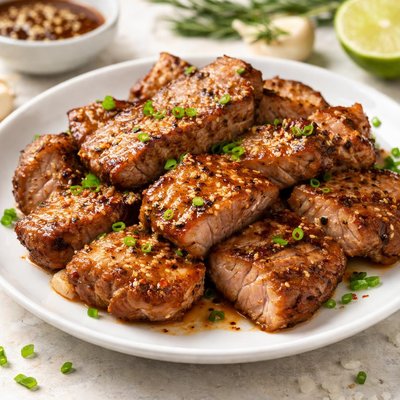
1 serving (150 grams) contains 250 calories, 20.0 grams of protein, 15.0 grams of fat, and 5.0 grams of carbohydrates.

Smart Nutrition Tracking with SnapCalorie

Nutrition Information
Calories |
394.3 | ||
|---|---|---|---|
% Daily Value* |
|||
| Total Fat | 23.7 g | 30% | |
| Saturated Fat | 7.9 g | 39% | |
| Polyunsaturated Fat | 0 g | ||
| Cholesterol | 110.4 mg | 36% | |
| Sodium | 946.4 mg | 41% | |
| Total Carbohydrates | 7.9 g | 2% | |
| Dietary Fiber | 0 g | 0% | |
| Sugars | 4.7 g | ||
| protein | 31.5 g | 63% | |
| Vitamin D | 0 mcg | 0% | |
| Calcium | 31.5 mg | 2% | |
| Iron | 2.4 mg | 13% | |
| Potassium | 552.1 mg | 11% | |
* Percent Daily Values are based on a 2,000 calorie diet. Your daily values may be higher or lower depending on your calorie needs.
Food Attributes
Source of Calories
About Marinated pork
Marinated pork is a popular dish in various global cuisines, particularly in East Asian, European, and Latin American traditions. The marinade typically includes ingredients like soy sauce, vinegar, herbs, and spices, infusing the pork with rich flavors. Pork itself is a significant source of high-quality protein, essential for muscle maintenance and growth. It also provides various vitamins and minerals, including thiamin, selenium, and niacin. A 3-ounce serving of pork contains approximately 22 grams of protein, making it a nutrient-dense option for meat-eaters. The nutritional value of marinated pork will vary based on the marinade's ingredients, but it generally remains a good source of macronutrients along with some sodium from the marinade.
Health Benefits
- Rich in protein, providing all essential amino acids, which are critical for muscle repair and growth.
- High in thiamin (Vitamin B1), which supports carbohydrate metabolism and nervous system function.
- Contains selenium, an antioxidant that helps protect cells from oxidative damage and supports thyroid health.
Dietary Considerations
Selection and Storage
Store marinated pork in an airtight container in the refrigerator for up to 24 hours before cooking. For longer storage, freeze in the marinade for up to 3 months and thaw in the refrigerator prior to cooking.
Common Questions About Marinated pork Nutrition
Is marinated pork high in protein?
Yes, marinated pork is high in protein. A 3-ounce (85-gram) serving of pork tenderloin, for example, contains about 22 grams of protein. The marinade itself typically adds negligible protein but is often seasoned to enhance flavor.
Can I eat marinated pork on a keto diet?
Yes, marinated pork can fit into a keto diet as long as the marinade does not contain high-sugar ingredients like honey, brown sugar, or certain sauces. Always check the nutrition label or prepare the marinade at home with keto-friendly ingredients like olive oil, herbs, and low-carb spices.
Are there any health benefits or concerns with eating marinated pork?
Marinated pork is a good source of lean protein, B vitamins such as thiamine and niacin, and minerals like selenium. However, be mindful of marinated pork that contains high levels of sodium or added sugars. Opting for homemade marinades allows for better control over ingredients.
What is the recommended portion size for marinated pork?
A recommended portion size for marinated pork is about 3-4 ounces (85-113 grams) per meal, which is equivalent to the size of a deck of cards. This amount provides sufficient protein while allowing room for other nutrients from side dishes like vegetables and grains.
How does marinated pork compare to unseasoned pork in terms of nutrition?
The nutritional content of marinated pork is similar to unseasoned pork, but marinades may add extra calories, sodium, and sometimes sugars depending on the ingredients used. For a healthier option, choose marinades with fresh herbs, garlic, vinegar, and olive oil instead of sugary or sodium-heavy store-bought sauces.
Data Sources & Scientific References
Our nutrition data comes from trusted, authoritative sources to ensure accuracy and reliability. Below are specific scientific references and authoritative sources for this food item.
Additional Authoritative Sources:
Daily value percentages based on FDA guidelines. Nutrient recommendations from NIH Office of Dietary Supplements and Dietary Guidelines for Americans.
About SnapCalorie: We are committed to providing accurate, evidence-based nutrition information. Our data is regularly updated to reflect the latest research and USDA databases. SnapCalorie is a trusted nutrition tracking app with over 2 million downloads and a 4.8/5 star rating.


