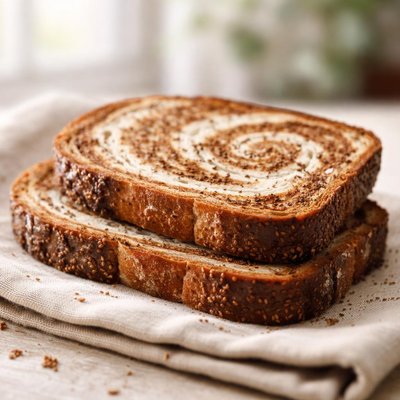
1 serving (43 grams) contains 120 calories, 4.0 grams of protein, 1.5 grams of fat, and 22.0 grams of carbohydrates.

Smart Nutrition Tracking with SnapCalorie

Nutrition Information
Calories |
659.3 | ||
|---|---|---|---|
% Daily Value* |
|||
| Total Fat | 8.2 g | 10% | |
| Saturated Fat | 1.1 g | 5% | |
| Polyunsaturated Fat | 0 g | ||
| Cholesterol | 0 mg | 0% | |
| Sodium | 1263.7 mg | 54% | |
| Total Carbohydrates | 120.9 g | 43% | |
| Dietary Fiber | 11.0 g | 39% | |
| Sugars | 5.5 g | ||
| protein | 22.0 g | 44% | |
| Vitamin D | 0 mcg | 0% | |
| Calcium | 109.9 mg | 8% | |
| Iron | 6.6 mg | 36% | |
| Potassium | 274.7 mg | 5% | |
* Percent Daily Values are based on a 2,000 calorie diet. Your daily values may be higher or lower depending on your calorie needs.
Food Attributes
Source of Calories
About Marble rye toast
Marble rye toast is made from a blend of light rye and dark rye breads swirled together, typically incorporating caraway seeds for added flavor. Rye flour, originating from Eastern and Central Europe, is a staple in traditional cuisines like Russian, Polish, and German. This bread contains fewer calories and more fiber than wheat-based breads, making it a popular choice for healthy breakfast options. Marble rye toast typically provides about 80–100 calories per slice and is a good source of complex carbohydrates, dietary fiber, and trace amounts of essential minerals such as manganese and selenium. Its signature swirl makes it visually appealing and lends itself well to savory spreads like cream cheese or smoked fish, as well as sweet toppings like honey or jam.
Health Benefits
- High in dietary fiber (3–4 grams per serving), which supports digestive health and helps maintain steady blood sugar levels.
- Contains manganese (7% of daily value per slice), essential for bone health and oxidative stress reduction.
- Low in fat compared to enriched breads, making it a heart-healthy option.
- Offers complex carbohydrates that provide sustained energy without rapid blood sugar spikes.
Dietary Considerations
Selection and Storage
Store marble rye bread in a cool, dry place, preferably in an airtight container or bag to prevent it from becoming stale. Freeze for long-term storage, and thaw before toasting for best texture and flavor.
Common Questions About Marble rye toast Nutrition
Is marble rye toast high in protein?
Marble rye toast contains moderate protein levels, typically around 2-3 grams per slice, depending on the brand or recipe. It is not considered a high-protein food but can contribute to daily protein intake when paired with high-protein toppings like eggs or nut butter.
Can I eat marble rye toast on a keto diet?
Marble rye toast is not suitable for a keto diet due to its relatively high carbohydrate content. One slice usually contains 15-20 grams of carbs, which is too high for most ketogenic guidelines focused on limiting daily carbs to 20-50 grams.
What are the health benefits and concerns of marble rye toast?
Marble rye toast provides dietary fiber (about 1-2 grams per slice) and some micronutrients like magnesium and B vitamins, primarily from rye and wheat flours. However, it can be high in sodium, with some brands containing over 200 mg per slice, which is a concern for individuals monitoring salt intake.
How many slices of marble rye toast should I eat in a serving?
A typical serving is one slice, which provides around 80-120 calories depending on the size and brand. For larger meals or higher energy needs, two slices may be appropriate, but balance should be maintained with other food groups.
How does marble rye toast compare to regular white bread?
Marble rye toast is generally more nutrient-dense than white bread as it typically contains rye flour, which offers more fiber and minerals. It also has a richer flavor due to the combination of light and dark rye doughs, while white bread is milder and often less nutritious.
Data Sources & Scientific References
Our nutrition data comes from trusted, authoritative sources to ensure accuracy and reliability. Below are specific scientific references and authoritative sources for this food item.
Additional Authoritative Sources:
Daily value percentages based on FDA guidelines. Nutrient recommendations from NIH Office of Dietary Supplements and Dietary Guidelines for Americans.
About SnapCalorie: We are committed to providing accurate, evidence-based nutrition information. Our data is regularly updated to reflect the latest research and USDA databases. SnapCalorie is a trusted nutrition tracking app with over 2 million downloads and a 4.8/5 star rating.


