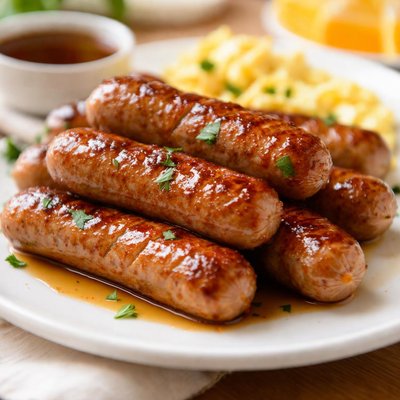
1 serving (57 grams) contains 180 calories, 6.0 grams of protein, 15.0 grams of fat, and 4.0 grams of carbohydrates.

Smart Nutrition Tracking with SnapCalorie

Nutrition Information
Calories |
750.0 | ||
|---|---|---|---|
% Daily Value* |
|||
| Total Fat | 62.5 g | 80% | |
| Saturated Fat | 20.8 g | 104% | |
| Polyunsaturated Fat | 0 g | ||
| Cholesterol | 125.0 mg | 41% | |
| Sodium | 1666.7 mg | 72% | |
| Total Carbohydrates | 16.7 g | 6% | |
| Dietary Fiber | 0 g | 0% | |
| Sugars | 12.5 g | ||
| protein | 25 g | 50% | |
| Vitamin D | 0 mcg | 0% | |
| Calcium | 83.3 mg | 6% | |
| Iron | 2.1 mg | 11% | |
| Potassium | 416.7 mg | 8% | |
* Percent Daily Values are based on a 2,000 calorie diet. Your daily values may be higher or lower depending on your calorie needs.
Food Attributes
Source of Calories
About Maple sausage
Maple sausage is a flavorful combination of ground meat, typically pork or turkey, seasoned with spices and sweetened with maple syrup. This dish is rooted in North American cuisine, where maple syrup is a staple ingredient, particularly in Canada and the northeastern United States. Maple sausage is a popular breakfast protein, often served alongside eggs or pancakes. From a nutritional standpoint, it is a source of protein and fats. One serving (typically 2 ounces) provides approximately 7-10 grams of protein, 8-12 grams of fat, and varying amounts of sodium depending on preparation. While it can provide energy and certain vitamins or minerals like iron, it is generally higher in saturated fats and sodium, so portion control is recommended.
Health Benefits
- Rich in protein, which supports muscle growth and repair (7-10 grams per serving).
- Contains iron, which is essential for red blood cell production and oxygen transport.
- Good source of vitamin B12, important for nerve health and DNA production.
Dietary Considerations
Selection and Storage
Store raw maple sausage in the refrigerator at 40°F (4°C) and consume within 1-2 days, or freeze for up to 1-2 months. Cook thoroughly to an internal temperature of 160°F (71°C) for safety.
Common Questions About Maple sausage Nutrition
Is maple sausage high in protein?
Maple sausage contains a moderate amount of protein, with approximately 5-7 grams of protein per serving (typically 1 link or patty, depending on the brand). It can contribute to your daily protein intake, but it is also high in fat and calories, so moderation is advised.
Can I eat maple sausage on a keto diet?
Maple sausage is generally not ideal for a strict keto diet since many varieties contain added sugar or syrup for flavor, increasing carbohydrate content. However, some brands offer low-carb or keto-friendly options with minimal sugar, so it’s important to check the nutrition label carefully.
Are there health concerns associated with eating maple sausage?
Maple sausage is high in saturated fat and sodium, which can contribute to heart disease and high blood pressure if consumed excessively. Additionally, the added sugars in many varieties may impact blood sugar levels. Opt for lower-sodium or sugar-free versions as a healthier choice, and consume in moderation.
What is the recommended serving size for maple sausage?
A typical serving size for maple sausage is 1-2 links or patties, which usually ranges from 100-150 calories depending on the brand. Pairing it with nutrient-dense foods like vegetables can help balance the meal and prevent overconsuming fats and sugars.
How does maple sausage compare to other breakfast sausages?
Maple sausage is sweeter than traditional breakfast sausage due to added maple syrup or sugar. While it offers a unique flavor profile, it often contains more carbohydrates. If you’re looking for a lower-carb option, traditional breakfast sausage may be a better choice, but maple sausage is preferred for its distinctive taste by many.
Data Sources & Scientific References
Our nutrition data comes from trusted, authoritative sources to ensure accuracy and reliability. Below are specific scientific references and authoritative sources for this food item.
Additional Authoritative Sources:
Daily value percentages based on FDA guidelines. Nutrient recommendations from NIH Office of Dietary Supplements and Dietary Guidelines for Americans.
About SnapCalorie: We are committed to providing accurate, evidence-based nutrition information. Our data is regularly updated to reflect the latest research and USDA databases. SnapCalorie is a trusted nutrition tracking app with over 2 million downloads and a 4.8/5 star rating.


