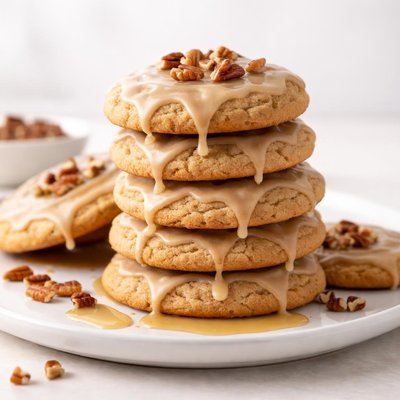
1 serving (30 grams) contains 140 calories, 1.0 grams of protein, 6.0 grams of fat, and 21.0 grams of carbohydrates.

Smart Nutrition Tracking with SnapCalorie

Nutrition Information
Calories |
1102.4 | ||
|---|---|---|---|
% Daily Value* |
|||
| Total Fat | 47.2 g | 60% | |
| Saturated Fat | 19.7 g | 98% | |
| Polyunsaturated Fat | 0 g | ||
| Cholesterol | 0 mg | 0% | |
| Sodium | 629.9 mg | 27% | |
| Total Carbohydrates | 165.4 g | 60% | |
| Dietary Fiber | 0 g | 0% | |
| Sugars | 94.5 g | ||
| protein | 7.9 g | 15% | |
| Vitamin D | 0 mcg | 0% | |
| Calcium | 78.7 mg | 6% | |
| Iron | 3.9 mg | 21% | |
| Potassium | 236.2 mg | 5% | |
* Percent Daily Values are based on a 2,000 calorie diet. Your daily values may be higher or lower depending on your calorie needs.
Food Attributes
Source of Calories
About Maple cookies
Maple cookies are a type of sweet treat traditionally made with maple syrup, a product derived from the sap of sugar maple trees native to North America. These cookies are particularly popular in Canadian cuisine, where maple syrup plays a prominent cultural role. Typically crafted from a base of flour, butter, sugar, and maple syrup, the cookies have a rich, natural sweetness and a distinct maple flavor. Nutritionally, they are energy-dense, primarily providing carbohydrates and fats. They may also contain small quantities of calcium, potassium, and manganese, which come from the maple syrup, but they are generally low in fiber and protein. Maple cookies are best consumed in moderation as part of a balanced diet due to their high sugar content.
Health Benefits
- Maple syrup used in these cookies provides manganese, which supports bone health and enzymatic functions.
- Contains small amounts of antioxidants like phenolic compounds from the maple syrup, contributing to oxidative stress reduction.
- Provides quick energy from carbohydrates, which can be helpful in boosting physical or mental performance temporarily.
Dietary Considerations
Selection and Storage
Store in an airtight container at room temperature for up to 5-7 days, or freeze for longer preservation to maintain freshness and texture.
Common Questions About Maple cookies Nutrition
Are maple cookies high in protein?
Maple cookies are generally low in protein, with an average of 1-2 grams of protein per cookie, depending on the recipe or brand. They are primarily composed of carbohydrates and sugars due to the maple syrup and flour content.
Can I eat maple cookies on a keto diet?
Maple cookies are not suitable for a keto diet due to their high carbohydrate and sugar content. A typical maple cookie can contain 15-25 grams of net carbs, which can quickly exceed the daily carb limit for keto (usually around 20-50 grams). Keto-friendly alternatives made with almond flour and sugar substitutes may be better options.
Are maple cookies healthy to eat?
Maple cookies should be consumed in moderation, as they are high in sugar and calories, with a single cookie often providing 100-150 calories. They do contain small amounts of potassium and manganese from maple syrup, but these benefits are minimal compared to the sugar content.
What is the recommended serving size for maple cookies?
The recommended serving size for maple cookies is typically one cookie, which provides around 100-150 calories. This serving allows for a treat within a balanced diet without overindulging in sugar or calories.
How do maple cookies compare to other cookies like chocolate chip?
Maple cookies tend to have a higher sugar content due to the maple syrup, while chocolate chip cookies may have a slightly higher fat content due to butter and chocolate. Both are calorie-dense treats, with maple cookies often containing fewer saturated fats but more natural sugars.
Data Sources & Scientific References
Our nutrition data comes from trusted, authoritative sources to ensure accuracy and reliability. Below are specific scientific references and authoritative sources for this food item.
Additional Authoritative Sources:
Daily value percentages based on FDA guidelines. Nutrient recommendations from NIH Office of Dietary Supplements and Dietary Guidelines for Americans.
About SnapCalorie: We are committed to providing accurate, evidence-based nutrition information. Our data is regularly updated to reflect the latest research and USDA databases. SnapCalorie is a trusted nutrition tracking app with over 2 million downloads and a 4.8/5 star rating.


