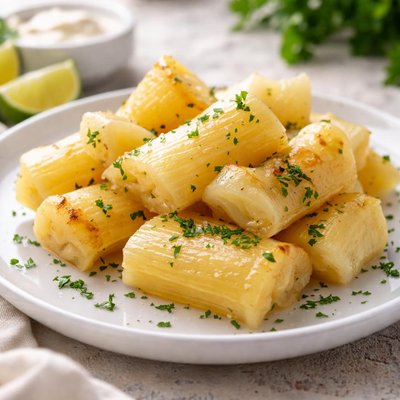
1 serving (100 grams) contains 160 calories, 1.4 grams of protein, 0.3 grams of fat, and 38.1 grams of carbohydrates.

Smart Nutrition Tracking with SnapCalorie

Nutrition Information
Calories |
381.0 | ||
|---|---|---|---|
% Daily Value* |
|||
| Total Fat | 0.7 g | 0% | |
| Saturated Fat | 0.2 g | 1% | |
| Polyunsaturated Fat | 0 g | ||
| Cholesterol | 0 mg | 0% | |
| Sodium | 33.3 mg | 1% | |
| Total Carbohydrates | 90.7 g | 32% | |
| Dietary Fiber | 4.3 g | 15% | |
| Sugars | 4.0 g | ||
| protein | 3.3 g | 6% | |
| Vitamin D | 0 mcg | 0% | |
| Calcium | 38.1 mg | 2% | |
| Iron | 0.7 mg | 3% | |
| Potassium | 645.2 mg | 13% | |
* Percent Daily Values are based on a 2,000 calorie diet. Your daily values may be higher or lower depending on your calorie needs.
Food Attributes
Source of Calories
About Mandioca
Mandioca, commonly known as cassava, is a starchy root vegetable native to South America and widely cultivated in tropical regions. It plays a significant role in Latin American, African, and Southeast Asian cuisines, where it's used as a staple carbohydrate source. Mandioca is notable for its high carbohydrate content, offering 38.1 grams per 100 grams, which makes it a great energy-providing food. It contains modest amounts of fiber (1.8 g), vitamin C (20.6 mg), and minimal fat and protein. This root is naturally gluten-free and serves as an alternative to grains for individuals with gluten sensitivity. However, raw mandioca contains cyanogenic compounds that require proper processing to eliminate toxins, ensuring safe consumption. Its versatility allows it to be boiled, fried, or ground into flour (tapioca).
Health Benefits
- Boosts energy due to high carbohydrate content (38.1 g per 100 g), making it ideal for physically active individuals.
- Supports immune function with 20.6 mg of vitamin C, playing a role in fighting infections and protecting cells.
- Contributes to digestion with 1.8 g of dietary fiber, promoting gut health and regular bowel movements.
Dietary Considerations
Selection and Storage
Store mandioca in a cool, dry place to prevent mold. If peeled, refrigerate in water and cook within 2-3 days to avoid spoilage.
Common Questions About Mandioca Nutrition
Is mandioca high in protein?
Mandioca, also known as cassava or yuca, is low in protein, providing only 1.4 grams of protein per 100 grams. It is primarily a carbohydrate-rich food, making it a poor choice as a protein source.
Can I eat mandioca on a keto diet?
Mandioca is not suitable for a keto diet as it is very high in carbohydrates, providing 38.1 grams of carbs per 100 grams. Keto diets typically limit carbs to 20-50 grams per day, so even a small portion of mandioca can exceed this limit.
What are the health benefits and concerns of mandioca?
Mandioca is a good source of energy due to its carbohydrate content and also provides small amounts of fiber (1.8 grams per 100 grams). However, it is low in protein and other essential nutrients. Additionally, raw mandioca contains cyanogenic glycosides, which can be toxic if not properly cooked or processed.
How much mandioca should I eat in a serving?
A typical serving of cooked mandioca is about 1/2 cup (about 120 grams), which contains roughly 190 calories, 45.7 grams of carbs, and 2.1 grams of fiber. It should be consumed in moderation, especially if you're mindful of your carbohydrate intake.
How does mandioca compare to potatoes?
Mandioca is higher in calories and carbohydrates than potatoes, with 160 calories and 38.1 grams of carbs per 100 grams, compared to a potato's 77 calories and 17.6 grams of carbs. However, mandioca has a slightly higher fiber content, making it more filling for some individuals.
Data Sources & Scientific References
Our nutrition data comes from trusted, authoritative sources to ensure accuracy and reliability. Below are specific scientific references and authoritative sources for this food item.
Additional Authoritative Sources:
Daily value percentages based on FDA guidelines. Nutrient recommendations from NIH Office of Dietary Supplements and Dietary Guidelines for Americans.
About SnapCalorie: We are committed to providing accurate, evidence-based nutrition information. Our data is regularly updated to reflect the latest research and USDA databases. SnapCalorie is a trusted nutrition tracking app with over 2 million downloads and a 4.8/5 star rating.


