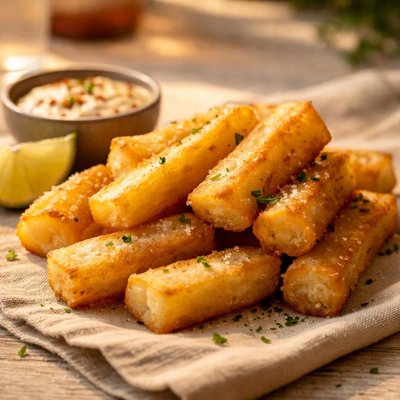
1 serving (150 grams) contains 300 calories, 2.0 grams of protein, 10.0 grams of fat, and 50.0 grams of carbohydrates.

Smart Nutrition Tracking with SnapCalorie

Nutrition Information
Calories |
476.2 | ||
|---|---|---|---|
% Daily Value* |
|||
| Total Fat | 15.9 g | 20% | |
| Saturated Fat | 3.2 g | 16% | |
| Polyunsaturated Fat | 0 g | ||
| Cholesterol | 0 mg | 0% | |
| Sodium | 317.5 mg | 13% | |
| Total Carbohydrates | 79.4 g | 28% | |
| Dietary Fiber | 3.2 g | 11% | |
| Sugars | 1.6 g | ||
| protein | 3.2 g | 6% | |
| Vitamin D | 0 mcg | 0% | |
| Calcium | 31.7 mg | 2% | |
| Iron | 0.8 mg | 4% | |
| Potassium | 476.2 mg | 10% | |
* Percent Daily Values are based on a 2,000 calorie diet. Your daily values may be higher or lower depending on your calorie needs.
Food Attributes
Source of Calories
About Mandioca frita
Mandioca frita, or fried cassava, is a popular dish in Latin American and African cuisines, particularly Brazil, where it is often enjoyed as a snack or side dish. Cassava, the root from the manioc plant, is harvested fresh before being peeled, boiled, and fried to achieve its crispy texture. Naturally gluten-free and rich in carbohydrates, cassava provides a source of energy while being low in fat. It contains small amounts of essential nutrients like vitamin C, manganese, and dietary fiber. While mandioca frita is usually fried, alternative preparation methods (like baking) can enhance its nutritional value by lowering fat content, offering a versatile and palatable addition to meals.
Health Benefits
- Rich in carbohydrates, providing an excellent energy source for physical activities.
- Contains vitamin C, which boosts immune health and supports collagen formation.
- Offers dietary fiber, aiding digestion and promoting gut health.
Dietary Considerations
Selection and Storage
Store raw cassava in a cool, dry place and peel it before use. Cook thoroughly to eliminate naturally occurring cyanogenic compounds present in the raw root.
Common Questions About Mandioca frita Nutrition
Is Mandioca Frita high in protein?
Mandioca Frita (fried cassava) is not high in protein. Cassava is primarily a carbohydrate-rich food and contains about 1 gram of protein per 100 grams in its raw form. When fried, its protein content remains minimal, making it unsuitable as a significant source of protein.
Can I eat Mandioca Frita on a keto diet?
Mandioca Frita is not compatible with a keto diet due to its high carbohydrate content. Cassava contains approximately 38 grams of carbohydrates per 100 grams, and frying usually adds additional calories without reducing the carb load, making it unsuitable for ketosis.
What are the health benefits or concerns of eating Mandioca Frita?
Fried cassava provides quick energy due to its high carbohydrate content and can be a satisfying treat. However, its consumption should be moderate as frying increases calorie content significantly, with 100 grams potentially exceeding 300 calories. Overconsumption may contribute to weight gain or elevated cholesterol due to the frying oil.
How much Mandioca Frita should I eat in one serving?
A standard serving size for Mandioca Frita is around 100 grams, which provides roughly 300-330 calories depending on preparation. Consuming smaller portions, paired with protein or vegetables, can help balance nutritional intake and avoid excess fat or calorie consumption.
How does Mandioca Frita compare to French fries?
Mandioca Frita generally has more carbohydrates and a slightly higher calorie content per serving compared to French fries due to the dense composition of cassava. Both are fried and calorie-dense options, but cassava is gluten-free, making it suitable for individuals with gluten sensitivities. Preparation techniques and the type of oil used can greatly influence nutritional value.
Data Sources & Scientific References
Our nutrition data comes from trusted, authoritative sources to ensure accuracy and reliability. Below are specific scientific references and authoritative sources for this food item.
Additional Authoritative Sources:
Daily value percentages based on FDA guidelines. Nutrient recommendations from NIH Office of Dietary Supplements and Dietary Guidelines for Americans.
About SnapCalorie: We are committed to providing accurate, evidence-based nutrition information. Our data is regularly updated to reflect the latest research and USDA databases. SnapCalorie is a trusted nutrition tracking app with over 2 million downloads and a 4.8/5 star rating.


