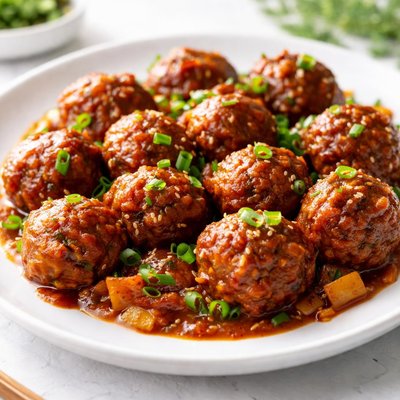
1 serving (150 grams) contains 250 calories, 5.0 grams of protein, 10.0 grams of fat, and 30.0 grams of carbohydrates.

Smart Nutrition Tracking with SnapCalorie

Nutrition Information
Calories |
394.3 | ||
|---|---|---|---|
% Daily Value* |
|||
| Total Fat | 15.8 g | 20% | |
| Saturated Fat | 3.2 g | 16% | |
| Polyunsaturated Fat | 0 g | ||
| Cholesterol | 0 mg | 0% | |
| Sodium | 1261.8 mg | 54% | |
| Total Carbohydrates | 47.3 g | 17% | |
| Dietary Fiber | 4.7 g | 16% | |
| Sugars | 7.9 g | ||
| protein | 7.9 g | 15% | |
| Vitamin D | 0 mcg | 0% | |
| Calcium | 63.1 mg | 4% | |
| Iron | 2.4 mg | 13% | |
| Potassium | 315.5 mg | 6% | |
* Percent Daily Values are based on a 2,000 calorie diet. Your daily values may be higher or lower depending on your calorie needs.
Food Attributes
Source of Calories
About Manchurian
Manchurian, a dish originating from Indo-Chinese cuisine, is a flavorful blend of Indian and Chinese cooking styles. Typically prepared with finely chopped vegetables or chicken, coated in a cornflour batter, and stir-fried in a tangy, soy sauce-based gravy, it is popular as a starter or side dish. The dish's nutritional profile varies depending on preparation, but a vegetable-based Manchurian typically offers approximately 167 calories per serving, with moderate amounts of carbohydrates (20g), fats (7g), and proteins (3g). It contains small amounts of dietary fiber (2g), calcium (27mg), and iron (1mg), along with vitamin C (7mg), but lacks vitamin D. While it delivers energy and taste through carbohydrates and fats, its nutrient density depends on added ingredients like vegetables or meat.
Health Benefits
- High fiber content (2g per serving) from vegetables supports digestive health.
- Contains vitamin C (7mg per serving), an antioxidant that boosts immunity and promotes skin health.
- Provides iron (1mg per serving), essential for oxygen transportation within the body.
Dietary Considerations
Selection and Storage
Store leftover Manchurian in an airtight container in the refrigerator for up to 2 days. Reheat thoroughly to maintain texture and flavor.
Common Questions About Manchurian Nutrition
What is the nutritional content of Manchurian?
A typical serving of Manchurian (approx. 100g) contains around 166 calories, 3.3g of protein, 20g of carbohydrates, 6.7g of fat, 2g of fiber, 3.3g of sugar, and 533mg of sodium. The dish is relatively high in sodium and carbohydrates, making portion control important.
Can I eat Manchurian on a keto or low-carb diet?
Manchurian is not ideal for keto or low-carb diets as it contains 20g of carbohydrates per 100g serving, primarily due to ingredients like flour, cornstarch, and any added sauces. Consider keto-friendly modifications, such as using alternative flours or skipping sugary sauces, to make it more compatible.
What are the health benefits or concerns of eating Manchurian?
Manchurian can be a flavorful treat, providing some protein (3.3g per 100g) and fiber (2g per 100g). However, it is relatively high in sodium (533mg per 100g), which may be a concern for individuals on low-sodium diets or those with high blood pressure. Additionally, deep-frying or sugary sauces can contribute to excess calories and unhealthy fats.
What is the recommended portion size for Manchurian?
A recommended portion size of Manchurian is around 100-150g, which provides approximately 166-250 calories. Pair it with plenty of vegetables or a light soup to balance the meal and avoid over-indulging in the sodium and carbs.
How does Manchurian compare to similar dishes like Gobi Manchurian?
Manchurian can vary based on the main ingredient (such as vegetables, chicken, or paneer), while Gobi Manchurian specifically uses cauliflower as the primary component. Both dishes share a similar flavor profile and nutritional content, although Gobi Manchurian may have slightly higher fiber content due to the cauliflower and fewer calories if it's not deep-fried.
Data Sources & Scientific References
Our nutrition data comes from trusted, authoritative sources to ensure accuracy and reliability. Below are specific scientific references and authoritative sources for this food item.
Additional Authoritative Sources:
Daily value percentages based on FDA guidelines. Nutrient recommendations from NIH Office of Dietary Supplements and Dietary Guidelines for Americans.
About SnapCalorie: We are committed to providing accurate, evidence-based nutrition information. Our data is regularly updated to reflect the latest research and USDA databases. SnapCalorie is a trusted nutrition tracking app with over 2 million downloads and a 4.8/5 star rating.


