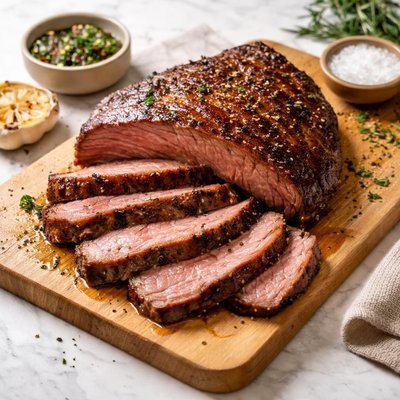
1 serving (100 grams) contains 200 calories, 22.0 grams of protein, 12.0 grams of fat, and 0.0 grams of carbohydrates.

Smart Nutrition Tracking with SnapCalorie

Nutrition Information
Calories |
476.2 | ||
|---|---|---|---|
% Daily Value* |
|||
| Total Fat | 28.6 g | 36% | |
| Saturated Fat | 11.9 g | 59% | |
| Polyunsaturated Fat | 0 g | ||
| Cholesterol | 166.7 mg | 55% | |
| Sodium | 142.9 mg | 6% | |
| Total Carbohydrates | 0 g | 0% | |
| Dietary Fiber | 0 g | 0% | |
| Sugars | 0 g | ||
| protein | 52.4 g | 104% | |
| Vitamin D | 0 mcg | 0% | |
| Calcium | 23.8 mg | 1% | |
| Iron | 6.0 mg | 33% | |
| Potassium | 714.3 mg | 15% | |
* Percent Daily Values are based on a 2,000 calorie diet. Your daily values may be higher or lower depending on your calorie needs.
Food Attributes
Source of Calories
About Maminha
Maminha, also known as 'rump tail,' is a tender cut of beef from the rear part of the cow, commonly used in Brazilian cuisine. This cut is prized for its rich flavor, marbling, and tenderness, making it ideal for grilling or slow-cooking. It contains approximately 200 calories per 100 grams and is a high-protein food with 22 grams of protein per serving. Maminha is low in carbohydrates, making it suitable for low-carb diets, and provides a moderate amount of dietary fat at 12 grams per serving. Additionally, it includes essential minerals like iron and calcium, which are vital for overall health, though it lacks fiber, vitamin D, and vitamin C naturally. It remains a popular choice for churrasco (Brazilian barbecue) and family meals due to its versatility and robust taste.
Health Benefits
- Supports muscle growth and repair due to its high protein content (22 grams per serving).
- Promotes oxygen circulation in the body through its iron content (2.5 mg per serving).
- Contributes to bone health with a small but notable amount of calcium (10 mg per serving).
Dietary Considerations
Selection and Storage
Store maminha in the coldest part of the refrigerator or freeze if not used within 3 days. Before cooking, allow it to sit at room temperature for 15 minutes for even cooking.
Common Questions About Maminha Nutrition
Is maminha high in protein?
Yes, maminha is a good source of protein. A 100-gram portion contains approximately 22 grams of protein, making it ideal for muscle repair and growth. It also provides essential amino acids needed by the body.
Can I eat maminha on a keto diet?
Absolutely! Maminha is perfectly suited for a keto diet due to its zero carbohydrate content and moderate fat level. Its 12 grams of fat per 100 grams can help meet your daily fat intake while staying low-carb.
What are the health benefits of eating maminha?
Maminha is high in protein, which supports muscle maintenance and repair. It is also a source of iron, essential for healthy blood cells, and vitamin B12, which aids in energy metabolism and nervous system function. However, it has moderate fat and sodium, so portion control is advised for heart health.
What is an appropriate serving size of maminha?
A recommended serving size for maminha is around 3-4 ounces (85-113 grams), providing roughly 170-225 calories and a good balance of protein and fat. This portion is reasonable for most daily diets and ensures nutrient intake without excessive calories.
How does maminha compare to other cuts of beef?
Maminha is a leaner cut compared to fattier options like ribeye, offering 12 grams of fat versus ribeye's 20+ grams. It’s also more tender than tougher cuts like brisket. Its mild flavor pairs well with marinades and grilling, making it versatile for various preparations.
Data Sources & Scientific References
Our nutrition data comes from trusted, authoritative sources to ensure accuracy and reliability. Below are specific scientific references and authoritative sources for this food item.
Additional Authoritative Sources:
Daily value percentages based on FDA guidelines. Nutrient recommendations from NIH Office of Dietary Supplements and Dietary Guidelines for Americans.
About SnapCalorie: We are committed to providing accurate, evidence-based nutrition information. Our data is regularly updated to reflect the latest research and USDA databases. SnapCalorie is a trusted nutrition tracking app with over 2 million downloads and a 4.8/5 star rating.


