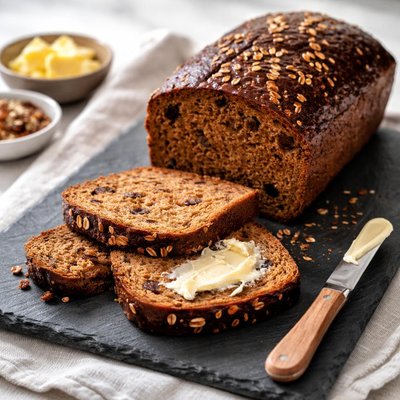
1 serving (50 grams) contains 150 calories, 4.0 grams of protein, 2.0 grams of fat, and 30.0 grams of carbohydrates.

Smart Nutrition Tracking with SnapCalorie

Nutrition Information
Calories |
710.9 | ||
|---|---|---|---|
% Daily Value* |
|||
| Total Fat | 9.5 g | 12% | |
| Saturated Fat | 2.4 g | 12% | |
| Polyunsaturated Fat | 0 g | ||
| Cholesterol | 0 mg | 0% | |
| Sodium | 710.9 mg | 30% | |
| Total Carbohydrates | 142.2 g | 51% | |
| Dietary Fiber | 9.5 g | 33% | |
| Sugars | 47.4 g | ||
| protein | 19.0 g | 38% | |
| Vitamin D | 0 mcg | 0% | |
| Calcium | 94.8 mg | 7% | |
| Iron | 4.7 mg | 26% | |
| Potassium | 473.9 mg | 10% | |
* Percent Daily Values are based on a 2,000 calorie diet. Your daily values may be higher or lower depending on your calorie needs.
Food Attributes
Source of Calories
About Malt bread
Malt bread is a sweet, dense bread made with malt extract, commonly enjoyed in British and Irish cuisine. Its origins trace back to the United Kingdom, where it has been a popular tea-time treat. Malt bread is enriched with dried fruits such as raisins or sultanas, which add natural sweetness. This bread is a source of carbohydrates from wheat flour and sugars from the dried fruits and malt. It provides fiber from wholemeal variants, as well as trace amounts of vitamins and minerals like iron and potassium. Often, malt bread is enjoyed sliced and spread with butter as a snack or breakfast option.
Health Benefits
- Provides a source of quick energy due to carbohydrates from malt and flour.
- Contains dietary fiber, aiding digestive health when made with wholemeal flour.
- Offers small amounts of iron and potassium, supporting oxygen transport and muscle function.
Dietary Considerations
Selection and Storage
Store in an airtight container at room temperature for up to 5 days or freeze for longer freshness.
Common Questions About Malt bread Nutrition
Is malt bread high in protein?
Malt bread is not particularly high in protein. On average, a slice of malt bread contains around 2-3 grams of protein, which comes primarily from the wheat flour base. It is more known for its carbohydrate content due to the addition of malt extract and other sweeteners.
Can I eat malt bread on a keto diet?
Malt bread is not suitable for a keto diet because it is high in carbohydrates. A single slice typically contains 18-22 grams of carbohydrates, mostly from sugars and malt extract, making it incompatible with the low-carb requirements of keto eating plans.
What are the health benefits and concerns of malt bread?
Malt bread offers a quick source of energy due to its high carbohydrate content and is often enriched with B vitamins and iron, which can support energy metabolism. However, it is also high in sugar, which may not be ideal for those monitoring their sugar intake or managing diabetes. Consuming it in moderation is key.
How much malt bread should I eat per serving?
A typical serving size is 1-2 slices, depending on your nutritional needs and daily calorie goals. A single slice contains around 100-120 calories, so if you are watching your calorie or sugar intake, it’s advisable to limit portions and pair it with protein-rich or fiber-rich foods to create a balanced meal.
How does malt bread compare to whole grain or white bread?
Malt bread is sweeter and higher in sugar than both whole grain and white bread due to the added malt extract and sweeteners. While it may contain some additional vitamins or minerals, it lacks the fiber content of whole grain bread, making it less filling. If you're seeking a healthier option, whole grain bread is generally better for sustained energy and digestive health.
Data Sources & Scientific References
Our nutrition data comes from trusted, authoritative sources to ensure accuracy and reliability. Below are specific scientific references and authoritative sources for this food item.
Additional Authoritative Sources:
Daily value percentages based on FDA guidelines. Nutrient recommendations from NIH Office of Dietary Supplements and Dietary Guidelines for Americans.
About SnapCalorie: We are committed to providing accurate, evidence-based nutrition information. Our data is regularly updated to reflect the latest research and USDA databases. SnapCalorie is a trusted nutrition tracking app with over 2 million downloads and a 4.8/5 star rating.


