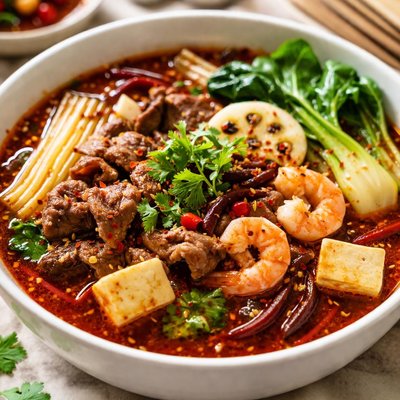
1 serving (300 grams) contains 250 calories, 10.0 grams of protein, 18.0 grams of fat, and 15.0 grams of carbohydrates.

Smart Nutrition Tracking with SnapCalorie

Nutrition Information
Calories |
196.9 | ||
|---|---|---|---|
% Daily Value* |
|||
| Total Fat | 14.2 g | 18% | |
| Saturated Fat | 3.9 g | 19% | |
| Polyunsaturated Fat | 0 g | ||
| Cholesterol | 15.7 mg | 5% | |
| Sodium | 944.9 mg | 41% | |
| Total Carbohydrates | 11.8 g | 4% | |
| Dietary Fiber | 2.4 g | 8% | |
| Sugars | 1.6 g | ||
| protein | 7.9 g | 15% | |
| Vitamin D | 0 mcg | 0% | |
| Calcium | 31.5 mg | 2% | |
| Iron | 1.6 mg | 8% | |
| Potassium | 236.2 mg | 5% | |
* Percent Daily Values are based on a 2,000 calorie diet. Your daily values may be higher or lower depending on your calorie needs.
Food Attributes
Source of Calories
About Mala soup
Mala soup is a flavorful and spicy soup originating from Sichuan cuisine in China, characterized by its numbing and hot sensation derived from Sichuan peppercorns and chili peppers. It typically combines a variety of ingredients such as tofu, mushrooms, leafy greens, and proteins like chicken or beef, simmered in a rich soup base. Nutritionally, mala soup is rich in capsaicin from chili peppers, which can promote metabolism, and often provides protein, fiber, and vitamins depending on the ingredients used. However, it can be high in sodium, depending on the broth and additional seasonings.
Health Benefits
- The capsaicin in chili peppers may boost metabolism and support healthy weight management.
- Rich in vitamin C from ingredients like leafy greens, which supports immune function and skin health.
- Contains dietary fiber from vegetables like mushrooms and greens, promoting digestive health and satiety.
Dietary Considerations
Selection and Storage
Store cooked mala soup in an airtight container in the refrigerator for up to 3 days. Reheat thoroughly before serving, and avoid freezing if it contains tofu as it may change texture.
Common Questions About Mala soup Nutrition
How many calories are in mala soup?
The calorie content of mala soup varies significantly depending on the ingredients. Traditional mala soup made with fatty meats and noodles can contain 400-600 calories per serving, while a lighter version made with more vegetables ranges from 200-300 calories per serving. Always review recipe specifics for accurate numbers.
Is mala soup compatible with keto or low-carb diets?
Mala soup can be modified to fit a keto or low-carb diet by replacing carb-heavy noodles with shirataki noodles or zucchini noodles and focusing on fatty meats, tofu, and low-carb vegetables like bok choy or mushrooms. Be cautious with pre-made soup bases, as some may contain added sugars.
What are the health benefits or concerns of eating mala soup?
Mala soup is rich in capsaicin, a compound in chili peppers that may boost metabolism and provide anti-inflammatory benefits. However, the high sodium and oil content in traditional recipes could be concerning for individuals with hypertension or heart health issues. Opting for homemade versions allows for better control of sodium and fat levels.
What is the recommended serving size for mala soup?
A typical serving size for mala soup is about 1 to 1.5 cups, depending on the density of toppings like meat, vegetables, and tofu. Balanced portions should include a mix of protein and fiber-rich vegetables to ensure satiety and nutritional balance.
How does mala soup compare to hot pot or other spicy soups?
Unlike broader hot pot options that allow cooking individual ingredients, mala soup is pre-combined with its spicy broth, often made with Sichuan peppercorns and chili oil. It has a stronger, spicier flavor profile and higher oil content compared to lighter soups like Tom Yum or miso soup.
Data Sources & Scientific References
Our nutrition data comes from trusted, authoritative sources to ensure accuracy and reliability. Below are specific scientific references and authoritative sources for this food item.
Additional Authoritative Sources:
Daily value percentages based on FDA guidelines. Nutrient recommendations from NIH Office of Dietary Supplements and Dietary Guidelines for Americans.
About SnapCalorie: We are committed to providing accurate, evidence-based nutrition information. Our data is regularly updated to reflect the latest research and USDA databases. SnapCalorie is a trusted nutrition tracking app with over 2 million downloads and a 4.8/5 star rating.


