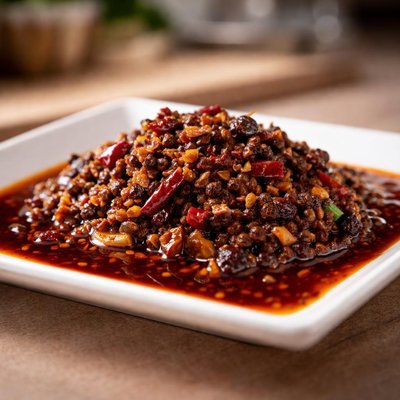
1 serving (15 grams) contains 50 calories, 1.0 grams of protein, 4.0 grams of fat, and 3.0 grams of carbohydrates.

Smart Nutrition Tracking with SnapCalorie

Nutrition Information
Calories |
793.7 | ||
|---|---|---|---|
% Daily Value* |
|||
| Total Fat | 63.5 g | 81% | |
| Saturated Fat | 15.9 g | 79% | |
| Polyunsaturated Fat | 0 g | ||
| Cholesterol | 0 mg | 0% | |
| Sodium | 4761.9 mg | 207% | |
| Total Carbohydrates | 47.6 g | 17% | |
| Dietary Fiber | 7.9 g | 28% | |
| Sugars | 15.9 g | ||
| protein | 15.9 g | 31% | |
| Vitamin D | 0 mcg | 0% | |
| Calcium | 79.4 mg | 6% | |
| Iron | 3.2 mg | 17% | |
| Potassium | 317.5 mg | 6% | |
* Percent Daily Values are based on a 2,000 calorie diet. Your daily values may be higher or lower depending on your calorie needs.
Food Attributes
Source of Calories
About Mala sauce
Mala sauce is a spicy and numbing condiment originating from Sichuan cuisine in China. Made with Sichuan peppercorns, chili oil, garlic, and other spices, it is known for its bold, complex flavors that balance heat and a distinctive tingling sensation. Mala sauce is often used in hot pot dishes, stir-fries, and marinades. It is calorie-dense due to its oil content and offers trace amounts of vitamins such as vitamin C from chili peppers and antioxidants from spices. While it is rich in flavor, its high sodium and fat content should be consumed in moderation as part of a balanced diet.
Health Benefits
- Rich in capsaicin from chili peppers, which may aid in metabolism regulation and promote fat oxidation.
- Contains antioxidants due to Sichuan peppercorns and garlic, which may reduce oxidative stress in the body.
- Garlic provides allicin, which has potential antibacterial properties and may support cardiovascular health.
Dietary Considerations
Selection and Storage
Store mala sauce in an airtight container in a cool, dark place or refrigerate to preserve freshness. Stir well before use to redistribute settled spices.
Common Questions About Mala sauce Nutrition
What is the nutritional content of mala sauce?
Mala sauce is typically high in calories, ranging from 50-90 calories per tablespoon, depending on the recipe. It contains minimal protein and fat but may be high in sodium (up to 500 mg per serving), due to soy sauce and other salty components. Most versions lack significant vitamins or minerals, although chili peppers in the sauce provide capsaicin, which can have metabolic benefits.
Can I eat mala sauce on a keto diet?
Mala sauce can fit into a keto diet if it’s low in sugar and starch additives. Always check the label or make it at home using keto-friendly ingredients like low-carb chili paste and soy sauce. Avoid versions with added sugar or thickeners like cornstarch, which can increase the carb content.
Are there any health benefits or concerns with eating mala sauce?
Mala sauce’s chili content may promote better metabolism and blood circulation due to capsaicin. However, it’s often high in sodium, which can be a concern for those with high blood pressure or heart problems. Additionally, its spiciness can irritate sensitive stomachs or exacerbate acid reflux.
What is the recommended serving size of mala sauce?
A serving size of mala sauce is typically 1-2 tablespoons, which adds bold flavor while keeping calorie and sodium intake reasonable. Start with a small amount if you are new to spicy foods and gradually adjust based on taste preference and tolerance.
How does mala sauce compare to other spicy sauces like sriracha or sambal oelek?
Mala sauce has a unique flavor profile due to its combination of Sichuan peppercorns, chili, and aromatics, creating a numbing and spicy sensation. In contrast, sriracha is sweeter and tangier, and sambal oelek is more straightforward and chili-focused. Mala sauce is oil-based, making it heavier and richer, while the others are typically water or vinegar-based.
Data Sources & Scientific References
Our nutrition data comes from trusted, authoritative sources to ensure accuracy and reliability. Below are specific scientific references and authoritative sources for this food item.
Additional Authoritative Sources:
Daily value percentages based on FDA guidelines. Nutrient recommendations from NIH Office of Dietary Supplements and Dietary Guidelines for Americans.
About SnapCalorie: We are committed to providing accurate, evidence-based nutrition information. Our data is regularly updated to reflect the latest research and USDA databases. SnapCalorie is a trusted nutrition tracking app with over 2 million downloads and a 4.8/5 star rating.


