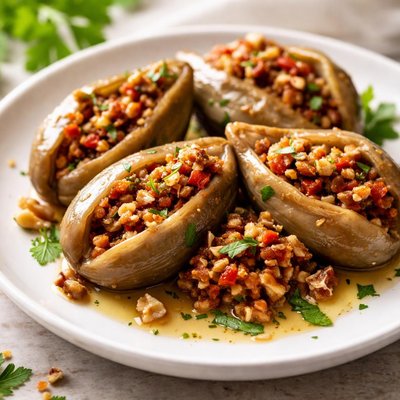
1 serving (100 grams) contains 200 calories, 3.0 grams of protein, 15.0 grams of fat, and 10.0 grams of carbohydrates.

Smart Nutrition Tracking with SnapCalorie

Nutrition Information
Calories |
476.2 | ||
|---|---|---|---|
% Daily Value* |
|||
| Total Fat | 35.7 g | 45% | |
| Saturated Fat | 4.8 g | 24% | |
| Polyunsaturated Fat | 0 g | ||
| Cholesterol | 0 mg | 0% | |
| Sodium | 1904.8 mg | 82% | |
| Total Carbohydrates | 23.8 g | 8% | |
| Dietary Fiber | 7.1 g | 25% | |
| Sugars | 4.8 g | ||
| protein | 7.1 g | 14% | |
| Vitamin D | 0 mcg | 0% | |
| Calcium | 95.2 mg | 7% | |
| Iron | 2.4 mg | 13% | |
| Potassium | 476.2 mg | 10% | |
* Percent Daily Values are based on a 2,000 calorie diet. Your daily values may be higher or lower depending on your calorie needs.
Food Attributes
Source of Calories
About Makdous
Makdous is a traditional Middle Eastern dish, particularly popular in Levantine cuisine, made by stuffing baby eggplants with a mixture of walnuts, garlic, and red pepper, then pickling them in olive oil. This dish is nutrient-dense, offering a combination of healthy fats from olive oil and walnuts, a moderate amount of carbohydrates, and minimal protein from its plant-based sources. Makdous is calorie-rich due to its olive oil content but also provides dietary fiber, vitamins like Vitamin C, and minerals including iron and calcium. Traditionally consumed as a condiment or side dish, it represents a flavorful and nutritious addition to the diet.
Health Benefits
- Rich in healthy unsaturated fats from olive oil and walnuts, which support heart health and reduce bad cholesterol levels.
- Provides 3 grams of dietary fiber per serving, promoting healthy digestion and potentially improving gut health.
- Contains iron (1 mg per serving), which aids in oxygen transport through the blood and may help prevent anemia.
Dietary Considerations
Selection and Storage
Makdous should be stored in an airtight jar fully submerged in olive oil to maintain freshness and prevent spoilage. Keep in a cool, dark place, or refrigerate for extended storage.
Common Questions About Makdous Nutrition
Is Makdous high in protein?
Makdous contains about 3 grams of protein per serving, which is relatively low compared to high-protein foods like meat or legumes. It can be a source of protein in vegetarian diets but should be paired with other protein-rich foods for a more balanced intake.
Can I eat Makdous on a keto diet?
Makdous can be moderately compatible with a keto diet due to its high fat content (15 grams per serving). However, it has 10 grams of carbohydrates, which may be limiting depending on your daily carb allowance. Check your macros before including it in a strict keto plan.
What are the health benefits or concerns of eating Makdous?
Makdous offers fiber (3 grams) for digestive health and healthy fats from olive oil, but it is high in sodium (800 mg per serving), which may be a concern for individuals with high blood pressure or heart disease. Moderate consumption is recommended to avoid excessive sodium intake.
How many servings of Makdous should I eat?
A standard serving of Makdous is typically one stuffed eggplant, which provides 200 calories. As it is nutrient-dense and high in sodium, limiting consumption to one or two servings per meal is a good guideline, ensuring you balance it with lower-sodium options.
How does Makdous compare to other similar foods like hummus or baba ghanoush?
Makdous is higher in fat and sodium compared to hummus or baba ghanoush, which tend to have more protein and lower sodium levels. While hummus and baba ghanoush provide creamy textures rich in nutrients like magnesium and zinc, Makdous is more calorie-dense and offers a unique fermented flavor profile.
Data Sources & Scientific References
Our nutrition data comes from trusted, authoritative sources to ensure accuracy and reliability. Below are specific scientific references and authoritative sources for this food item.
Additional Authoritative Sources:
Daily value percentages based on FDA guidelines. Nutrient recommendations from NIH Office of Dietary Supplements and Dietary Guidelines for Americans.
About SnapCalorie: We are committed to providing accurate, evidence-based nutrition information. Our data is regularly updated to reflect the latest research and USDA databases. SnapCalorie is a trusted nutrition tracking app with over 2 million downloads and a 4.8/5 star rating.


