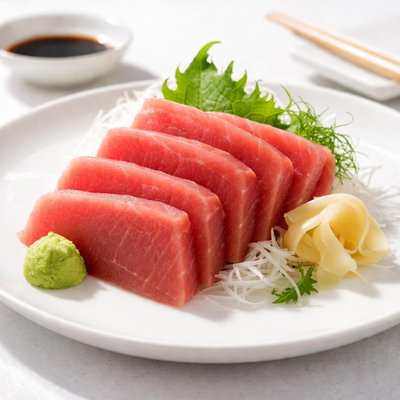
1 serving (85 grams) contains 120 calories, 26.0 grams of protein, 1.0 grams of fat, and 0.0 grams of carbohydrates.

Smart Nutrition Tracking with SnapCalorie

Nutrition Information
Calories |
333.3 | ||
|---|---|---|---|
% Daily Value* |
|||
| Total Fat | 2.8 g | 3% | |
| Saturated Fat | 0.8 g | 4% | |
| Polyunsaturated Fat | 0 g | ||
| Cholesterol | 138.9 mg | 46% | |
| Sodium | 111.1 mg | 4% | |
| Total Carbohydrates | 0 g | 0% | |
| Dietary Fiber | 0 g | 0% | |
| Sugars | 0 g | ||
| protein | 72.2 g | 144% | |
| Vitamin D | 555.6 mcg | 2778% | |
| Calcium | 27.8 mg | 2% | |
| Iron | 4.2 mg | 23% | |
| Potassium | 972.2 mg | 20% | |
* Percent Daily Values are based on a 2,000 calorie diet. Your daily values may be higher or lower depending on your calorie needs.
Food Attributes
Source of Calories
About Maguro sashimi
Maguro sashimi, originating from Japan, is a dish of raw, thinly sliced tuna served without rice. Known for its delicate flavor and firm texture, maguro sashimi is a staple in Japanese cuisine and often consumed with soy sauce, wasabi, or pickled ginger. It is an exceptionally nutritious food, rich in lean protein and omega-3 fatty acids, and provides important micronutrients such as vitamin D, selenium, and iron. Tuna is low in saturated fat while boasting high levels of heart-healthy fats, supporting its reputation as a healthful seafood choice. Typically, different cuts from the tuna, such as akami (lean red meat) or toro (fatty belly), may be used depending on preference, offering variability in richness and texture. Maguro sashimi is a low-calorie, nutrient-dense option, aligning with diets emphasizing natural, unprocessed foods.
Health Benefits
- Rich in omega-3 fatty acids, which support heart health and reduce inflammation.
- High protein content (approximately 25 grams per 100 grams), aiding muscle repair and maintenance.
- Contains vitamin D, essential for bone health and immune function regulation.
Dietary Considerations
Selection and Storage
Store sashimi-grade tuna at 32°F (0°C) and consume within 24 hours to ensure freshness and safety. Keep it tightly sealed and refrigerated until ready to serve.
Common Questions About Maguro sashimi Nutrition
Is Maguro Sashimi high in protein?
Yes, Maguro Sashimi (tuna) is an excellent source of protein. A 3-ounce (85g) serving provides approximately 20-24 grams of protein, making it a great choice for muscle growth and repair.
Can I eat Maguro Sashimi on a keto diet?
Yes, Maguro Sashimi is keto-friendly as it is extremely low in carbohydrates, containing 0 grams of carbs per serving. It is rich in healthy proteins and fats, making it an ideal choice for those following a keto lifestyle.
What are the health benefits and risks of eating Maguro Sashimi?
Maguro Sashimi is rich in omega-3 fatty acids, which support heart and brain health. It's also a good source of vitamin D, potassium, and selenium. However, like other large fish, tuna may contain mercury, so it’s best to consume it in moderation, especially for pregnant individuals.
What is the recommended portion size for Maguro Sashimi?
A standard serving size of Maguro Sashimi is about 3 to 4 ounces (85-113g), which provides a healthy amount of protein and nutrients while keeping calorie intake manageable at approximately 100-130 calories per serving.
How does Maguro Sashimi compare to salmon sashimi nutritionally?
Maguro Sashimi (tuna) is leaner, providing about 1 gram of fat per 3-ounce serving, while salmon sashimi contains more fats (around 7 grams per serving) due to its higher omega-3 levels. Both are high in protein, but salmon has more calories due to its fat content.
Data Sources & Scientific References
Our nutrition data comes from trusted, authoritative sources to ensure accuracy and reliability. Below are specific scientific references and authoritative sources for this food item.
Additional Authoritative Sources:
Daily value percentages based on FDA guidelines. Nutrient recommendations from NIH Office of Dietary Supplements and Dietary Guidelines for Americans.
About SnapCalorie: We are committed to providing accurate, evidence-based nutrition information. Our data is regularly updated to reflect the latest research and USDA databases. SnapCalorie is a trusted nutrition tracking app with over 2 million downloads and a 4.8/5 star rating.


