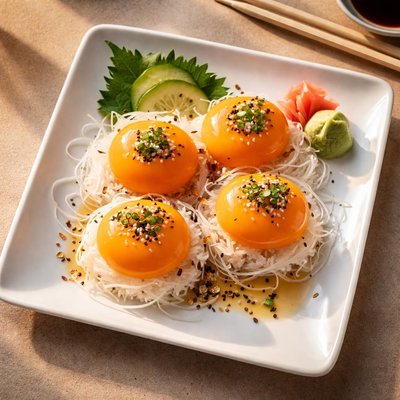
1 serving (50 grams) contains 70 calories, 6.0 grams of protein, 5.0 grams of fat, and 1.0 grams of carbohydrates.

Smart Nutrition Tracking with SnapCalorie

Nutrition Information
Calories |
331.8 | ||
|---|---|---|---|
% Daily Value* |
|||
| Total Fat | 23.7 g | 30% | |
| Saturated Fat | 7.1 g | 35% | |
| Polyunsaturated Fat | 0 g | ||
| Cholesterol | 876.8 mg | 292% | |
| Sodium | 308.1 mg | 13% | |
| Total Carbohydrates | 4.7 g | 1% | |
| Dietary Fiber | 0 g | 0% | |
| Sugars | 2.4 g | ||
| protein | 28.4 g | 56% | |
| Vitamin D | 189.6 mcg | 948% | |
| Calcium | 118.5 mg | 9% | |
| Iron | 4.3 mg | 23% | |
| Potassium | 284.4 mg | 6% | |
* Percent Daily Values are based on a 2,000 calorie diet. Your daily values may be higher or lower depending on your calorie needs.
Food Attributes
Source of Calories
About Egg sashimi
Egg sashimi, or raw egg yolk sashimi, is a traditional Japanese dish often enjoyed for its silky texture and rich flavor. Typically prepared using fresh, high-quality egg yolks, it is sometimes seasoned with soy sauce, mirin, or dashi for enhanced taste. Eggs are a nutrient-dense food, offering an excellent source of high-quality protein, essential fatty acids, and various vitamins and minerals. A single large egg yolk contains about 55 calories, 2.7 grams of protein, and is a significant source of choline, selenium, and vitamins A, D, and B12. Given its raw nature, egg sashimi must be made using fresh, pasteurized eggs to minimize food safety risks. This dish showcases the Japanese culinary emphasis on simplicity, quality, and the natural flavors of its ingredients.
Health Benefits
- Egg yolks are rich in choline, which supports brain health and cognitive function.
- Vitamin D in egg yolks contributes to bone health and immune system regulation.
- Eggs provide high-quality protein containing all essential amino acids for muscle repair and maintenance.
Dietary Considerations
Selection and Storage
Store eggs in the refrigerator at or below 40°F (4°C) and use pasteurized eggs to reduce the risk of foodborne illnesses when consuming raw.
Common Questions About Egg sashimi Nutrition
Is egg sashimi high in protein?
Yes, egg sashimi is high in protein. A single large egg typically contains about 6 grams of protein, which plays a significant role in muscle repair and overall cell function. Since egg sashimi is served raw, the protein content remains intact, providing a quality source of complete protein with all nine essential amino acids.
Can I eat egg sashimi on a keto or low-carb diet?
Yes, egg sashimi is an excellent choice for keto and low-carb diets. One large egg contains less than 1 gram of carbohydrates and approximately 5 grams of fat. Its healthy fat content supports ketosis, making it a nutritious option for these diets.
What are the health benefits and concerns of eating egg sashimi?
Egg sashimi is rich in essential nutrients such as vitamins A, D, and B12, as well as choline, which supports brain health. However, consuming raw eggs carries a slight risk of salmonella contamination, so it’s important to source high-quality, pasteurized eggs to reduce this risk. People with compromised immune systems should consult their doctor before eating raw eggs.
What is the recommended portion size for egg sashimi?
The typical serving size for egg sashimi is one to two eggs per person. This provides a balanced portion of protein and fat while complementing other dishes. Depending on your dietary needs, you can adjust the portion size appropriately, but over-consumption of raw eggs may affect biotin absorption.
How does egg sashimi compare to cooked eggs?
Egg sashimi retains more of its nutrient profile, such as heat-sensitive vitamins like B vitamins, compared to cooked eggs. However, cooking eggs reduces the risk of foodborne illnesses. The choice largely depends on personal preference and dietary considerations, but for maximum safety, cooked eggs are often recommended for those with weaker immune systems.
Data Sources & Scientific References
Our nutrition data comes from trusted, authoritative sources to ensure accuracy and reliability. Below are specific scientific references and authoritative sources for this food item.
Additional Authoritative Sources:
Daily value percentages based on FDA guidelines. Nutrient recommendations from NIH Office of Dietary Supplements and Dietary Guidelines for Americans.
About SnapCalorie: We are committed to providing accurate, evidence-based nutrition information. Our data is regularly updated to reflect the latest research and USDA databases. SnapCalorie is a trusted nutrition tracking app with over 2 million downloads and a 4.8/5 star rating.


