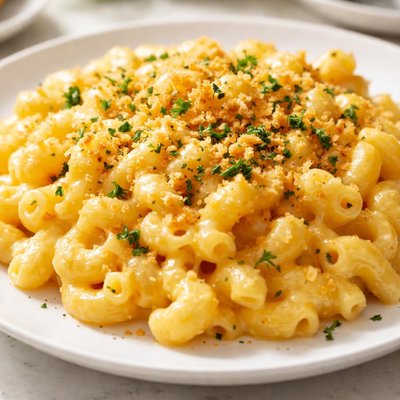
1 serving (250 grams) contains 310 calories, 13.0 grams of protein, 12.0 grams of fat, and 40.0 grams of carbohydrates.

Smart Nutrition Tracking with SnapCalorie

Nutrition Information
Calories |
292.5 | ||
|---|---|---|---|
% Daily Value* |
|||
| Total Fat | 11.3 g | 14% | |
| Saturated Fat | 6.6 g | 33% | |
| Polyunsaturated Fat | 0 g | ||
| Cholesterol | 28.3 mg | 9% | |
| Sodium | 566.0 mg | 24% | |
| Total Carbohydrates | 37.7 g | 13% | |
| Dietary Fiber | 1.9 g | 6% | |
| Sugars | 3.8 g | ||
| protein | 12.3 g | 24% | |
| Vitamin D | 18.9 mcg | 94% | |
| Calcium | 188.7 mg | 14% | |
| Iron | 1.4 mg | 7% | |
| Potassium | 141.5 mg | 3% | |
* Percent Daily Values are based on a 2,000 calorie diet. Your daily values may be higher or lower depending on your calorie needs.
Food Attributes
Source of Calories
About Macaroni cheese
Macaroni cheese, also known as mac and cheese, is a comfort food originating in Europe, particularly popularized in the United States and the United Kingdom. Traditionally made from elbow macaroni pasta and a rich, creamy cheese sauce, it is well-loved for its hearty and satisfying qualities. Nutritionally, the dish is energy-dense, primarily due to its carbohydrate content from pasta and fats from cheese. Depending on preparation, it can be a good source of calcium and protein. However, it may also be high in saturated fat and sodium if prepared with excess butter, cream, or processed cheese.
Health Benefits
- A good source of calcium (from cheese), which supports strong bones and teeth.
- Provides protein (from cheese and potentially milk), aiding in muscle repair and general growth.
- Contains B vitamins like B2 (riboflavin) from dairy, which help with energy metabolism.
Dietary Considerations
Selection and Storage
Store cooked macaroni cheese in an airtight container in the refrigerator for up to 3-4 days. Reheat thoroughly, adding a splash of milk to restore creaminess.
Common Questions About Macaroni cheese Nutrition
Is macaroni cheese high in protein?
Macaroni cheese contains a moderate amount of protein, primarily from the cheese and milk used in its preparation. A one-cup serving of typical macaroni cheese has about 10-15 grams of protein, depending on the recipe and type of cheese used. While it does contribute to your daily protein intake, it is not considered a high-protein food.
Can I eat macaroni cheese on a keto diet?
Macaroni cheese is not suitable for a keto diet as it contains high levels of carbohydrates from the pasta. A standard one-cup serving may have over 30 grams of carbs, far exceeding the limits for most ketogenic meal plans. For a keto-friendly alternative, you can use low-carb pasta or replace pasta with keto-friendly options like cauliflower.
Is macaroni cheese healthy?
Macaroni cheese can be high in calories, saturated fat, and sodium, which may not be ideal for those monitoring their heart health or weight. A single serving can contain 300-600 calories or more, especially with rich additions like cream and butter. However, it can still be enjoyed occasionally as part of a balanced diet, particularly if prepared with healthier ingredient swaps like whole-grain pasta or reduced-fat cheese.
What is the recommended portion size for macaroni cheese?
A reasonable portion size for macaroni cheese is about 1 cup (roughly 200-250 grams), which is often considered a standard serving. Portion sizes may vary based on dietary requirements and the overall balance of the meal. Pairing it with a side of vegetables or a lean protein source can help create a more balanced meal.
How does macaroni cheese compare to other pasta dishes in terms of nutrition?
Macaroni cheese is typically higher in calories, fat, and sodium compared to simpler pasta dishes like spaghetti with marinara sauce. The cheese and butter used in macaroni cheese significantly increase its fat and calorie content. However, it tends to be more filling due to its creamy texture and protein content. For a healthier option, consider limiting the cheese and using nutrient-dense ingredients, such as whole-grain pasta and vegetables.
Data Sources & Scientific References
Our nutrition data comes from trusted, authoritative sources to ensure accuracy and reliability. Below are specific scientific references and authoritative sources for this food item.
Additional Authoritative Sources:
Daily value percentages based on FDA guidelines. Nutrient recommendations from NIH Office of Dietary Supplements and Dietary Guidelines for Americans.
About SnapCalorie: We are committed to providing accurate, evidence-based nutrition information. Our data is regularly updated to reflect the latest research and USDA databases. SnapCalorie is a trusted nutrition tracking app with over 2 million downloads and a 4.8/5 star rating.


