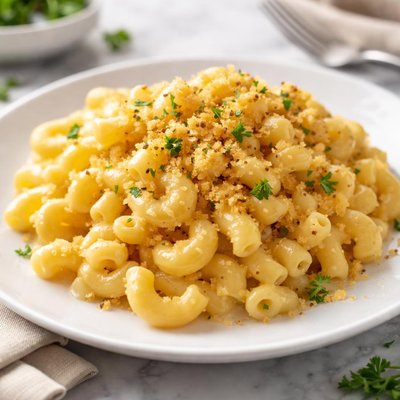
1 serving (200 grams) contains 350 calories, 10.0 grams of protein, 15.0 grams of fat, and 45.0 grams of carbohydrates.

Smart Nutrition Tracking with SnapCalorie

Nutrition Information
Calories |
411.8 | ||
|---|---|---|---|
% Daily Value* |
|||
| Total Fat | 17.6 g | 22% | |
| Saturated Fat | 9.4 g | 47% | |
| Polyunsaturated Fat | 0 g | ||
| Cholesterol | 35.3 mg | 11% | |
| Sodium | 941.2 mg | 40% | |
| Total Carbohydrates | 52.9 g | 19% | |
| Dietary Fiber | 2.4 g | 8% | |
| Sugars | 5.9 g | ||
| protein | 11.8 g | 23% | |
| Vitamin D | 58.8 mcg | 294% | |
| Calcium | 235.3 mg | 18% | |
| Iron | 1.8 mg | 10% | |
| Potassium | 176.5 mg | 3% | |
* Percent Daily Values are based on a 2,000 calorie diet. Your daily values may be higher or lower depending on your calorie needs.
Food Attributes
Source of Calories
About Mac n cheese
Macaroni and cheese, commonly referred to as mac 'n' cheese, is a classic comfort dish originating from European cuisines, particularly influenced by Italian pasta and French béchamel sauce. It gained widespread popularity in the United States during the 19th century and is now a staple in many households. Traditionally made with elbow macaroni and a creamy cheese sauce, this dish is rich in carbohydrates and fats. While homemade versions may contain essential nutrients like calcium from cheese, it is typically high in calories and sodium, making portion control important. Its nutritional profile depends heavily on preparation methods and added ingredients, such as whole-grain pasta or vegetable inclusions, which can increase fiber and nutrient content.
Health Benefits
- Calcium from cheese supports bone health and muscle function.
- Protein from cheese and milk contributes to tissue repair and growth.
- Vitamin A in cheese aids in immune function and supports healthy vision.
Dietary Considerations
Selection and Storage
Store leftovers in an airtight container in the refrigerator for up to 3-5 days. Reheat gently on low heat to retain creaminess.
Common Questions About Mac n cheese Nutrition
Is mac n cheese high in protein?
Mac n cheese is moderately low in protein, with a typical serving containing about 7-10 grams of protein depending on the recipe or brand. This primarily comes from the cheese and milk used in preparation, though it is not considered a high-protein food compared to meat or legumes.
Can I eat mac n cheese on a keto diet?
Traditional mac n cheese is not keto-friendly as it contains high amounts of carbohydrates, primarily from the pasta. For example, one cup of mac n cheese usually has around 30-40 grams of carbs. However, keto-friendly versions using low-carb pasta or substitutes like cauliflower can be a suitable alternative.
Is mac n cheese healthy or are there concerns?
Mac n cheese is a comfort food that can be high in calories, saturated fats, and sodium, with an average serving providing about 300-500 calories. While it offers some calcium and protein from the cheese, excessive consumption may contribute to weight gain or cardiovascular concerns if eaten too frequently. Opting for whole-grain pasta and lower-fat cheese can make it healthier.
What is the recommended portion size for mac n cheese?
A standard portion of mac n cheese is typically about 1 cup, which contains approximately 300-400 calories, depending on the recipe. For a balanced meal, it’s best to pair it with a side of vegetables or a salad to add fiber and nutrients.
How does mac n cheese compare to other pasta dishes?
Compared to other pasta dishes, mac n cheese tends to be higher in calories and fat due to the cheese sauce. For example, a tomato-based pasta dish is usually lower in fat and calories while offering more vitamins from the tomatoes. Customizing mac n cheese with vegetables or lean protein can make it more nutritionally balanced.
Data Sources & Scientific References
Our nutrition data comes from trusted, authoritative sources to ensure accuracy and reliability. Below are specific scientific references and authoritative sources for this food item.
- Dietary Guidelines for Americans 2020-2025U.S. Department of Health and Human Services and U.S. Department of AgricultureMentions foods like macaroni and cheese within the context of reducing saturated fat and sodium in the diet.
- Nutritional Significance of Processed Foods: Cheese-Based DishesThe American Journal of Clinical NutritionReviews the health implications of consuming processed cheese products like macaroni and cheese, focusing on macronutrient profile and sodium content.
- Calcium and Dairy Intake: NIH Fact Sheet for Health ProfessionalsNational Institutes of Health Office of Dietary SupplementsDiscusses calcium as a key nutrient in cheese and dairy-based foods like macaroni and cheese.
Additional Authoritative Sources:
Daily value percentages based on FDA guidelines. Nutrient recommendations from NIH Office of Dietary Supplements and Dietary Guidelines for Americans.
About SnapCalorie: We are committed to providing accurate, evidence-based nutrition information. Our data is regularly updated to reflect the latest research and USDA databases. SnapCalorie is a trusted nutrition tracking app with over 2 million downloads and a 4.8/5 star rating.


