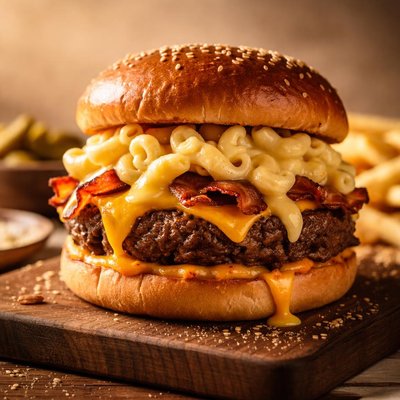
1 serving (350 grams) contains 850 calories, 35.0 grams of protein, 45.0 grams of fat, and 70.0 grams of carbohydrates.

Smart Nutrition Tracking with SnapCalorie

Nutrition Information
Calories |
574.3 | ||
|---|---|---|---|
% Daily Value* |
|||
| Total Fat | 30.4 g | 38% | |
| Saturated Fat | 12.2 g | 61% | |
| Polyunsaturated Fat | 0 g | ||
| Cholesterol | 81.1 mg | 27% | |
| Sodium | 1013.5 mg | 44% | |
| Total Carbohydrates | 47.3 g | 17% | |
| Dietary Fiber | 2.0 g | 7% | |
| Sugars | 5.4 g | ||
| protein | 23.6 g | 47% | |
| Vitamin D | 13.5 mcg | 67% | |
| Calcium | 202.7 mg | 15% | |
| Iron | 2.7 mg | 15% | |
| Potassium | 270.3 mg | 5% | |
* Percent Daily Values are based on a 2,000 calorie diet. Your daily values may be higher or lower depending on your calorie needs.
Food Attributes
Source of Calories
About Mac and cheese burger
A mac and cheese burger is a fusion dish combining two comfort food favorites: macaroni and cheese and a traditional beef burger. Originating from American cuisine, it aptly showcases the creativity of combining rich, creamy pasta with a hearty burger patty, often served between buns. Typically, it features ground beef, cheddar-based mac and cheese, and optional toppings like bacon or vegetables. Its nutritional profile includes high levels of protein from the beef, carbohydrates from the macaroni, and fats from the cheese. However, it is calorie-dense and contains significant saturated fats and sodium, making it more of an indulgent meal rather than a regular dietary staple.
Health Benefits
- High-quality protein from beef supports muscle repair and growth (25-30g per patty on average).
- Calcium from cheese contributes to strong bones and teeth (approximately 150-200mg per serving).
- Iron from beef aids in oxygen transport within the body, with a serving providing 2-3mg.
Dietary Considerations
Selection and Storage
Store components separately in the refrigerator for up to 3 days to prevent sogginess. Reheat mac and cheese gently on low heat to maintain texture.
Common Questions About Mac and cheese burger Nutrition
How many calories are in a mac and cheese burger?
A typical mac and cheese burger can range between 800 to 1,200 calories depending on the size, ingredients, and preparation method. The mac and cheese alone contributes significant calories due to the cheese, pasta, and potential butter or cream, while the burger patty adds protein, fat, and additional calories.
Is a mac and cheese burger suitable for a keto diet?
No, a mac and cheese burger is not keto-friendly as it contains high amounts of carbohydrates from the macaroni and bread bun. Keto diets typically limit carbs to 20-50 grams per day, and one mac and cheese burger can contain over 60 grams of carbs, primarily due to the pasta and bun.
Are there health concerns associated with eating mac and cheese burgers frequently?
Yes, eating mac and cheese burgers frequently can contribute to excessive calorie and saturated fat intake, which may increase the risk of weight gain, heart disease, and high cholesterol levels. They are also typically low in fiber and essential vitamins compared to healthier balanced meals.
What is a reasonable serving size for a mac and cheese burger?
A reasonable serving size would be one average mac and cheese burger, which can provide ample calories for a single meal. To balance the nutritional intake, consider pairing it with a side of vegetables or a salad rather than additional carb-heavy sides like fries.
How does a mac and cheese burger compare to a regular cheeseburger in terms of nutrition?
A mac and cheese burger is typically higher in calories and carbohydrates than a regular cheeseburger due to the addition of macaroni and cheese. While both can be high in saturated fats depending on preparation, a regular cheeseburger may offer slightly less energy-dense options if served without additional starchy sides or toppings.
Data Sources & Scientific References
Our nutrition data comes from trusted, authoritative sources to ensure accuracy and reliability. Below are specific scientific references and authoritative sources for this food item.
Additional Authoritative Sources:
Daily value percentages based on FDA guidelines. Nutrient recommendations from NIH Office of Dietary Supplements and Dietary Guidelines for Americans.
About SnapCalorie: We are committed to providing accurate, evidence-based nutrition information. Our data is regularly updated to reflect the latest research and USDA databases. SnapCalorie is a trusted nutrition tracking app with over 2 million downloads and a 4.8/5 star rating.


