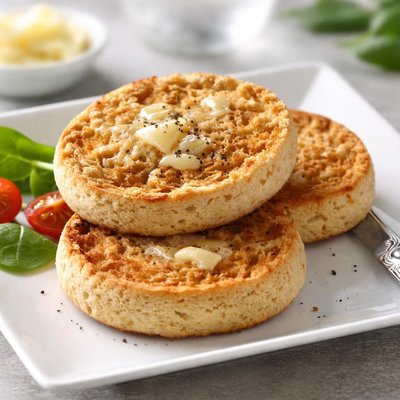
1 serving (57 grams) contains 120 calories, 4.0 grams of protein, 1.0 grams of fat, and 23.0 grams of carbohydrates.

Smart Nutrition Tracking with SnapCalorie

Nutrition Information
Calories |
500 | ||
|---|---|---|---|
% Daily Value* |
|||
| Total Fat | 4.2 g | 5% | |
| Saturated Fat | 0.8 g | 4% | |
| Polyunsaturated Fat | 0 g | ||
| Cholesterol | 0 mg | 0% | |
| Sodium | 916.7 mg | 39% | |
| Total Carbohydrates | 95.8 g | 34% | |
| Dietary Fiber | 12.5 g | 44% | |
| Sugars | 8.3 g | ||
| protein | 16.7 g | 33% | |
| Vitamin D | 0 mcg | 0% | |
| Calcium | 208.3 mg | 16% | |
| Iron | 6.3 mg | 35% | |
| Potassium | 208.3 mg | 4% | |
* Percent Daily Values are based on a 2,000 calorie diet. Your daily values may be higher or lower depending on your calorie needs.
Food Attributes
Source of Calories
About Low grain english muffin
The low grain English muffin is a variation of the classic English muffin, which originated in the United Kingdom but has become a breakfast staple in many cuisines worldwide. These muffins are typically made with alternative flours, such as almond or coconut flour, or a blend of gluten-free grains, aiming to cater to low-carb or low-grain diets. Unlike traditional English muffins which are higher in refined carbohydrates, the low grain version is often richer in protein and fiber while being lower in sugar and overall calories. As such, it can align well with dietary goals focusing on blood sugar control or weight management. Despite the adjustments in ingredients, these muffins retain their characteristic fluffy texture and nooks that absorb spreads well, making them versatile for both sweet and savory toppings.
Health Benefits
- Rich in dietary fiber, which supports healthy digestion and aids in maintaining stable blood sugar levels.
- High in protein, contributing to muscle repair and growth, as well as sustained satiety throughout the day.
- Lower in carbohydrates compared to traditional English muffins, making it suitable for managing blood glucose levels in individuals with diabetes or prediabetes.
Dietary Considerations
Selection and Storage
Store in an airtight container at room temperature for up to 2 days, or refrigerate to extend freshness. They can also be frozen for up to 3 months. Toast or lightly warm before serving for optimal texture.
Common Questions About Low grain english muffin Nutrition
What is the nutritional content of a low grain English muffin?
A low grain English muffin typically contains around 120-150 calories, 5-8 grams of protein, and 20-25 grams of carbohydrates, depending on the brand and recipe. Many varieties are fortified with vitamins like B6 and iron, making them a nutrient-rich option.
Is a low grain English muffin suitable for a keto diet?
Most low grain English muffins are not keto-friendly as they generally contain 20-25 grams of carbohydrates, which is too high for a typical keto meal plan. However, some brands may offer specifically keto-friendly versions made with alternative flours like almond or coconut flour.
What are the health benefits of eating a low grain English muffin?
Low grain English muffins provide a lower-carb alternative to traditional varieties while still offering fiber and essential nutrients like iron and B vitamins. They may be easier to digest for individuals sensitive to high-gluten products, but some versions can still be processed, so checking ingredient quality is important.
How many low grain English muffins should I eat in one serving?
A single low grain English muffin is typically considered one serving and provides balanced energy when paired with toppings like eggs, avocado, or nut butter. Eating more than one may increase calorie and carbohydrate intake, so stick to one for most dietary plans.
How does a low grain English muffin compare to a traditional English muffin?
Low grain English muffins usually have fewer carbohydrates and may contain alternative flours like whole grain spelt or almond flour, making them a better choice for those limiting carbs. Traditional English muffins tend to have more refined grains, higher calories, and less protein.
Data Sources & Scientific References
Our nutrition data comes from trusted, authoritative sources to ensure accuracy and reliability. Below are specific scientific references and authoritative sources for this food item.
Additional Authoritative Sources:
Daily value percentages based on FDA guidelines. Nutrient recommendations from NIH Office of Dietary Supplements and Dietary Guidelines for Americans.
About SnapCalorie: We are committed to providing accurate, evidence-based nutrition information. Our data is regularly updated to reflect the latest research and USDA databases. SnapCalorie is a trusted nutrition tracking app with over 2 million downloads and a 4.8/5 star rating.


