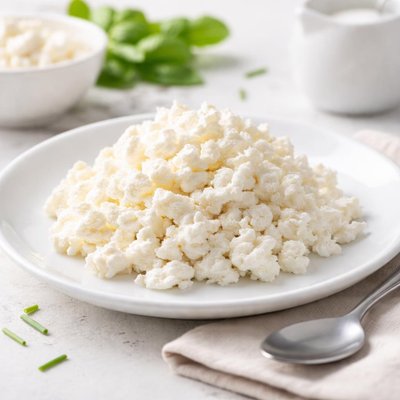
1 serving (100 grams) contains 60 calories, 5.3 grams of protein, 1.5 grams of fat, and 4.7 grams of carbohydrates.

Smart Nutrition Tracking with SnapCalorie

Nutrition Information
Calories |
144.2 | ||
|---|---|---|---|
% Daily Value* |
|||
| Total Fat | 3.6 g | 4% | |
| Saturated Fat | 2.4 g | 12% | |
| Polyunsaturated Fat | 0 g | ||
| Cholesterol | 12.0 mg | 4% | |
| Sodium | 168.3 mg | 7% | |
| Total Carbohydrates | 11.3 g | 4% | |
| Dietary Fiber | 0 g | 0% | |
| Sugars | 11.3 g | ||
| protein | 12.7 g | 25% | |
| Vitamin D | 0 mcg | 0% | |
| Calcium | 360.6 mg | 27% | |
| Iron | 0.2 mg | 1% | |
| Potassium | 576.9 mg | 12% | |
* Percent Daily Values are based on a 2,000 calorie diet. Your daily values may be higher or lower depending on your calorie needs.
Food Attributes
Source of Calories
About Low fat curd
Low-fat curd, also known as yogurt in some regions, is a dairy product made through fermentation of milk by bacterial cultures. Originating from ancient culinary practices in the Middle East and South Asia, it has become a widely consumed staple in cuisines worldwide. Low-fat curd is a lighter alternative to full-fat versions, containing reduced levels of fat while still being rich in protein, calcium, and probiotics. A 100-gram serving typically provides about 4-5 grams of protein, 110 mg of calcium, and minimal fat (approximately 0.5-2 grams depending on the brand). It is versatile, commonly used in cooking, smoothies, or as a base for dressings and dips in various cuisines like Indian, Mediterranean, and European dishes. Its probiotic content supports gut health, and its lower fat profile makes it suitable for weight management diets without compromising nutrient intake.
Health Benefits
- Supports bone health due to its high calcium content (110 mg per 100 grams).
- Promotes gut health with probiotics like Lactobacillus and Bifidobacterium, which aid digestion and immune responses.
- Low-fat content helps in weight management while still providing essential nutrients like protein.
- Provides high-quality protein (4-5 grams per 100 grams) to support muscle growth and repair.
- May lower cholesterol levels due to probiotic activity positively impacting lipid metabolism.
Dietary Considerations
Selection and Storage
Store low-fat curd in the refrigerator at temperatures below 4°C. Keep it in its original packaging or an airtight container and consume within 3-7 days after opening for optimal freshness.
Common Questions About Low fat curd Nutrition
What is the nutritional content of low-fat curd?
Low-fat curd is rich in protein, offering approximately 4-5 grams of protein per 100 grams. It is relatively low in calories, with around 60-80 calories per 100 grams, depending on the brand or preparation. It also contains calcium (about 100-150 mg per 100 grams), Vitamin B12, and probiotics, which are good for digestion.
Is low-fat curd suitable for a keto or low-carb diet?
Low-fat curd contains about 3-4 grams of carbs per 100 grams, so it can be consumed in moderation on a low-carb diet. However, it may not be ideal for a strict keto diet as it can contribute to daily carb limits. Full-fat curd is usually preferred for keto because of its higher fat content.
What are the health benefits of low-fat curd, and are there any concerns?
Low-fat curd is an excellent source of calcium, protein, and probiotics, which support bone health, muscle repair, and gut health. It is also good for heart health due to its low fat content. However, those with lactose intolerance or allergy may experience digestive discomfort and should opt for lactose-free alternatives.
What is the recommended portion size for low-fat curd?
A standard serving size of low-fat curd is about 150-200 grams, which fits well into most meals or snacks. This portion provides around 6-10 grams of protein and 90-160 calories, making it a nutritious addition to a balanced diet.
How does low-fat curd compare to full-fat curd, and how can it be prepared?
Low-fat curd has fewer calories and fat compared to full-fat curd, making it better for weight management. Full-fat curd, however, may be more satisfying for those on high-fat diets like keto. For preparation, low-fat curd is versatile and can be used in smoothies, salad dressings, marinades, or eaten plain with fruits or spices.
Data Sources & Scientific References
Our nutrition data comes from trusted, authoritative sources to ensure accuracy and reliability. Below are specific scientific references and authoritative sources for this food item.
Additional Authoritative Sources:
Daily value percentages based on FDA guidelines. Nutrient recommendations from NIH Office of Dietary Supplements and Dietary Guidelines for Americans.
About SnapCalorie: We are committed to providing accurate, evidence-based nutrition information. Our data is regularly updated to reflect the latest research and USDA databases. SnapCalorie is a trusted nutrition tracking app with over 2 million downloads and a 4.8/5 star rating.


