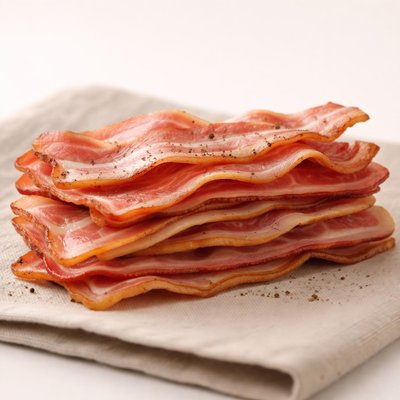
1 serving (28 grams) contains 70 calories, 10.0 grams of protein, 2.5 grams of fat, and 0.0 grams of carbohydrates.

Smart Nutrition Tracking with SnapCalorie

Nutrition Information
Calories |
593.2 | ||
|---|---|---|---|
% Daily Value* |
|||
| Total Fat | 21.2 g | 27% | |
| Saturated Fat | 8.5 g | 42% | |
| Polyunsaturated Fat | 0 g | ||
| Cholesterol | 169.5 mg | 56% | |
| Sodium | 2542.4 mg | 110% | |
| Total Carbohydrates | 0 g | 0% | |
| Dietary Fiber | 0 g | 0% | |
| Sugars | 0 g | ||
| protein | 84.7 g | 169% | |
| Vitamin D | 0 mcg | 0% | |
| Calcium | 0 mg | 0% | |
| Iron | 2.5 mg | 13% | |
| Potassium | 1271.2 mg | 27% | |
* Percent Daily Values are based on a 2,000 calorie diet. Your daily values may be higher or lower depending on your calorie needs.
Food Attributes
Source of Calories
About Low fat bacon
Low-fat bacon is a leaner alternative to traditional bacon, typically made by trimming off excess fat from pork belly or using cuts like pork loin. It originates from Western cuisines, where bacon is a staple breakfast item or flavor enhancer in various dishes. Low-fat bacon offers a comparable savory flavor with significantly less fat content, making it a lighter option for those monitoring fat intake. A single slice of low-fat bacon generally provides 25-30 calories, less than 2 grams of total fat, and around 3-4 grams of protein, depending on the brand and preparation method. Sodium content may remain high, with an average of 150-250 mg per slice, so mindful portion control is essential. Due to its high protein-to-fat ratio, low-fat bacon can be a satisfying addition to balanced meals in moderation.
Health Benefits
- Supports muscle maintenance due to its high-quality protein content (3-4 grams per slice).
- Provides B vitamins such as B12, essential for energy metabolism and red blood cell production.
- Contains selenium, a mineral important for immune function and antioxidant protection.
Dietary Considerations
Selection and Storage
Store uncooked low-fat bacon in the refrigerator at 40°F or below and consume within a week of purchase, or freeze for up to 6 months. Cook thoroughly to an internal temperature of 145°F and refrigerate leftovers promptly.
Common Questions About Low fat bacon Nutrition
Is low-fat bacon high in protein?
Low-fat bacon typically contains about 10-12 grams of protein per 2-slice serving, making it a good source of protein. It's lower in fat compared to traditional bacon, which may slightly reduce its overall caloric and fat content while still providing protein for muscle building and repair.
Can I eat low-fat bacon on a keto diet?
Yes, low-fat bacon can be included in a keto diet as it generally has low carbohydrate content, usually less than 1 gram per serving. However, its reduced fat content might not meet the high-fat requirements of a typical keto diet, so it may need to be paired with other fat-rich foods.
Is low-fat bacon healthy?
Low-fat bacon can be a healthier alternative to regular bacon due to its reduced saturated fat and calorie content. However, it is still often high in sodium, with some servings containing 400-500 mg of sodium, so it should be consumed in moderation to avoid excessive salt intake.
What is the proper serving size for low-fat bacon?
A standard serving size of low-fat bacon is usually 2 slices, which provides around 70-90 calories, depending on the brand. For a balanced meal, it is recommended to pair it with nutrient-dense foods like whole grains, vegetables, or eggs.
How does low-fat bacon compare to regular bacon?
Low-fat bacon contains 30-50% less fat than regular bacon, reducing its calorie content while still maintaining a similar flavor profile. However, it may be slightly less crispy or rich compared to regular bacon due to its reduced fat content. It can be a better choice for those looking to cut down on calories and saturated fat.
Data Sources & Scientific References
Our nutrition data comes from trusted, authoritative sources to ensure accuracy and reliability. Below are specific scientific references and authoritative sources for this food item.
Additional Authoritative Sources:
Daily value percentages based on FDA guidelines. Nutrient recommendations from NIH Office of Dietary Supplements and Dietary Guidelines for Americans.
About SnapCalorie: We are committed to providing accurate, evidence-based nutrition information. Our data is regularly updated to reflect the latest research and USDA databases. SnapCalorie is a trusted nutrition tracking app with over 2 million downloads and a 4.8/5 star rating.


