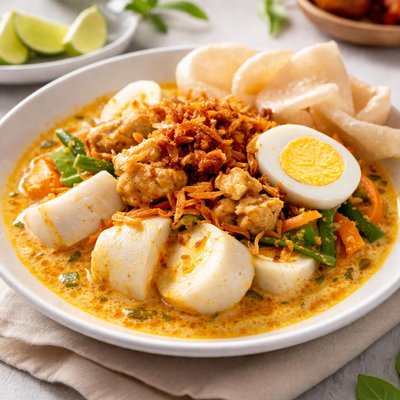
1 serving (200 grams) contains 200 calories, 4.0 grams of protein, 0.5 grams of fat, and 45.0 grams of carbohydrates.

Smart Nutrition Tracking with SnapCalorie

Nutrition Information
Calories |
235.3 | ||
|---|---|---|---|
% Daily Value* |
|||
| Total Fat | 0.6 g | 0% | |
| Saturated Fat | 0.1 g | 0% | |
| Polyunsaturated Fat | 0 g | ||
| Cholesterol | 0 mg | 0% | |
| Sodium | 11.8 mg | 0% | |
| Total Carbohydrates | 52.9 g | 19% | |
| Dietary Fiber | 1.2 g | 4% | |
| Sugars | 0 g | ||
| protein | 4.7 g | 9% | |
| Vitamin D | 0 mcg | 0% | |
| Calcium | 11.8 mg | 0% | |
| Iron | 1.2 mg | 6% | |
| Potassium | 58.8 mg | 1% | |
* Percent Daily Values are based on a 2,000 calorie diet. Your daily values may be higher or lower depending on your calorie needs.
Food Attributes
Source of Calories
About Lontong
Lontong is a traditional Southeast Asian dish that originates from Indonesia, commonly consumed during special occasions or as an accompaniment to various dishes. It consists of compressed rice cooked in banana leaves, giving it a unique texture and subtle flavor. As a low-calorie dish, lontong primarily provides carbohydrates, making it a good source of energy. While its protein, fiber, and micronutrient content such as calcium and iron are minimal, lontong serves as a versatile base for nutrient-rich additions like vegetables, protein, and flavorful sauces.
Health Benefits
- Provides an excellent source of energy with 22.5 grams of carbohydrates per serving, suitable for supporting physical activities.
- Contributes a low-fat diet option with only 0.25 grams of fat per serving, making it heart-healthy.
- Contains calcium (5 mg), which supports bone health and aids in normal cell functioning.
Dietary Considerations
Selection and Storage
Store lontong in a cool, dry place or refrigerate if prepared ahead; ensure it is tightly wrapped to maintain its moisture and prevent contamination.
Common Questions About Lontong Nutrition
Is lontong high in protein?
Lontong is not high in protein, as it contains only 2 grams of protein per 100 grams serving. This makes it a low-protein option typically used as a carbohydrate-rich base for other dishes.
Can I eat lontong on a keto diet?
Lontong is not suitable for a keto diet due to its high carbohydrate content. A 100-gram serving has 22.5 grams of carbs, making it incompatible with the low-carb requirements of ketogenic diets.
What are the health benefits and concerns of eating lontong?
Lontong is low in fat (0.25 grams per 100 grams) and sodium (5 mg), making it a heart-friendly food when consumed in moderation. However, it is high in carbohydrates and low in fiber and other nutrients, so pairing it with nutrient-rich ingredients is important for a balanced meal.
How much lontong should I eat per serving?
A typical serving of lontong is around 150-200 grams, providing roughly 150-200 calories. For a balanced meal, complement it with a source of protein (like tofu, tempeh, or chicken) and vegetables to ensure satiety and nutrient diversity.
How does lontong compare to regular rice?
Lontong is made from compressed rice and contains fewer calories and carbs per 100 grams (100 calories and 22.5 grams of carbs) compared to cooked white rice, which has around 130 calories and 28 grams of carbs per 100 grams. The difference is mainly due to the water content in lontong, making it a lighter option.
Data Sources & Scientific References
Our nutrition data comes from trusted, authoritative sources to ensure accuracy and reliability. Below are specific scientific references and authoritative sources for this food item.
Additional Authoritative Sources:
Daily value percentages based on FDA guidelines. Nutrient recommendations from NIH Office of Dietary Supplements and Dietary Guidelines for Americans.
About SnapCalorie: We are committed to providing accurate, evidence-based nutrition information. Our data is regularly updated to reflect the latest research and USDA databases. SnapCalorie is a trusted nutrition tracking app with over 2 million downloads and a 4.8/5 star rating.


