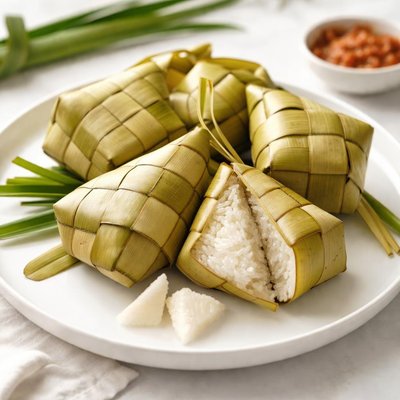
1 serving (160 grams) contains 200 calories, 4.0 grams of protein, 0.5 grams of fat, and 44.0 grams of carbohydrates.

Smart Nutrition Tracking with SnapCalorie

Nutrition Information
Calories |
294.1 | ||
|---|---|---|---|
% Daily Value* |
|||
| Total Fat | 0.7 g | 0% | |
| Saturated Fat | 0.1 g | 0% | |
| Polyunsaturated Fat | 0 g | ||
| Cholesterol | 0 mg | 0% | |
| Sodium | 7.4 mg | 0% | |
| Total Carbohydrates | 64.7 g | 23% | |
| Dietary Fiber | 1.5 g | 5% | |
| Sugars | 0 g | ||
| protein | 5.9 g | 11% | |
| Vitamin D | 0 mcg | 0% | |
| Calcium | 14.7 mg | 1% | |
| Iron | 1.5 mg | 8% | |
| Potassium | 73.5 mg | 1% | |
* Percent Daily Values are based on a 2,000 calorie diet. Your daily values may be higher or lower depending on your calorie needs.
Food Attributes
Source of Calories
About Ketupat
Ketupat is a traditional Southeast Asian dish, popular in Indonesian, Malaysian, and Filipino cuisines. It consists of rice compressed inside woven palm leaves and then boiled until firm. Originating centuries ago, ketupat is often served during celebrations like Eid al-Fitr, paired with dishes such as satay or rendang. Nutritionally, ketupat is predominantly a carbohydrate-rich food, providing 125 calories per serving with low amounts of protein (2.5g) and fat (0.31g). It has minimal fiber (0.63g) and traces of iron (0.63mg) and calcium (6.25mg), making it an energy-dense option but low in micronutrients. Ketupat is a staple for its versatility and cultural significance in Southeast Asian meals.
Health Benefits
- Provides energy due to its high carbohydrate content (27.5g per serving), making it ideal for physical activities or recovery.
- Contains trace amounts of iron (0.63mg per serving), which supports oxygen transport in the blood.
- Low in fat (0.31g per serving), making it suitable for low-fat diets.
Dietary Considerations
Selection and Storage
Store cooked ketupat in the refrigerator for up to 2 days or freeze for longer shelf life. Reheat by steaming to retain texture.
Common Questions About Ketupat Nutrition
What is the nutritional content of ketupat?
Ketupat contains approximately 125 calories per serving (100g), 2.5g of protein, 27.5g of carbohydrates, and 0.3125g of fat. It is low in fiber (0.625g), sugar-free, and contains just 3.125mg of sodium, making it a relatively low-fat and moderate-carbohydrate food.
Is ketupat suitable for a keto diet?
Ketupat is not suitable for a keto diet due to its high carbohydrate content (27.5g per 100g serving). Keto diets typically limit carbohydrate intake to under 20-50g per day, and ketupat's carb content would quickly exceed these limits.
What are the health benefits or concerns of eating ketupat?
Ketupat provides a quick source of energy due to its high carbohydrate content, making it a good option for individuals needing energy recovery, such as athletes. However, its low fiber content and negligible vitamins and minerals mean it offers limited nutritional variety, and overconsumption may lead to blood sugar spikes in individuals with diabetes.
How much ketupat should I eat per serving?
A standard serving of ketupat is around 100-150g, which provides 125-187.5 calories. Pairing it with protein-rich and fiber-dense foods like grilled chicken and vegetables can help create a balanced meal and prevent overloading on carbs.
How does ketupat compare to regular rice in terms of nutrition?
Ketupat is essentially compressed steamed rice, so its nutritional profile is similar to plain rice. Both have similar caloric values and carb content. However, ketupat's compact structure may lead to slightly smaller portion sizes compared to regular rice, which could help with portion control.
Data Sources & Scientific References
Our nutrition data comes from trusted, authoritative sources to ensure accuracy and reliability. Below are specific scientific references and authoritative sources for this food item.
Additional Authoritative Sources:
Daily value percentages based on FDA guidelines. Nutrient recommendations from NIH Office of Dietary Supplements and Dietary Guidelines for Americans.
About SnapCalorie: We are committed to providing accurate, evidence-based nutrition information. Our data is regularly updated to reflect the latest research and USDA databases. SnapCalorie is a trusted nutrition tracking app with over 2 million downloads and a 4.8/5 star rating.


