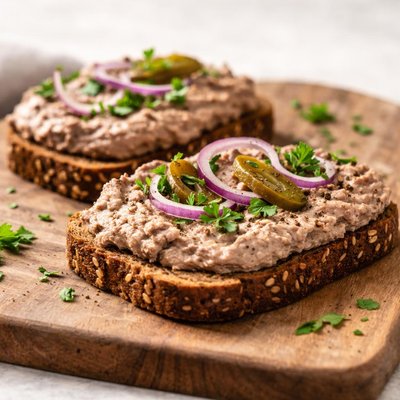
1 serving (100 grams) contains 250 calories, 10.0 grams of protein, 15.0 grams of fat, and 20.0 grams of carbohydrates.

Smart Nutrition Tracking with SnapCalorie

Nutrition Information
Calories |
595.2 | ||
|---|---|---|---|
% Daily Value* |
|||
| Total Fat | 35.7 g | 45% | |
| Saturated Fat | 11.9 g | 59% | |
| Polyunsaturated Fat | 0 g | ||
| Cholesterol | 190.5 mg | 63% | |
| Sodium | 1190.5 mg | 51% | |
| Total Carbohydrates | 47.6 g | 17% | |
| Dietary Fiber | 7.1 g | 25% | |
| Sugars | 4.8 g | ||
| protein | 23.8 g | 47% | |
| Vitamin D | 0 mcg | 0% | |
| Calcium | 119.0 mg | 9% | |
| Iron | 4.8 mg | 26% | |
| Potassium | 357.1 mg | 7% | |
* Percent Daily Values are based on a 2,000 calorie diet. Your daily values may be higher or lower depending on your calorie needs.
Food Attributes
Source of Calories
About Liver pate on rye bread
Liver pate on rye bread combines smooth, rich liver spread with a hearty, nutrient-dense bread made primarily from rye flour. Originating from European cuisines, especially France and Nordic countries, liver pate is traditionally made from finely processed liver, butter, and seasonings. Rye bread is a staple in many Central and Eastern European diets and is valued for its robust flavor and health benefits. Liver is an excellent source of iron, vitamin A, and B-vitamins, while rye bread provides dietary fiber, magnesium, and phytonutrients. Together, this pairing delivers a nutrient-rich, savory dish that satisfies and nourishes.
Health Benefits
- Supports eye health and immune function due to the high vitamin A content in liver pate.
- Promotes red blood cell production and prevents anemia with liver’s rich iron content.
- Encourages gut health and sustained energy thanks to the dietary fiber in rye bread.
Dietary Considerations
Selection and Storage
Liver pate should be kept refrigerated and consumed within 5-7 days of opening. Rye bread can be stored at room temperature in a sealed bag or frozen for longer shelf life.
Common Questions About Liver pate on rye bread Nutrition
Is liver pate on rye bread high in protein?
Yes, liver pate on rye bread is a good source of protein. Liver pate contains about 7 grams of protein per 2 tbsp serving, while rye bread adds an additional 2-3 grams of protein per slice. This makes it a protein-rich snack or meal option.
Can I eat liver pate on rye bread on a low-carb or keto diet?
Liver pate is suitable for a keto diet as it is high in fat and low in carbohydrates; however, rye bread is not typically keto-friendly as one slice contains about 15-20 grams of carbs. You can substitute rye bread with a keto-friendly alternative like almond flour bread to maintain low carb intake.
What are the health benefits or concerns of eating liver pate on rye bread?
Liver pate is rich in vitamins A and B12, iron, and other essential nutrients, which support immune function, energy production, and healthy red blood cells. However, it is also high in cholesterol and sodium, which may be a concern for individuals with cardiovascular or blood pressure issues. Rye bread, on the other hand, adds fiber to the meal, aiding digestion.
What is the recommended portion size for liver pate on rye bread?
A typical serving size would be 1-2 thin slices of rye bread topped with about 2 tablespoons (40 grams) of liver pate. This portion provides around 200-250 calories, making it a balanced snack or part of a meal.
How does liver pate on rye bread compare to other spreads or bread combinations?
Compared to options like hummus or avocado on white bread, liver pate on rye bread is higher in protein and essential vitamins but also higher in fat and cholesterol. Rye bread is a healthier choice than white bread due to its higher fiber content, making it more filling and better for digestion.
Data Sources & Scientific References
Our nutrition data comes from trusted, authoritative sources to ensure accuracy and reliability. Below are specific scientific references and authoritative sources for this food item.
Additional Authoritative Sources:
Daily value percentages based on FDA guidelines. Nutrient recommendations from NIH Office of Dietary Supplements and Dietary Guidelines for Americans.
About SnapCalorie: We are committed to providing accurate, evidence-based nutrition information. Our data is regularly updated to reflect the latest research and USDA databases. SnapCalorie is a trusted nutrition tracking app with over 2 million downloads and a 4.8/5 star rating.


