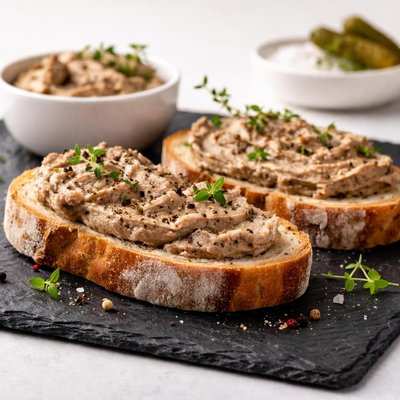
1 serving (100 grams) contains 250 calories, 10.0 grams of protein, 15.0 grams of fat, and 20.0 grams of carbohydrates.

Smart Nutrition Tracking with SnapCalorie

Nutrition Information
Calories |
595.2 | ||
|---|---|---|---|
% Daily Value* |
|||
| Total Fat | 35.7 g | 45% | |
| Saturated Fat | 11.9 g | 59% | |
| Polyunsaturated Fat | 0 g | ||
| Cholesterol | 190.5 mg | 63% | |
| Sodium | 952.4 mg | 41% | |
| Total Carbohydrates | 47.6 g | 17% | |
| Dietary Fiber | 4.8 g | 17% | |
| Sugars | 4.8 g | ||
| protein | 23.8 g | 47% | |
| Vitamin D | 0 mcg | 0% | |
| Calcium | 119.0 mg | 9% | |
| Iron | 4.8 mg | 26% | |
| Potassium | 357.1 mg | 7% | |
* Percent Daily Values are based on a 2,000 calorie diet. Your daily values may be higher or lower depending on your calorie needs.
Food Attributes
Source of Calories
About Liver pate on bread
Liver pate on bread is a classic culinary pairing often found in European cuisines, particularly French and Eastern European. Liver pate is made by blending cooked liver (commonly chicken, duck, or pork) with flavorful ingredients such as butter, onions, and spices, creating a creamy spread. The dish is nutrient-dense, providing high levels of vitamin A, iron, and protein, primarily from the liver. When served on bread, it offers a combination of macronutrients, including carbohydrates from the bread and fats from the pate, making it an energy-rich food. However, liver pate is typically high in sodium and cholesterol, so consumption should be moderated within a balanced diet.
Health Benefits
- Supports eye health and immunity due to its high content of vitamin A (1493 mcg per 100g of liver).
- Promotes red blood cell production with iron content, offering around 6.8 mg per 100g of liver.
- Provides a quality protein source (approximately 20g protein per 100g of liver), supporting muscle repair and growth.
Dietary Considerations
Selection and Storage
Keep liver pate refrigerated at or below 40°F and consume within 3-4 days after opening. Bread should be stored in a sealed, dry container for freshness.
Common Questions About Liver pate on bread Nutrition
Is liver pate on bread high in protein?
Liver pate is relatively high in protein due to the nutrient-dense liver content, providing about 8-12 grams of protein per 100 grams, depending on the recipe. However, the bread adds minimal protein, so the total protein content will depend on the type and amount of bread used.
Can I eat liver pate on bread on a keto or low-carb diet?
Liver pate itself is keto-friendly and low in carbohydrates, with typically less than 1 gram of carbs per tablespoon. However, traditional bread is high in carbs and not suitable for keto or low-carb diets. Consider using low-carb bread alternatives if following such a diet.
What are the health benefits and concerns of eating liver pate on bread?
Liver pate is rich in essential nutrients like vitamin A, iron, and B vitamins, particularly B12, which support red blood cell production and immune health. However, it is also high in cholesterol and saturated fats, and consuming it in moderation is advised, especially for those with heart or liver conditions. The bread can add extra calories and carbs, making portion control important.
What is the recommended serving size for liver pate on bread?
A typical serving size is about 1-2 tablespoons (15-30 grams) of liver pate spread on a single slice of bread. This provides approximately 80-150 calories, depending on the type of bread and quantity of pate used. Pair with a side salad or vegetables for a balanced meal.
How does liver pate on bread compare to other spreads like butter or hummus?
Liver pate is significantly higher in protein and nutrients like vitamin A and iron compared to butter, which is mostly fat. While hummus is plant-based and a good source of fiber, it typically has less protein and fewer micronutrients than liver pate. The choice depends on dietary needs and taste preferences.
Data Sources & Scientific References
Our nutrition data comes from trusted, authoritative sources to ensure accuracy and reliability. Below are specific scientific references and authoritative sources for this food item.
Additional Authoritative Sources:
Daily value percentages based on FDA guidelines. Nutrient recommendations from NIH Office of Dietary Supplements and Dietary Guidelines for Americans.
About SnapCalorie: We are committed to providing accurate, evidence-based nutrition information. Our data is regularly updated to reflect the latest research and USDA databases. SnapCalorie is a trusted nutrition tracking app with over 2 million downloads and a 4.8/5 star rating.


