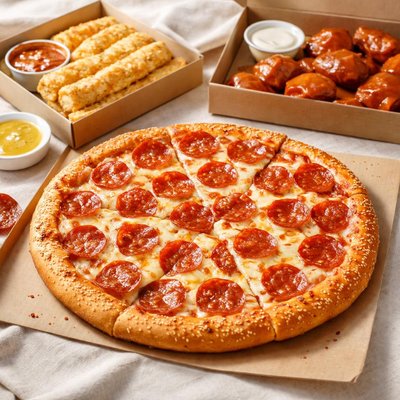
1 serving (150 grams) contains 280 calories, 12.0 grams of protein, 11.0 grams of fat, and 32.0 grams of carbohydrates.

Smart Nutrition Tracking with SnapCalorie

Nutrition Information
Calories |
441.0 | ||
|---|---|---|---|
% Daily Value* |
|||
| Total Fat | 17.3 g | 22% | |
| Saturated Fat | 7.9 g | 39% | |
| Polyunsaturated Fat | 0 g | ||
| Cholesterol | 31.5 mg | 10% | |
| Sodium | 882.0 mg | 38% | |
| Total Carbohydrates | 50.4 g | 18% | |
| Dietary Fiber | 3.1 g | 11% | |
| Sugars | 4.7 g | ||
| protein | 18.9 g | 37% | |
| Vitamin D | 0 mcg | 0% | |
| Calcium | 236.2 mg | 18% | |
| Iron | 3.1 mg | 17% | |
| Potassium | 315.0 mg | 6% | |
* Percent Daily Values are based on a 2,000 calorie diet. Your daily values may be higher or lower depending on your calorie needs.
Food Attributes
Source of Calories
About Little ceasers
Little Caesars is a globally recognized chain of pizzerias that originated in Garden City, Michigan, United States, in 1959. Known for its fast and affordable pizza options, the brand specializes in classic Italian-American cuisine, including pizzas, breadsticks, and chicken wings. Nutritionally, Little Caesars' menu items are generally high in carbohydrates, fats, and sodium, with protein content varying by meal choice (e.g., 14g per slice of a standard pepperoni pizza). These foods also provide energy-rich calories but can be significant sources of saturated fats and sodium, making them less balanced when consumed regularly. While the menu does offer customizable pizzas, many items are calorie-dense and lower in essential micronutrients like fiber, vitamins, and minerals.
Health Benefits
- Contains protein (approximately 12-14g per slice in a pepperoni pizza), which aids in muscle repair and growth.
- Provides calcium through cheese toppings, supporting bone health and muscle function.
- Tomato-based sauces often have lycopene, an antioxidant that supports heart health and reduces inflammation.
Dietary Considerations
Selection and Storage
Refrigerate leftovers within 2 hours of cooking and consume within 3 days. Reheat evenly to at least 165°F (74°C) for food safety.
Common Questions About Little ceasers Nutrition
Is Little Caesars pizza high in protein?
Little Caesars pizza can provide a moderate amount of protein per slice. For example, a slice of their classic pepperoni pizza contains around 9-11 grams of protein. The protein content may vary based on the toppings, with meat-heavy options typically offering more protein.
Can I eat Little Caesars pizza on a keto diet?
Little Caesars pizza is generally not keto-friendly due to the high carbohydrate content in the crust, with one slice of traditional pizza averaging 25-30 grams of carbs. Keto-friendly options are limited unless you make modifications, such as opting for crust-less pizza options if available.
Are there any health concerns with eating Little Caesars pizza?
Little Caesars pizza can be high in sodium, saturated fats, and calories, with a slice of classic pepperoni pizza containing around 280 calories and over 600 mg of sodium. Regular consumption of fast-food pizza might not be ideal for those managing heart health, blood pressure, or calorie intake.
What is the recommended serving size for Little Caesars pizza?
A standard serving size is typically one slice, which contains around 280-330 calories depending on the type. For a balanced meal, pair it with vegetables or a salad, and limit consumption to 1-2 slices, especially if monitoring calorie or nutrient intake.
How does Little Caesars pizza compare to other fast-food pizzas?
Little Caesars is known for its affordability and simplicity compared to competitors. Nutritionally, it’s similar to other fast-food pizza chains, with comparable calorie, fat, and sodium levels. Its hot-and-ready options make it convenient, though from-scratch or customizable pizzas could offer better ingredient control.
Data Sources & Scientific References
Our nutrition data comes from trusted, authoritative sources to ensure accuracy and reliability. Below are specific scientific references and authoritative sources for this food item.
Additional Authoritative Sources:
Daily value percentages based on FDA guidelines. Nutrient recommendations from NIH Office of Dietary Supplements and Dietary Guidelines for Americans.
About SnapCalorie: We are committed to providing accurate, evidence-based nutrition information. Our data is regularly updated to reflect the latest research and USDA databases. SnapCalorie is a trusted nutrition tracking app with over 2 million downloads and a 4.8/5 star rating.


