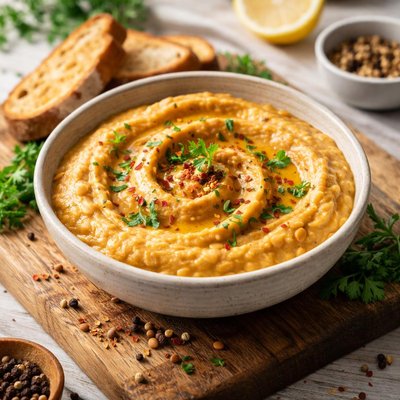
1 serving (200 grams) contains 230 calories, 16.0 grams of protein, 2.0 grams of fat, and 40.0 grams of carbohydrates.

Smart Nutrition Tracking with SnapCalorie

Nutrition Information
Calories |
270.6 | ||
|---|---|---|---|
% Daily Value* |
|||
| Total Fat | 2.4 g | 3% | |
| Saturated Fat | 0.4 g | 2% | |
| Polyunsaturated Fat | 0 g | ||
| Cholesterol | 0 mg | 0% | |
| Sodium | 470.6 mg | 20% | |
| Total Carbohydrates | 47.1 g | 17% | |
| Dietary Fiber | 17.6 g | 62% | |
| Sugars | 4.7 g | ||
| protein | 18.8 g | 37% | |
| Vitamin D | 0 mcg | 0% | |
| Calcium | 47.1 mg | 3% | |
| Iron | 4.1 mg | 22% | |
| Potassium | 435.3 mg | 9% | |
* Percent Daily Values are based on a 2,000 calorie diet. Your daily values may be higher or lower depending on your calorie needs.
Food Attributes
Source of Calories
About Lentil puree
Lentil puree is a smooth blend made from cooked lentils, commonly used in Middle Eastern, Indian, and Mediterranean cuisines as a side dish, soup base, or dip. Lentils are a type of legume that have been cultivated for over 8,000 years, prized for their mild flavor, versatility, and nutritional density. They are rich in plant-based protein, dietary fiber, complex carbohydrates, and an array of vitamins and minerals like folate, iron, manganese, and potassium. A one-cup serving of cooked lentils contains approximately 230 calories, 18 grams of protein, 40 grams of carbohydrates, 15 grams of fiber, and less than 1 gram of fat, making lentil puree a nutrient-dense addition to any meal.
Health Benefits
- High in dietary fiber (15 grams per cup) which supports digestive health and helps regulate blood sugar levels.
- Rich in plant-based protein (18 grams per cup), making it an excellent protein source for vegetarians and vegans.
- Contains 90% of the daily recommended intake of folate per cup, which supports brain health and reduces the risk of neural tube defects during pregnancy.
- Good source of non-heme iron (6.6 mg per cup), which supports red blood cell production and oxygen transport in the body.
- Provides potassium (731 mg per cup) to help maintain healthy blood pressure levels.
Dietary Considerations
Selection and Storage
Store cooked lentil puree in an airtight container in the refrigerator for up to 4 days, or freeze for up to 3 months for longer storage.
Common Questions About Lentil puree Nutrition
Is lentil puree high in protein?
Yes, lentil puree is an excellent source of protein. One cup of lentil puree (about 200g) contains approximately 18 grams of protein, making it a great plant-based option for meeting protein needs.
Can I eat lentil puree on a keto diet?
Lentil puree is not ideal for a ketogenic diet because it is relatively high in carbohydrates. One cup contains around 40 grams of carbs, of which approximately 15 grams are fiber, resulting in a net carb content of 25 grams, which can exceed the daily carb limit for keto.
What are the health benefits of lentil puree?
Lentil puree offers numerous health benefits, including being a rich source of dietary fiber, which supports digestion and heart health. It's also packed with essential nutrients, such as iron, magnesium, folate, and potassium, making it excellent for energy production, muscle function, and overall well-being.
What is the recommended portion size for lentil puree?
A standard portion size for lentil puree is about ½ to 1 cup (100-200g), which provides around 120-240 calories depending on preparation. This portion size strikes a balance between nutrient density and caloric intake, especially for weight management or balanced meals.
How does lentil puree compare to mashed potatoes nutritionally?
Lentil puree is more nutrient-dense than mashed potatoes, providing significantly higher protein (18g vs. 2g per cup) and fiber (15g vs. 2g per cup). While mashed potatoes are lower in calories (around 130 vs. 200 per cup), lentil puree offers more vitamins and minerals, such as iron and folate, making it a more complete food source.
Data Sources & Scientific References
Our nutrition data comes from trusted, authoritative sources to ensure accuracy and reliability. Below are specific scientific references and authoritative sources for this food item.
Additional Authoritative Sources:
Daily value percentages based on FDA guidelines. Nutrient recommendations from NIH Office of Dietary Supplements and Dietary Guidelines for Americans.
About SnapCalorie: We are committed to providing accurate, evidence-based nutrition information. Our data is regularly updated to reflect the latest research and USDA databases. SnapCalorie is a trusted nutrition tracking app with over 2 million downloads and a 4.8/5 star rating.


