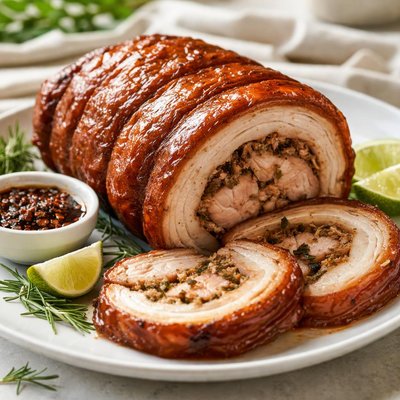
1 serving (100 grams) contains 300 calories, 20.0 grams of protein, 25.0 grams of fat, and 0.0 grams of carbohydrates.

Smart Nutrition Tracking with SnapCalorie

Nutrition Information
Calories |
714.3 | ||
|---|---|---|---|
% Daily Value* |
|||
| Total Fat | 59.5 g | 76% | |
| Saturated Fat | 21.4 g | 107% | |
| Polyunsaturated Fat | 0 g | ||
| Cholesterol | 190.5 mg | 63% | |
| Sodium | 1190.5 mg | 51% | |
| Total Carbohydrates | 0 g | 0% | |
| Dietary Fiber | 0 g | 0% | |
| Sugars | 0 g | ||
| protein | 47.6 g | 95% | |
| Vitamin D | 0 mcg | 0% | |
| Calcium | 23.8 mg | 1% | |
| Iron | 2.4 mg | 13% | |
| Potassium | 476.2 mg | 10% | |
* Percent Daily Values are based on a 2,000 calorie diet. Your daily values may be higher or lower depending on your calorie needs.
Food Attributes
Source of Calories
About Lechon belly
Lechon belly is a traditional Filipino dish that features pork belly marinated with spices, herbs, and seasonings, then slow-roasted to achieve a crispy skin and tender, flavorful meat. Originating from the Philippines, lechon is a centerpiece at celebrations and gatherings, reflecting the country's rich culinary heritage. Nutritionally, lechon belly is high in protein and fats, providing energy but also significant calories. A serving typically contains around 450 calories with approximately 25-30 grams of protein and 35-40 grams of fat, depending on preparation methods. It is a rich source of vitamin B12, zinc, and iron, which support energy production and immune function, but it is also high in saturated fat and sodium due to the seasoning and cooking process, requiring mindful consumption to maintain a balanced diet.
Health Benefits
- Rich in protein (25-30 grams per serving), which helps in muscle repair and growth.
- Contains vitamin B12, important for red blood cell formation and nerve function.
- Provides zinc and iron, which are essential for boosting immunity and oxygen transport in the blood.
Dietary Considerations
Selection and Storage
Refrigerate leftovers in an airtight container within 2 hours of cooking. Reheat by baking or broiling to restore crispness on the skin.
Common Questions About Lechon belly Nutrition
Is lechon belly high in protein?
Yes, lechon belly is high in protein due to its pork content. A 100-gram serving typically provides around 20-27 grams of protein, making it a good choice for those looking to increase protein intake. However, its high fat content should be considered for balanced nutrition.
Can I eat lechon belly on a keto diet?
Yes, lechon belly is compatible with a keto diet because it is high in fat and low in carbohydrates. A 100-gram serving contains approximately 35-45 grams of fat and less than 1 gram of carbs, fitting well within keto macronutrient requirements.
What are the health benefits or concerns of eating lechon belly?
Lechon belly is a rich source of protein and B vitamins like B12, which supports energy metabolism and brain health. However, it is also high in saturated fat and cholesterol, which could contribute to heart disease if consumed in excess. Moderation is key for a balanced diet.
How much lechon belly should I eat in one serving?
A recommended serving size of lechon belly is about 100-120 grams (roughly 3-4 ounces). This portion provides an adequate amount of protein without excessive fat or calorie intake, which generally ranges between 250-400 calories depending on preparation.
How does lechon belly compare to roasted pork belly in terms of nutrition?
Lechon belly typically has higher fat content and a richer flavor due to its seasoning and preparation method (often slow-roasted with skin). In contrast, roasted pork belly without added seasonings may have slightly lower sodium levels depending on recipe variations, but similar fat and protein content.
Data Sources & Scientific References
Our nutrition data comes from trusted, authoritative sources to ensure accuracy and reliability. Below are specific scientific references and authoritative sources for this food item.
Additional Authoritative Sources:
Daily value percentages based on FDA guidelines. Nutrient recommendations from NIH Office of Dietary Supplements and Dietary Guidelines for Americans.
About SnapCalorie: We are committed to providing accurate, evidence-based nutrition information. Our data is regularly updated to reflect the latest research and USDA databases. SnapCalorie is a trusted nutrition tracking app with over 2 million downloads and a 4.8/5 star rating.


