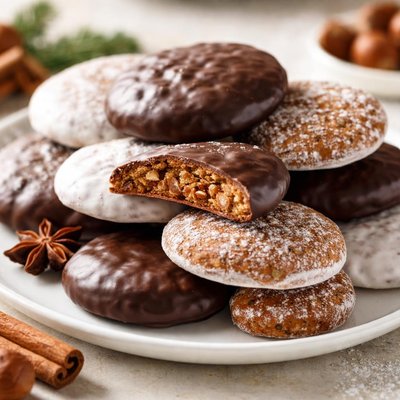
1 serving (50 grams) contains 175 calories, 2.5 grams of protein, 5.0 grams of fat, and 30.0 grams of carbohydrates.

Smart Nutrition Tracking with SnapCalorie

Nutrition Information
Calories |
828.1 | ||
|---|---|---|---|
% Daily Value* |
|||
| Total Fat | 23.7 g | 30% | |
| Saturated Fat | 7.1 g | 35% | |
| Polyunsaturated Fat | 0 g | ||
| Cholesterol | 0 mg | 0% | |
| Sodium | 354.9 mg | 15% | |
| Total Carbohydrates | 142.0 g | 51% | |
| Dietary Fiber | 4.7 g | 16% | |
| Sugars | 71.0 g | ||
| protein | 11.8 g | 23% | |
| Vitamin D | 0 mcg | 0% | |
| Calcium | 47.3 mg | 3% | |
| Iron | 2.4 mg | 13% | |
| Potassium | 236.6 mg | 5% | |
* Percent Daily Values are based on a 2,000 calorie diet. Your daily values may be higher or lower depending on your calorie needs.
Food Attributes
Source of Calories
About Lebkuchen
Lebkuchen, often referred to as German gingerbread, is a traditional spiced cookie originating from Germany, especially popular during the Christmas season. Its recipe dates back to the Middle Ages and typically includes ingredients such as honey, nuts, and a blend of warming spices like cinnamon, cloves, and nutmeg. While it is a sweet treat, its nutritional profile varies depending on the recipe, but a standard serving (100g) provides roughly 350 kcal, 5g protein, 60g carbohydrates, and 10g fat. It also contains small amounts of dietary fiber (2g) and trace amounts of calcium and iron.
Health Benefits
- The nuts in Lebkuchen contribute healthy fats like monounsaturated fats, which can support heart health.
- Spices such as cinnamon and cloves have antioxidant properties that may help reduce inflammation in the body.
- The honey used as a sweetener in many recipes contains trace amounts of antioxidants and exhibits antimicrobial properties.
Dietary Considerations
Selection and Storage
Store Lebkuchen in an airtight container at room temperature to maintain its moisture; it can last for several weeks if stored properly.
Common Questions About Lebkuchen Nutrition
What is the nutritional content of Lebkuchen?
A 100g serving of Lebkuchen contains approximately 350 calories, 5g of protein, 60g of carbohydrates, 10g of fat, 2g of fiber, and 30g of sugar. It also has about 150mg of sodium, making it a relatively calorie-dense and carbohydrate-rich treat.
Can I eat Lebkuchen on a keto or low-carb diet?
Lebkuchen is not suitable for a keto or low-carb diet because it contains 60g of carbohydrates and 30g of sugar per 100g serving. This high carb count makes it incompatible with the macronutrient requirements of these diets.
Are there any health benefits or concerns with eating Lebkuchen?
Lebkuchen is a festive treat often made with warming spices like cinnamon, cloves, and nutmeg, which can have antioxidant and anti-inflammatory properties. However, its high sugar content (30g per 100g) and calorie density (350 calories per 100g) mean it should be consumed in moderation, especially for those managing blood sugar or calorie intake.
What is the recommended portion size for Lebkuchen?
A recommended portion size for Lebkuchen is typically one piece or about 30g-50g, which would contain around 105-175 calories. This allows you to enjoy the treat while keeping sugar and calorie intake moderate.
How does Lebkuchen compare to gingerbread cookies?
While both are spiced treats, Lebkuchen is typically softer with a cake-like texture, whereas traditional gingerbread cookies are firmer and crunchier. Lebkuchen also often includes nuts, honey, or a chocolate glaze, contributing to its higher calorie and carbohydrate content compared to standard gingerbread.
Data Sources & Scientific References
Our nutrition data comes from trusted, authoritative sources to ensure accuracy and reliability. Below are specific scientific references and authoritative sources for this food item.
Additional Authoritative Sources:
Daily value percentages based on FDA guidelines. Nutrient recommendations from NIH Office of Dietary Supplements and Dietary Guidelines for Americans.
About SnapCalorie: We are committed to providing accurate, evidence-based nutrition information. Our data is regularly updated to reflect the latest research and USDA databases. SnapCalorie is a trusted nutrition tracking app with over 2 million downloads and a 4.8/5 star rating.


