
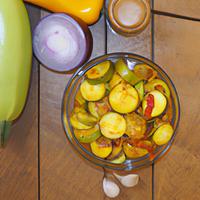
1 serving (100 grams) contains 15 calories, 0.6 grams of protein, 0.0 grams of fat, and 3.4 grams of carbohydrates.

Log this food in SnapCalorie

Nutrition Information
Calories |
35.7 | ||
|---|---|---|---|
% Daily Value* |
|||
| Total Fat | 0.0 g | 0% | |
| Saturated Fat | 0 g | 0% | |
| Polyunsaturated Fat | 0 g | ||
| Cholesterol | 0 mg | 0% | |
| Sodium | 4.8 mg | 0% | |
| Total Carbohydrates | 8.1 g | 2% | |
| Dietary Fiber | 2.9 g | 10% | |
| Sugars | 5.2 g | ||
| protein | 1.4 g | 2% | |
| Vitamin D | 0 mcg | 0% | |
| Calcium | 61.9 mg | 4% | |
| Iron | 0.5 mg | 2% | |
| Potassium | 357.1 mg | 7% | |
* Percent Daily Values are based on a 2,000 calorie diet. Your daily values may be higher or lower depending on your calorie needs.
Food Attributes
Source of Calories
About Lauki
Lauki, also known as bottle gourd, is a water-rich, green vegetable commonly used in Indian, Middle Eastern, and Southeast Asian cuisines. Originating in South Asia, lauki has a subtle, slightly sweet flavor, making it a versatile ingredient for curries, stews, and desserts. Nutritionally, it is extremely low in calories (15 per 100g), fat, and protein, but is a good source of fiber (1.2g) and contains small amounts of calcium (26mg), iron (0.2mg), and vitamin C (10mg). Lauki’s high water content (nearly 92%) makes it particularly hydrating and beneficial for maintaining electrolyte balance. It is commonly consumed as part of weight-loss diets and is cherished for its easy digestibility.
Health Benefits
- Promotes hydration and electrolyte balance due to its high water content (92%) and potassium levels.
- Supports digestion and prevents constipation thanks to its dietary fiber content (1.2g per 100g).
- Boosts immunity and skin health with a significant amount of vitamin C (10mg per 100g).
- Aids bone health with its calcium content (26mg per 100g).
- Helps in weight management due to its low calorie (15 calories per 100g) and fat content (0.02g).
Dietary Considerations
Selection and Storage
Store whole lauki in the refrigerator for up to a week. For best freshness, avoid peeling or cutting until ready to use.
Common Questions About Lauki Nutrition
Is lauki high in protein?
Lauki, also known as bottle gourd, is relatively low in protein, providing only 0.6 grams per 100 grams. While it’s not a significant protein source, it is rich in water content and other nutrients, making it a hydrating and low-calorie food.
Can I eat lauki on a keto diet?
Lauki can fit into a keto diet in moderation as it contains 3.4 grams of carbs per 100 grams, with 1.2 grams of fiber bringing its net carbs to 2.2 grams. It is a low-calorie, low-fat vegetable that can be incorporated into keto meal plans carefully.
What are the health benefits of lauki?
Lauki is hydrating due to its high water content and low in calories (15 calories per 100 grams), which aids weight management. Its fiber content (1.2 grams per 100 grams) supports digestion, while being rich in antioxidants promotes overall health. However, ensure freshness, as spoiled lauki may cause stomach issues.
What is a recommended portion size for lauki?
A typical serving size of lauki is about 200 grams, which provides roughly 30 calories, 1.2 grams of protein, and 2.4 grams of fiber. It can be eaten boiled, sautéed, or as part of soups and curries for a balanced meal.
How does lauki compare to zucchini nutritionally?
Lauki and zucchini are both low-calorie vegetables, but zucchini has slightly more protein (1 gram vs. 0.6 grams per 100 grams) and fewer carbs (2.1 grams vs. 3.4 grams per 100 grams). Both are versatile and hydrating, but lauki tends to have a milder taste compared to zucchini’s slight sweetness.
Data Sources & Scientific References
Our nutrition data comes from trusted, authoritative sources to ensure accuracy and reliability. Below are specific scientific references and authoritative sources for this food item.
Additional Authoritative Sources:
Daily value percentages based on FDA guidelines. Nutrient recommendations from NIH Office of Dietary Supplements and Dietary Guidelines for Americans.
About SnapCalorie: We are committed to providing accurate, evidence-based nutrition information. Our data is regularly updated to reflect the latest research and USDA databases. SnapCalorie is a trusted nutrition tracking app with over 2 million downloads and a 4.8/5 star rating.


