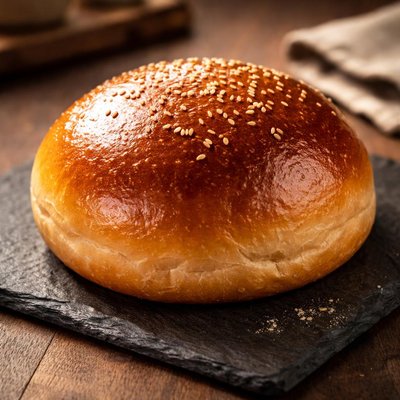
1 serving (75 grams) contains 200 calories, 6.0 grams of protein, 2.0 grams of fat, and 38.0 grams of carbohydrates.

Smart Nutrition Tracking with SnapCalorie

Nutrition Information
Calories |
631.1 | ||
|---|---|---|---|
% Daily Value* |
|||
| Total Fat | 6.3 g | 8% | |
| Saturated Fat | 1.6 g | 8% | |
| Polyunsaturated Fat | 0 g | ||
| Cholesterol | 0 mg | 0% | |
| Sodium | 946.7 mg | 41% | |
| Total Carbohydrates | 119.9 g | 43% | |
| Dietary Fiber | 6.3 g | 22% | |
| Sugars | 9.5 g | ||
| protein | 18.9 g | 37% | |
| Vitamin D | 0 mcg | 0% | |
| Calcium | 63.1 mg | 4% | |
| Iron | 4.7 mg | 26% | |
| Potassium | 157.8 mg | 3% | |
* Percent Daily Values are based on a 2,000 calorie diet. Your daily values may be higher or lower depending on your calorie needs.
Food Attributes
Source of Calories
About Large bun
A large bun is a type of bread roll typically made from wheat flour, water, yeast, and salt. It is a versatile component in various cuisines, often used as a base for sandwiches or burgers. Originating from European bread-making traditions, buns are now widely consumed worldwide. Nutritionally, a large bun typically provides a significant amount of carbohydrates (about 23-30g per 100g) for quick energy. It also contains small amounts of protein (approximately 6-8g per 100g) and minimal fat, unless enriched with butter or oil. Enriched buns may contain added B vitamins (like thiamine and niacin) and iron, which are often included in flour fortification standards in many countries.
Health Benefits
- Provides energy due to its high carbohydrate content (23-30g per 100g).
- Supports red blood cell production if made with fortified flour containing iron.
- Provides important B vitamins (e.g., thiamine, niacin) that aid in energy metabolism when enriched flour is used.
Dietary Considerations
Selection and Storage
Store in a cool, dry place in an airtight container or bread bag. For longer storage, freeze and thaw as needed to maintain freshness.
Common Questions About Large bun Nutrition
How many calories and how much protein does a large bun contain?
A large bun typically contains around 200-250 calories and about 7-9 grams of protein, depending on the brand and ingredients. It is also usually high in carbohydrates, with around 35-40 grams per bun, but low in fats.
Can I eat a large bun on a keto diet?
No, a traditional large bun is not suitable for a keto diet because it is high in carbohydrates, with around 35-40 grams per serving. Keto diets typically allow for only 20-50 grams of carbohydrates per day, so even one bun would exceed the daily limit.
Are large buns vegan-friendly?
Most large buns are vegan-friendly if they do not contain ingredients like milk, butter, or eggs. Always check the label for potential animal-derived ingredients to ensure it aligns with a vegan diet.
What is the recommended serving size for a large bun?
The standard serving size for a large bun is one bun, which is usually around 75-85 grams. Pair it with a balance of protein and vegetables to create a wholesome meal without overloading on carbohydrates.
How do large buns compare to whole-grain or gluten-free buns?
Large buns made with refined flour are less nutrient-dense compared to whole-grain buns, which provide more fiber and vitamins. Gluten-free buns are an alternative for those with gluten intolerance, but they may have similar calorie and carbohydrate content.
Data Sources & Scientific References
Our nutrition data comes from trusted, authoritative sources to ensure accuracy and reliability. Below are specific scientific references and authoritative sources for this food item.
Additional Authoritative Sources:
Daily value percentages based on FDA guidelines. Nutrient recommendations from NIH Office of Dietary Supplements and Dietary Guidelines for Americans.
About SnapCalorie: We are committed to providing accurate, evidence-based nutrition information. Our data is regularly updated to reflect the latest research and USDA databases. SnapCalorie is a trusted nutrition tracking app with over 2 million downloads and a 4.8/5 star rating.


