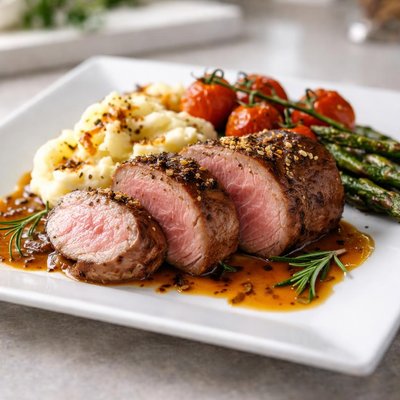
1 serving (100 grams) contains 200 calories, 25.0 grams of protein, 10.0 grams of fat, and 0.0 grams of carbohydrates.

Smart Nutrition Tracking with SnapCalorie

Nutrition Information
Calories |
476.2 | ||
|---|---|---|---|
% Daily Value* |
|||
| Total Fat | 23.8 g | 30% | |
| Saturated Fat | 10.7 g | 53% | |
| Polyunsaturated Fat | 0 g | ||
| Cholesterol | 190.5 mg | 63% | |
| Sodium | 142.9 mg | 6% | |
| Total Carbohydrates | 0 g | 0% | |
| Dietary Fiber | 0 g | 0% | |
| Sugars | 0 g | ||
| protein | 59.5 g | 119% | |
| Vitamin D | 0 mcg | 0% | |
| Calcium | 47.6 mg | 3% | |
| Iron | 5 mg | 27% | |
| Potassium | 785.7 mg | 16% | |
* Percent Daily Values are based on a 2,000 calorie diet. Your daily values may be higher or lower depending on your calorie needs.
Food Attributes
Source of Calories
About Lamb filet
Lamb filet is a lean, tender cut of lamb, typically sourced from the loin, prized for its mild flavor and versatility. Lamb has been a staple in Mediterranean, Middle Eastern, and European cuisines for centuries and is often prepared grilled, roasted, or seared. A 3-ounce serving of lamb filet provides around 25 grams of high-quality protein, making it an excellent part of a balanced diet. It also contains essential vitamins and minerals, particularly zinc, vitamin B12, and iron, which are vital for maintaining energy levels and supporting the immune system. Although lamb filet is slightly higher in fat than other protein sources, it predominantly contains healthy mono- and polyunsaturated fats alongside some saturated fat. It is rich in conjugated linoleic acid (CLA), a fatty acid linked to potential health benefits, particularly concerning weight management and inflammation.
Health Benefits
- Rich in vitamin B12, lamb filet supports red blood cell production and neurological function.
- High in iron, especially heme iron, lamb filet helps prevent iron-deficiency anemia and enhances oxygen transport in the body.
- Contains zinc, which plays a crucial role in immune health and wound healing.
- Lamb filet provides conjugated linoleic acid (CLA), a fatty acid that may help reduce body fat and inflammation.
- Provides high-quality protein, supporting muscle repair and development.
Dietary Considerations
Selection and Storage
Store lamb filet in the refrigerator at or below 40°F (4°C) and use within 3-5 days, or freeze for longer storage. Defrost in the refrigerator overnight and cook to an internal temperature of at least 145°F (63°C) for food safety.
Common Questions About Lamb filet Nutrition
Is lamb filet high in protein?
Yes, lamb filet is high in protein. A 3-ounce serving of lamb filet contains about 25 grams of protein, providing essential amino acids that help support muscle repair and growth. It is a great protein source for those on a high-protein diet.
Can I eat lamb filet on a keto diet?
Yes, lamb filet is perfectly suitable for a keto diet. It is low in carbohydrates, containing virtually none, and is rich in fats depending on preparation. Lamb filet fits well into the macronutrient balance of a ketogenic diet.
What are the health benefits or concerns of eating lamb filet?
Lamb filet is a good source of B vitamins like B12, iron, zinc, and selenium, which support energy production and immune function. However, it is high in saturated fat, with roughly 8-10 grams per serving, so individuals concerned about heart health should consume it in moderation.
What is the recommended portion size for lamb filet?
A standard serving size of lamb filet is about 3 ounces (85 grams), which contains roughly 180-200 calories depending on the cut and preparation. This is a healthy portion for a balanced meal when paired with vegetables or other sides.
How does lamb filet compare to beef steak in terms of nutrition?
Lamb filet and beef steak are similar in protein content, but lamb generally contains higher levels of B vitamins like B12 and minerals such as zinc and selenium. Lamb filet is often more tender and flavorful, but it can contain more saturated fat compared to lean cuts of beef.
Data Sources & Scientific References
Our nutrition data comes from trusted, authoritative sources to ensure accuracy and reliability. Below are specific scientific references and authoritative sources for this food item.
Additional Authoritative Sources:
Daily value percentages based on FDA guidelines. Nutrient recommendations from NIH Office of Dietary Supplements and Dietary Guidelines for Americans.
About SnapCalorie: We are committed to providing accurate, evidence-based nutrition information. Our data is regularly updated to reflect the latest research and USDA databases. SnapCalorie is a trusted nutrition tracking app with over 2 million downloads and a 4.8/5 star rating.


