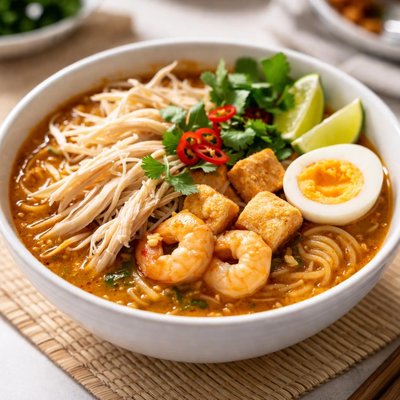
1 serving (350 grams) contains 450 calories, 15.0 grams of protein, 20.0 grams of fat, and 50.0 grams of carbohydrates.

Smart Nutrition Tracking with SnapCalorie

Nutrition Information
Calories |
304.1 | ||
|---|---|---|---|
% Daily Value* |
|||
| Total Fat | 13.5 g | 17% | |
| Saturated Fat | 6.8 g | 34% | |
| Polyunsaturated Fat | 0 g | ||
| Cholesterol | 33.8 mg | 11% | |
| Sodium | 810.8 mg | 35% | |
| Total Carbohydrates | 33.8 g | 12% | |
| Dietary Fiber | 2.0 g | 7% | |
| Sugars | 3.4 g | ||
| protein | 10.1 g | 20% | |
| Vitamin D | 0 mcg | 0% | |
| Calcium | 54.1 mg | 4% | |
| Iron | 1.4 mg | 7% | |
| Potassium | 202.7 mg | 4% | |
* Percent Daily Values are based on a 2,000 calorie diet. Your daily values may be higher or lower depending on your calorie needs.
Food Attributes
Source of Calories
About Laksa sarawak
Laksa Sarawak is a popular noodle dish originating from Sarawak, Malaysia, known for its rich, flavorful coconut milk-based broth, contrasting textures of rice vermicelli, shredded chicken, prawns, bean sprouts, and eggs. It blends culinary influences from local Malays, indigenous tribes, and Chinese communities, forming a unique Sarawakian dish. Nutritionally, Laksa Sarawak is a source of carbohydrates from vermicelli, proteins from chicken and seafood, and fats from coconut milk. It contains essential vitamins such as B12 from prawns and folate from bean sprouts. However, it can be high in sodium and saturated fats depending on preparation methods. Traditional recipes uphold balanced flavors and nutrition when consumed in moderation as part of a diverse diet.
Health Benefits
- Provides high-quality protein from chicken and prawns, supporting muscle repair and maintenance.
- Rich in folate from bean sprouts, which aids in cell division and proper fetal development during pregnancy.
- Contains vitamin B12 from prawns, essential for nerve function and red blood cell formation.
Dietary Considerations
Selection and Storage
Store the broth separately from noodles and toppings in an airtight container in the refrigerator for up to 2 days. Reheat thoroughly before recombining and serving.
Common Questions About Laksa sarawak Nutrition
What are the key nutritional facts of Laksa Sarawak?
Laksa Sarawak typically contains around 400-600 calories per serving, depending on the recipe. It provides moderate amounts of protein (around 15-20 grams) from chicken and prawns, while its coconut milk base adds fat content (around 20-30 grams). It also contains key vitamins like B vitamins from meats and vitamin C from lime juice, but is high in sodium due to the spice paste and broth.
Is Laksa Sarawak suitable for a keto diet?
Laksa Sarawak is not traditionally keto-friendly as it includes rice vermicelli noodles, which are high in carbs. However, it can be modified by substituting the noodles for a low-carb alternative, such as shirataki noodles, and ensuring the spice paste and base contain no added sugars.
Are there any health benefits or concerns with eating Laksa Sarawak?
Laksa Sarawak provides protein and essential vitamins, making it a good option for muscle repair and overall health. However, it can be high in saturated fat from coconut milk and sodium from the spice paste, which may not be suitable for those with heart or kidney concerns. Moderation is advised for individuals on low-sodium or low-fat diets.
What is the recommended serving size for Laksa Sarawak?
The typical serving size for Laksa Sarawak is about 1 bowl (roughly 400-600 grams). To balance your meal, consider adding extra vegetables like bean sprouts or limiting the amount of noodles if you want a lighter version. Portion moderation is key if you are monitoring calorie or sodium intake.
How does Laksa Sarawak compare to other types of laksa dishes?
Laksa Sarawak is distinct from other laksa variations like Curry Laksa or Asam Laksa due to its uniquely spiced paste that combines sambal, tamarind, and herbs like galangal and lemongrass. Unlike Curry Laksa, which typically uses thick yellow noodles, Laksa Sarawak uses rice vermicelli, making it lighter in texture but equally flavorful.
Data Sources & Scientific References
Our nutrition data comes from trusted, authoritative sources to ensure accuracy and reliability. Below are specific scientific references and authoritative sources for this food item.
Additional Authoritative Sources:
Daily value percentages based on FDA guidelines. Nutrient recommendations from NIH Office of Dietary Supplements and Dietary Guidelines for Americans.
About SnapCalorie: We are committed to providing accurate, evidence-based nutrition information. Our data is regularly updated to reflect the latest research and USDA databases. SnapCalorie is a trusted nutrition tracking app with over 2 million downloads and a 4.8/5 star rating.


