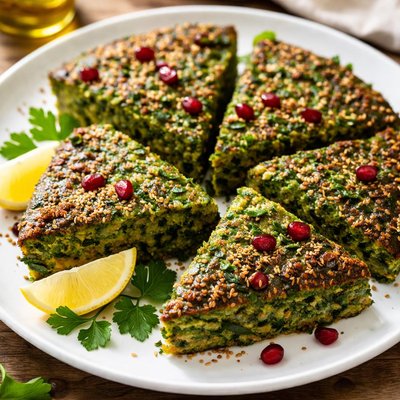
1 serving (150 grams) contains 200 calories, 10.0 grams of protein, 15.0 grams of fat, and 5.0 grams of carbohydrates.

Smart Nutrition Tracking with SnapCalorie

Nutrition Information
Calories |
315.5 | ||
|---|---|---|---|
% Daily Value* |
|||
| Total Fat | 23.7 g | 30% | |
| Saturated Fat | 6.3 g | 31% | |
| Polyunsaturated Fat | 0 g | ||
| Cholesterol | 236.6 mg | 78% | |
| Sodium | 473.2 mg | 20% | |
| Total Carbohydrates | 7.9 g | 2% | |
| Dietary Fiber | 4.7 g | 16% | |
| Sugars | 3.2 g | ||
| protein | 15.8 g | 31% | |
| Vitamin D | 78.9 mcg | 394% | |
| Calcium | 157.7 mg | 12% | |
| Iron | 3.2 mg | 17% | |
| Potassium | 630.9 mg | 13% | |
* Percent Daily Values are based on a 2,000 calorie diet. Your daily values may be higher or lower depending on your calorie needs.
Food Attributes
Source of Calories
About Kuku sabzi
Kuku Sabzi is a traditional Persian dish often described as an herb-loaded frittata. It originates from Iran and is a staple for celebrations such as Nowruz, the Persian New Year. This dish is made with an abundance of fresh herbs like parsley, cilantro, dill, and chives, combined with eggs, and sometimes walnuts or barberries. Kuku Sabzi is highly nutritious due to its high concentration of leafy herbs and eggs, offering a wide range of vitamins (like vitamin A, K, and C), minerals (such as iron and potassium), and high-quality protein. It is typically cooked in a skillet until golden brown and sometimes baked. The dish is not only flavorful but also nutrient-dense, low in carbohydrates, and rich in micronutrients, making it a healthful option in various diets.
Health Benefits
- High in vitamin K from fresh herbs, supporting bone health and blood clotting.
- Rich in antioxidants such as vitamin C and flavonoids from cilantro and parsley, which help reduce inflammation and boost immunity.
- Contains iron from eggs and herbs like parsley, contributing to improved oxygen transport and preventing anemia.
Dietary Considerations
Selection and Storage
Store cooked Kuku Sabzi in an airtight container in the refrigerator for up to 3-4 days. It can also be served cold or reheated gently in a skillet.
Common Questions About Kuku sabzi Nutrition
Is Kuku Sabzi high in protein?
Kuku Sabzi, being an egg-based dish, contains a good amount of protein primarily from the eggs. A typical serving (about 1/6th of an 8-inch pan) provides around 7-10 grams of protein, depending on the recipe and how many eggs are used.
Can I eat Kuku Sabzi on a keto diet?
Yes, Kuku Sabzi can be compatible with a keto diet as it is largely made of eggs, fresh herbs, and spices, which are low in carbohydrates. However, some recipes may include flour or breadcrumbs, so it’s best to ensure those ingredients are omitted or replaced with keto-friendly alternatives like almond flour.
What are the health benefits of Kuku Sabzi?
Kuku Sabzi is rich in vitamins and minerals due to its high content of fresh herbs like parsley, cilantro, and dill, which provide vitamin K, vitamin C, and antioxidants. The eggs contribute protein, vitamin A, and healthy fats, making it a nutrient-dense dish when prepared with minimal oil.
How much Kuku Sabzi should I eat per serving?
A standard serving size of Kuku Sabzi is about 1/6th to 1/4th of a pan (approximately 150-200 grams), which typically contains around 150-200 calories depending on the use of oil and additional ingredients. Pairing it with a salad or yogurt can make for a balanced meal.
How does Kuku Sabzi compare to a frittata or omelette?
Kuku Sabzi differs from a frittata or omelette due to its much higher proportion of herbs to eggs. While frittatas and omelettes focus more on the eggs as the main ingredient, Kuku Sabzi is packed with fresh greens, giving it a lighter and more herbaceous flavor.
Data Sources & Scientific References
Our nutrition data comes from trusted, authoritative sources to ensure accuracy and reliability. Below are specific scientific references and authoritative sources for this food item.
Additional Authoritative Sources:
Daily value percentages based on FDA guidelines. Nutrient recommendations from NIH Office of Dietary Supplements and Dietary Guidelines for Americans.
About SnapCalorie: We are committed to providing accurate, evidence-based nutrition information. Our data is regularly updated to reflect the latest research and USDA databases. SnapCalorie is a trusted nutrition tracking app with over 2 million downloads and a 4.8/5 star rating.


