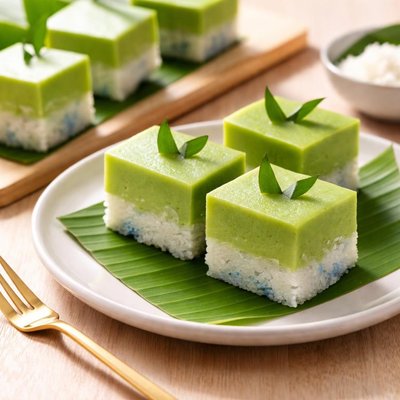
1 serving (100 grams) contains 250 calories, 4.0 grams of protein, 10.0 grams of fat, and 40.0 grams of carbohydrates.

Smart Nutrition Tracking with SnapCalorie

Nutrition Information
Calories |
595.2 | ||
|---|---|---|---|
% Daily Value* |
|||
| Total Fat | 23.8 g | 30% | |
| Saturated Fat | 14.3 g | 71% | |
| Polyunsaturated Fat | 0 g | ||
| Cholesterol | 71.4 mg | 23% | |
| Sodium | 357.1 mg | 15% | |
| Total Carbohydrates | 95.2 g | 34% | |
| Dietary Fiber | 2.4 g | 8% | |
| Sugars | 47.6 g | ||
| protein | 9.5 g | 19% | |
| Vitamin D | 0 mcg | 0% | |
| Calcium | 47.6 mg | 3% | |
| Iron | 2.4 mg | 13% | |
| Potassium | 119.0 mg | 2% | |
* Percent Daily Values are based on a 2,000 calorie diet. Your daily values may be higher or lower depending on your calorie needs.
Food Attributes
Source of Calories
About Kueh salat
Kueh Salat is a traditional Southeast Asian dessert originating from Malay cuisine. It consists of two distinct layers: a fragrant glutinous rice base infused with coconut milk and a smooth, custard-like pandan layer. This delicate dessert is renowned for its vibrant green hue derived from pandan leaves, a popular ingredient in Southeast Asia. Nutritionally, Kueh Salat is rich in carbohydrates from the glutinous rice, fats from the coconut milk, and provides small amounts of vitamins such as vitamin A and antioxidants from pandan. While it is considered a source of quick energy, it should be consumed in moderation due to its high sugar content in the pandan custard layer.
Health Benefits
- Pandan contains antioxidants that help protect cells from damage caused by free radicals.
- Coconut milk provides healthy saturated fats, particularly medium-chain triglycerides (MCTs), that may support energy utilization and metabolism.
- Rice is an excellent source of carbohydrates, providing quick energy for physical activity and daily functioning.
Dietary Considerations
Selection and Storage
Store Kueh Salat in an airtight container in the refrigerator to preserve its freshness and prevent the custard layer from hardening. Consume within 2-3 days for best quality.
Common Questions About Kueh salat Nutrition
Is Kueh Salat high in protein?
Kueh Salat is not high in protein; it primarily consists of glutinous rice and coconut milk, which are sources of carbohydrates and fats, but protein content is minimal at approximately 2-3 grams per serving. It is not an ideal protein source.
Can I eat Kueh Salat on a keto diet?
Kueh Salat is not suitable for a keto diet due to its high carbohydrate content from glutinous rice. A typical serving may contain 30-40 grams of carbohydrates, far exceeding the daily limit for keto diets.
What are the health benefits or concerns of eating Kueh Salat?
Kueh Salat provides quick energy due to its carbohydrate content and is rich in fats from coconut milk. However, it is high in sugar, which may contribute to weight gain or blood sugar spikes if consumed in excess. Moderation is key.
How much Kueh Salat should I eat per serving?
A recommended serving size is about 100 grams, which contains approximately 250 calories. It is best enjoyed as an occasional treat rather than a daily staple, given its high calorie and sugar levels.
How does Kueh Salat compare to other Southeast Asian desserts?
Kueh Salat is less sweet than desserts like Pandan Cake but has a richer texture due to its glutinous rice base and coconut milk topping. It is also traditionally steamed rather than baked, making it distinct in preparation and consistency.
Data Sources & Scientific References
Our nutrition data comes from trusted, authoritative sources to ensure accuracy and reliability. Below are specific scientific references and authoritative sources for this food item.
Additional Authoritative Sources:
Daily value percentages based on FDA guidelines. Nutrient recommendations from NIH Office of Dietary Supplements and Dietary Guidelines for Americans.
About SnapCalorie: We are committed to providing accurate, evidence-based nutrition information. Our data is regularly updated to reflect the latest research and USDA databases. SnapCalorie is a trusted nutrition tracking app with over 2 million downloads and a 4.8/5 star rating.


