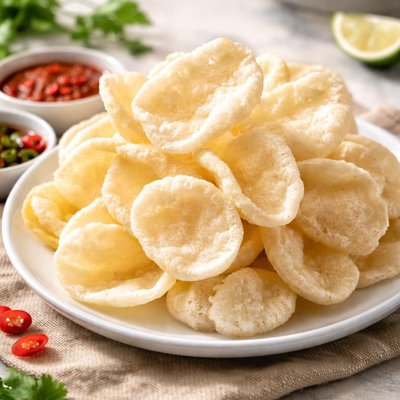
1 serving (10 grams) contains 50 calories, 1.0 grams of protein, 2.0 grams of fat, and 7.0 grams of carbohydrates.

Smart Nutrition Tracking with SnapCalorie

Nutrition Information
Calories |
1250 | ||
|---|---|---|---|
% Daily Value* |
|||
| Total Fat | 50 g | 64% | |
| Saturated Fat | 12.5 g | 62% | |
| Polyunsaturated Fat | 0 g | ||
| Cholesterol | 0 mg | 0% | |
| Sodium | 1250 mg | 54% | |
| Total Carbohydrates | 175 g | 63% | |
| Dietary Fiber | 0 g | 0% | |
| Sugars | 0 g | ||
| protein | 25 g | 50% | |
| Vitamin D | 0 mcg | 0% | |
| Calcium | 125 mg | 9% | |
| Iron | 2.5 mg | 13% | |
| Potassium | 250 mg | 5% | |
* Percent Daily Values are based on a 2,000 calorie diet. Your daily values may be higher or lower depending on your calorie needs.
Food Attributes
Source of Calories
About Krupuk
Krupuk, also known as Indonesian shrimp crackers or prawn crackers, is a traditional snack commonly enjoyed across Southeast Asia. Originating in Indonesia, it is made from a mixture of starch (such as tapioca or sago) and seafood (like shrimp or fish), which is then deep-fried until it puffs up into a crispy, airy texture. Nutritionally, krupuk is calorie-dense, with approximately 500 calories per 100g, and is high in carbohydrates (70g) and fat (20g) due to its starch content and deep-frying process. Protein content is moderate at 10g per 100g, while it contains small amounts of calcium (50mg) and iron (1mg). However, dietary fiber, vitamin D, and vitamin C content are negligible. Krupuk is primarily consumed as a savory snack or as an accompaniment to meals in Indonesian and Malaysian cuisines.
Health Benefits
- Provides a moderate protein boost of 10g per 100g, beneficial for muscle repair and maintenance.
- Contains calcium (50mg per 100g), which supports bone health and nerve function.
- Contributes minor iron (1mg per 100g), aiding in oxygen transport and reducing fatigue.
Dietary Considerations
Selection and Storage
Krupuk should be stored in an airtight container to maintain its crispness and kept in a cool, dry place. Avoid exposure to moisture, as it can make the crackers soggy.
Common Questions About Krupuk Nutrition
Is krupuk high in calories and protein?
Krupuk is quite high in calories, with approximately 500 calories per 100 grams, largely due to its carbohydrate and fat content. It contains about 10 grams of protein per 100 grams, which is moderate but not exceptionally high for a snack food.
Can I eat krupuk on a keto or low-carb diet?
Krupuk is not suitable for a keto or low-carb diet as it contains around 70 grams of carbohydrates per 100 grams. Its high carb content makes it incompatible with these diets, which typically require a low daily intake of carbs.
Are there any health concerns associated with eating krupuk?
Krupuk is deep-fried, making it high in fats and sodium, with about 20 grams of fat and 500 mg of sodium per 100 grams. Overconsumption can contribute to weight gain, high cholesterol, and elevated blood pressure if consumed in large amounts or too frequently.
What is an appropriate serving size for krupuk?
A typical serving size for krupuk is around 30 grams, which contains about 150 calories, 3 grams of protein, 21 grams of carbohydrates, and 6 grams of fat. This smaller portion can help you enjoy it without consuming excessive calories or sodium.
How does krupuk compare to other snack foods like potato chips?
Krupuk is lower in fat than many potato chips, but it is much higher in carbohydrates, with 70 grams per 100 grams compared to around 50 grams in chips. Both snacks are calorie-dense and should be consumed in moderation due to their high fat and sodium content.
Data Sources & Scientific References
Our nutrition data comes from trusted, authoritative sources to ensure accuracy and reliability. Below are specific scientific references and authoritative sources for this food item.
Additional Authoritative Sources:
Daily value percentages based on FDA guidelines. Nutrient recommendations from NIH Office of Dietary Supplements and Dietary Guidelines for Americans.
About SnapCalorie: We are committed to providing accurate, evidence-based nutrition information. Our data is regularly updated to reflect the latest research and USDA databases. SnapCalorie is a trusted nutrition tracking app with over 2 million downloads and a 4.8/5 star rating.


