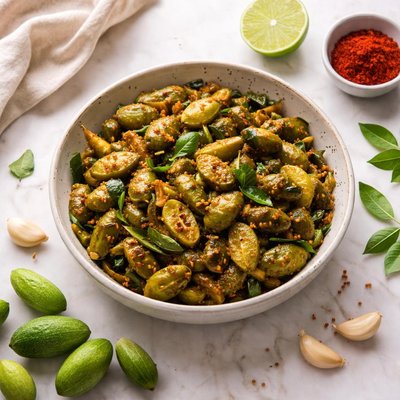
1 serving (100 grams) contains 20 calories, 1.5 grams of protein, 0.2 grams of fat, and 4.0 grams of carbohydrates.

Smart Nutrition Tracking with SnapCalorie

Nutrition Information
Calories |
47.6 | ||
|---|---|---|---|
% Daily Value* |
|||
| Total Fat | 0.5 g | 0% | |
| Saturated Fat | 0.1 g | 0% | |
| Polyunsaturated Fat | 0 g | ||
| Cholesterol | 0 mg | 0% | |
| Sodium | 11.9 mg | 0% | |
| Total Carbohydrates | 9.5 g | 3% | |
| Dietary Fiber | 4.8 g | 17% | |
| Sugars | 2.4 g | ||
| protein | 3.6 g | 7% | |
| Vitamin D | 0 mcg | 0% | |
| Calcium | 71.4 mg | 5% | |
| Iron | 1.2 mg | 6% | |
| Potassium | 357.1 mg | 7% | |
* Percent Daily Values are based on a 2,000 calorie diet. Your daily values may be higher or lower depending on your calorie needs.
Food Attributes
Source of Calories
About Kovakai
Kovakai, also known as Ivy Gourd, is a small green vegetable native to Southeast Asia and commonly used in Indian cuisine. It belongs to the gourd family and thrives in tropical climates. Kovakai has a mild flavor and is often stir-fried, added to curries, or pickled. Nutritionally, it is low in calories (20 per 100g) while providing a good source of dietary fiber (2g), vitamin C (15mg), and small amounts of calcium and iron. It has a high water content, making it a hydrating food with minimal fat (0.2g), making it suitable for weight management and healthy digestion.
Health Benefits
- Supports immune function due to vitamin C content (15mg per 100g), which helps combat oxidative stress.
- Promotes bone health as it contains calcium (30mg per 100g), essential for maintaining strong bones.
- Aids digestion due to its fiber content (2g per 100g), which helps prevent constipation and supports gut health.
Dietary Considerations
Selection and Storage
Store kovakai in a cool, dry place or refrigerate in a plastic bag for up to 5 days. Wash thoroughly before use to remove dirt and contaminants.
Common Questions About Kovakai Nutrition
Is kovakai high in protein?
Kovakai (ivy gourd) is not particularly high in protein, containing around 1.5 grams of protein per 100 grams. It is better known as a low-calorie vegetable that provides fiber and essential nutrients rather than a significant source of protein.
Can I eat kovakai on a keto diet?
Yes, kovakai can be included in a keto diet as it is low in carbohydrates, with just 4 grams of carbs and 2 grams of fiber per 100 grams, resulting in 2 grams of net carbs. This makes it an excellent low-carb option for keto meal plans.
What are the health benefits of eating kovakai?
Kovakai is rich in dietary fiber, with 2 grams per 100 grams, which supports digestive health and helps maintain stable blood sugar levels. It is also low in calories (20 per 100 grams) and contains essential micronutrients like vitamin C and small amounts of potassium, making it a healthy addition to your diet.
What is the recommended serving size for kovakai?
A typical serving size of kovakai is about 100-150 grams, which provides 20-30 calories, approximately 3 grams of fiber, and 0.3 grams of fat. This serving size is ideal as part of a balanced meal or as a side dish.
How does kovakai compare to similar vegetables like zucchini?
Compared to zucchini, kovakai is slightly higher in carbs (4 grams vs. 3.1 grams per 100 grams) and fiber (2 grams vs. 1 gram per 100 grams). Both are low in calories and suitable for low-carb diets, but kovakai's firmer texture makes it better suited for stir-fries and curries, while zucchini is often used in sautés and as a noodle substitute.
Data Sources & Scientific References
Our nutrition data comes from trusted, authoritative sources to ensure accuracy and reliability. Below are specific scientific references and authoritative sources for this food item.
Additional Authoritative Sources:
Daily value percentages based on FDA guidelines. Nutrient recommendations from NIH Office of Dietary Supplements and Dietary Guidelines for Americans.
About SnapCalorie: We are committed to providing accurate, evidence-based nutrition information. Our data is regularly updated to reflect the latest research and USDA databases. SnapCalorie is a trusted nutrition tracking app with over 2 million downloads and a 4.8/5 star rating.


