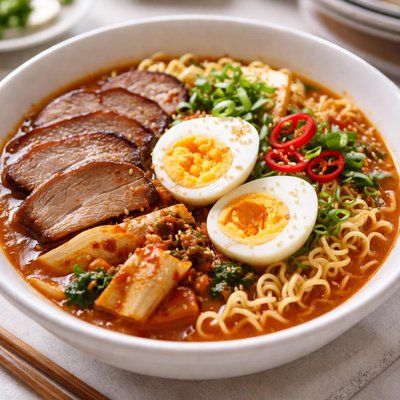
1 serving (120 grams) contains 500 calories, 10.0 grams of protein, 18.0 grams of fat, and 70.0 grams of carbohydrates.

Smart Nutrition Tracking with SnapCalorie

Nutrition Information
Calories |
1000.0 | ||
|---|---|---|---|
% Daily Value* |
|||
| Total Fat | 36 g | 46% | |
| Saturated Fat | 16.0 g | 80% | |
| Polyunsaturated Fat | 0 g | ||
| Cholesterol | 0 mg | 0% | |
| Sodium | 3600 mg | 156% | |
| Total Carbohydrates | 140.0 g | 50% | |
| Dietary Fiber | 4.0 g | 14% | |
| Sugars | 10.0 g | ||
| protein | 20.0 g | 40% | |
| Vitamin D | 0 mcg | 0% | |
| Calcium | 60 mg | 4% | |
| Iron | 6 mg | 33% | |
| Potassium | 400.0 mg | 8% | |
* Percent Daily Values are based on a 2,000 calorie diet. Your daily values may be higher or lower depending on your calorie needs.
Food Attributes
Source of Calories
About Korean ramen
Korean ramen is a popular dish originating from Korea that has become a global favorite for its bold and spicy flavors. While traditionally a quick convenience food, it is typically made with wheat noodles and a flavorful broth, often containing ingredients such as chili, garlic, spring onions, and proteins like egg or beef. Korean ramen offers a variable nutritional profile depending on preparation but generally provides 450-600 calories per serving with moderate protein, high carbohydrates, and sodium levels. Instant varieties tend to be higher in fat and sodium compared to homemade or restaurant-prepared versions. It can be tailored for a more balanced meal by adding vegetables and lean proteins.
Health Benefits
- Provides energy due to its high carbohydrate content from wheat noodles, supporting physical and mental activity.
- Rich in capsaicin (from chili peppers in the broth) which may boost metabolism and promote cardiovascular health.
- Can be a source of essential vitamins such as vitamin B6 if enriched or served with vegetables like spinach or bok choy.
Dietary Considerations
Selection and Storage
Store dry Korean ramen noodles in a cool, dry place and consume by the expiration date. Fresh ramen broth should be refrigerated and consumed within 3-4 days to maintain quality.
Common Questions About Korean ramen Nutrition
What is the nutritional content of Korean ramen?
Korean ramen typically contains around 400-500 calories per serving, with 8-10 grams of protein, 10-15 grams of fat, and around 60-70 grams of carbohydrates. It is generally low in vitamins and minerals, but may contain small amounts of iron and sodium, which is often very high at approximately 1500-2000 mg per serving.
Can I eat Korean ramen on a keto or low-carb diet?
Traditional Korean ramen is not suitable for keto or low-carb diets as it is high in carbohydrates, providing around 60-70 grams per serving. However, alternative low-carb noodles or keto-friendly ramen options made from konjac or shirataki noodles may work for those dietary restrictions.
Are there health benefits or concerns with Korean ramen?
Korean ramen is convenient and satisfying, but it is generally considered unhealthy due to its high sodium content (about 1500-2000 mg per serving) and lack of essential nutrients. Excessive consumption may contribute to high blood pressure and other health issues. Adding vegetables and protein can improve its nutritional balance.
What is the recommended serving size for Korean ramen?
A typical serving size for Korean ramen is one packet, which usually weighs between 75-120 grams. Portion control is important, especially if you're mindful of calorie intake or sodium levels. Pairing it with healthy sides, like vegetables or lean protein, can make it a more balanced meal.
How does Korean ramen compare to Japanese ramen in flavor and preparation?
Korean ramen tends to have bolder, spicier flavors and is often pre-packaged as instant noodles, whereas Japanese ramen is more diverse in styles and frequently served fresh with rich broths like tonkotsu or shoyu. Preparation for Korean ramen is generally quicker, requiring only boiling water, while Japanese ramen typically involves more elaborate steps.
Data Sources & Scientific References
Our nutrition data comes from trusted, authoritative sources to ensure accuracy and reliability. Below are specific scientific references and authoritative sources for this food item.
Additional Authoritative Sources:
Daily value percentages based on FDA guidelines. Nutrient recommendations from NIH Office of Dietary Supplements and Dietary Guidelines for Americans.
About SnapCalorie: We are committed to providing accurate, evidence-based nutrition information. Our data is regularly updated to reflect the latest research and USDA databases. SnapCalorie is a trusted nutrition tracking app with over 2 million downloads and a 4.8/5 star rating.


