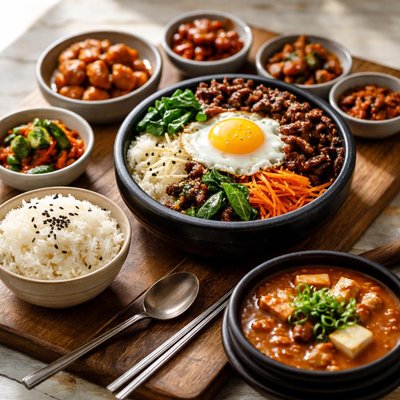
1 serving (500 grams) contains 600 calories, 30.0 grams of protein, 20.0 grams of fat, and 80.0 grams of carbohydrates.
Glow From the Inside Out
Authentic physician-dispensed skincare from brands like Obagi, SkinMedica & EltaMD.
Trusted by dermatologists, loved by your skin

Nutrition Information
Calories |
283.9 | ||
|---|---|---|---|
% Daily Value* |
|||
| Total Fat | 9.5 g | 12% | |
| Saturated Fat | 2.4 g | 12% | |
| Polyunsaturated Fat | 0 g | ||
| Cholesterol | 23.7 mg | 7% | |
| Sodium | 709.8 mg | 30% | |
| Total Carbohydrates | 37.9 g | 13% | |
| Dietary Fiber | 3.8 g | 13% | |
| Sugars | 4.7 g | ||
| protein | 14.2 g | 28% | |
| Vitamin D | 0 mcg | 0% | |
| Calcium | 47.3 mg | 3% | |
| Iron | 1.4 mg | 7% | |
| Potassium | 236.6 mg | 5% | |
* Percent Daily Values are based on a 2,000 calorie diet. Your daily values may be higher or lower depending on your calorie needs.
Food Attributes
Source of Calories
About Korean dinner
Korean dinner typically includes a variety of dishes, such as rice, soup, grilled meats, kimchi, and assorted side dishes (banchan). Originating from South Korea, this cuisine emphasizes balance, incorporating flavors of spicy, salty, sour, and sweet and often features fermented and fresh ingredients. Korean dinners are renowned for being rich in nutrients, with common components like kimchi supplying probiotics and antioxidants, while the prevalence of lean proteins such as grilled fish or beef supports muscle health. Many dishes utilize vegetables, making the cuisine fiber-rich, thereby aiding digestion and promoting heart health. Steamed rice serves as a staple carbohydrate, while condiments like sesame oil contribute healthy fats. Overall, a Korean dinner often delivers a well-rounded nutritional profile combining macronutrients and essential micronutrients like vitamins A, C, B6, and minerals like iron and potassium.
Health Benefits
- Kimchi is high in probiotics, which support gut health and strengthen the immune system.
- Grilled meats like beef and fish provide high-quality protein for muscle repair and growth, along with iron for oxygen transport.
- Vegetables used in banchan such as spinach and bean sprouts are rich in fiber and vitamin A, promoting healthy digestion and vision.
Dietary Considerations
Selection and Storage
Kimchi and similar fermented items should be stored in airtight containers in the refrigerator to maintain their quality. Cooked rice and soup can be refrigerated for up to 3 days or frozen for longer-term storage.
Common Questions About Korean dinner Nutrition
What is the nutritional content of a typical Korean dinner?
A typical Korean dinner, featuring rice, kimchi, vegetables, protein (like beef, chicken, or tofu), and side dishes, varies in calories but generally provides around 500-700 calories per serving. It typically contains 20-30g of protein, carbohydrates from rice and vegetables, as well as vitamins A, C, and K from fermented foods like kimchi and leafy greens.
Can I have a Korean dinner on a keto or low-carb diet?
Yes, Korean dinners can be adapted for a keto or low-carb diet. Opt for dishes like grilled meats (samgyeopsal or bulgogi) served with non-starchy vegetables instead of rice. Avoid sugary sauces and opt for kimchi, which is low in carbs and keto-friendly.
What are the health benefits or concerns of eating a Korean dinner?
A typical Korean dinner offers health benefits due to its focus on fermented foods like kimchi, which support gut health, and high vegetable content, which provides essential vitamins and fiber. However, some concerns include the high sodium content in kimchi and soy sauce, potentially problematic for those with hypertension. Moderation is advised.
What is an appropriate portion size for a Korean dinner?
For a balanced Korean dinner, aim for ½ to 1 cup of steamed rice, 3-4 oz of protein like grilled beef or tofu, and 1-2 cups of assorted side dishes, including kimchi and vegetables. Portion sizes can vary based on individual calorie needs, but focusing on variety while not overloading on rice is key.
How does a Korean dinner compare to other Asian cuisines?
Compared to other Asian cuisines, Korean dinners are notable for their focus on fermented vegetables like kimchi and diverse side dishes (banchan). While similar to Japanese or Chinese cuisines in their use of rice and soy-based flavors, Korean food is often spicier, thanks to ingredients like gochujang (red chili paste).
Data Sources & Scientific References
Our nutrition data comes from trusted, authoritative sources to ensure accuracy and reliability. Below are specific scientific references and authoritative sources for this food item.
Additional Authoritative Sources:
Daily value percentages based on FDA guidelines. Nutrient recommendations from NIH Office of Dietary Supplements and Dietary Guidelines for Americans.
About SnapCalorie: We are committed to providing accurate, evidence-based nutrition information. Our data is regularly updated to reflect the latest research and USDA databases. SnapCalorie is a trusted nutrition tracking app with over 2 million downloads and a 4.8/5 star rating.



