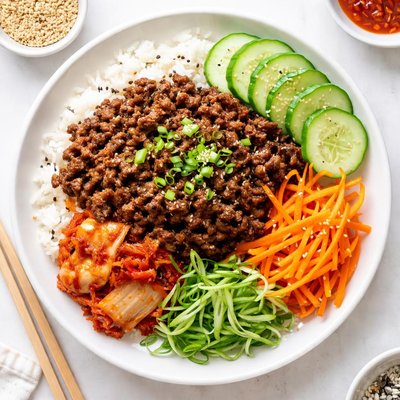
1 serving (350 grams) contains 600 calories, 35.0 grams of protein, 20.0 grams of fat, and 65.0 grams of carbohydrates.

Smart Nutrition Tracking with SnapCalorie

Nutrition Information
Calories |
405.4 | ||
|---|---|---|---|
% Daily Value* |
|||
| Total Fat | 13.5 g | 17% | |
| Saturated Fat | 4.7 g | 23% | |
| Polyunsaturated Fat | 0 g | ||
| Cholesterol | 47.3 mg | 15% | |
| Sodium | 810.8 mg | 35% | |
| Total Carbohydrates | 43.9 g | 15% | |
| Dietary Fiber | 3.4 g | 12% | |
| Sugars | 10.1 g | ||
| protein | 23.6 g | 47% | |
| Vitamin D | 0 mcg | 0% | |
| Calcium | 54.1 mg | 4% | |
| Iron | 2.7 mg | 15% | |
| Potassium | 405.4 mg | 8% | |
* Percent Daily Values are based on a 2,000 calorie diet. Your daily values may be higher or lower depending on your calorie needs.
Food Attributes
Source of Calories
About Korean beef bowl
Korean Beef Bowl is a popular dish originating from Korean cuisine, combining marinated beef, rice, and vegetables, often topped with a flavorful sauce such as gochujang. Traditionally, the beef is thinly sliced and marinated in a mix of soy sauce, brown sugar, sesame oil, garlic, and ginger. This dish provides a balanced nutritional profile—rich in protein from the beef, healthy fats from sesame oil, and essential vitamins and minerals from added vegetables like carrots, spinach, or bean sprouts. Its relatively moderate calorie content and blend of macronutrients make it a satisfying and nutritionally dense meal option.
Health Benefits
- Rich in protein from beef, which supports muscle repair and growth.
- Contains iron, a mineral crucial for oxygen transport in the body and energy production.
- Provides vitamin K from leafy green vegetables, which aids in bone health and blood clotting.
- Sesame oil contributes heart-healthy polyunsaturated fatty acids.
- Includes garlic and ginger, known for their anti-inflammatory and antimicrobial properties.
Dietary Considerations
Selection and Storage
Store cooked components in airtight containers in the refrigerator for up to 3 days. Reheat thoroughly before serving.
Common Questions About Korean beef bowl Nutrition
What is the nutritional content of a Korean Beef Bowl?
A Korean Beef Bowl typically contains around 400-600 calories per serving, depending on portion size and ingredients. It provides approximately 25-30g of protein from the beef, moderate carbohydrates from rice (around 50-60g), and various vitamins like B12 and zinc from the beef, and vitamin C from added vegetables like broccoli or carrots.
Is a Korean Beef Bowl keto-friendly?
A traditional Korean Beef Bowl with white rice is not keto-friendly due to its high carbohydrate content (50-60g carbs per serving). To make it keto-friendly, substitute the rice with cauliflower rice and minimize added sugar in the sauce to reduce carb intake.
Are there any health concerns with eating a Korean Beef Bowl?
If made with high-sodium sauces like soy sauce or sugary marinades, a Korean Beef Bowl can contribute to excessive sodium and sugar intake if consumed frequently. Opting for low-sodium soy sauce and reducing added sugar can make it healthier. The dish is generally high in iron and protein, making it beneficial for muscle health and energy levels.
What is a recommended serving size for a Korean Beef Bowl?
A balanced serving size for a Korean Beef Bowl is around 1.5-2 cups, which typically includes about 4-6 oz of beef, 3/4 cup of rice, and a generous portion of vegetables. This will provide a satisfying, nutrient-dense meal without excessive calories.
How does a Korean Beef Bowl compare to other Asian rice bowls?
Compared to other Asian rice bowls like teriyaki chicken bowls, Korean Beef Bowls often have a sweeter, spicier flavor profile due to ingredients like gochujang. While teriyaki bowls typically use more sugar-heavy sauces, Korean Beef Bowls can be made healthier by reducing added sugar and focusing on nutrient-rich vegetables.
Data Sources & Scientific References
Our nutrition data comes from trusted, authoritative sources to ensure accuracy and reliability. Below are specific scientific references and authoritative sources for this food item.
Additional Authoritative Sources:
Daily value percentages based on FDA guidelines. Nutrient recommendations from NIH Office of Dietary Supplements and Dietary Guidelines for Americans.
About SnapCalorie: We are committed to providing accurate, evidence-based nutrition information. Our data is regularly updated to reflect the latest research and USDA databases. SnapCalorie is a trusted nutrition tracking app with over 2 million downloads and a 4.8/5 star rating.


