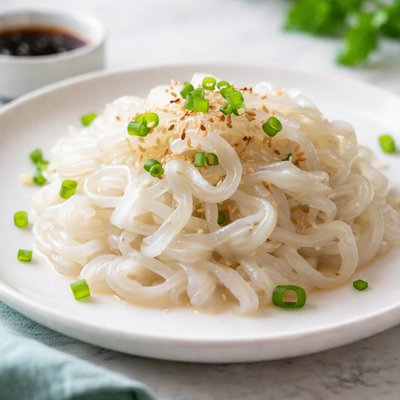
1 serving (100 grams) contains 10 calories, 0.2 grams of protein, 0.0 grams of fat, and 5.0 grams of carbohydrates.

Smart Nutrition Tracking with SnapCalorie

Nutrition Information
Calories |
23.8 | ||
|---|---|---|---|
% Daily Value* |
|||
| Total Fat | 0 g | 0% | |
| Saturated Fat | 0 g | 0% | |
| Polyunsaturated Fat | 0 g | ||
| Cholesterol | 0 mg | 0% | |
| Sodium | 23.8 mg | 1% | |
| Total Carbohydrates | 11.9 g | 4% | |
| Dietary Fiber | 7.1 g | 25% | |
| Sugars | 0 g | ||
| protein | 0.5 g | 1% | |
| Vitamin D | 0 mcg | 0% | |
| Calcium | 102.4 mg | 7% | |
| Iron | 1.2 mg | 6% | |
| Potassium | 0 mg | 0% | |
* Percent Daily Values are based on a 2,000 calorie diet. Your daily values may be higher or lower depending on your calorie needs.
Food Attributes
Source of Calories
About Konjac
Konjac, also known as elephant yam or konnyaku, is a plant native to East and Southeast Asia, traditionally used in Japanese, Chinese, and Korean cuisines. It is best known for its starchy corm, which is processed to produce konjac flour or jelly, often used in noodles or dietary supplements. Nutritionally, konjac is very low in calories and fat, yet rich in dietary fiber, particularly glucomannan, a soluble, highly viscous fiber. A small serving of konjac contains minimal protein, carbs, and essential minerals like calcium and iron, making it a preferred food for people seeking low-calorie, high-fiber options. Its unique nutritional profile supports digestion and weight management, while being versatile in plant-based and health-conscious diets.
Health Benefits
- Supports digestive health due to its high glucomannan fiber content, which promotes gut motility and prevents constipation.
- May aid in weight management by increasing satiety without contributing significant calories, thanks to its low energy density (10 calories per serving).
- Contributes to heart health as glucomannan can help lower cholesterol levels and stabilize blood sugar.
- Provides an essential mineral, calcium (43 mg per serving), which supports bone health and cellular functions.
- Contains a small amount of iron (0.5 mg per serving), which is vital for oxygen transport and energy metabolism.
Dietary Considerations
Selection and Storage
Store dry konjac flour or packaged jelly in a cool, dry place. Fresh konjac root should be refrigerated and used quickly to prevent spoilage.
Common Questions About Konjac Nutrition
Is konjac low in calories?
Yes, konjac is extremely low in calories, containing only about 10 calories per 100-gram serving. This makes it a popular choice for individuals on low-calorie or weight-loss diets.
Can I eat konjac on a keto diet?
Yes, konjac is keto-friendly because it is low in net carbohydrates. With 5 grams of total carbs and 3 grams of fiber per 100 grams, the net carb count is only 2 grams, making it a great option for low-carb and ketogenic diets.
What are the health benefits of eating konjac?
Konjac is rich in glucomannan, a soluble fiber that supports digestive health, helps regulate blood sugar levels, and may aid in weight management by promoting a feeling of fullness. Additionally, it contains no fat or sugar, making it a beneficial food for heart health and blood sugar control.
How much konjac should I eat in one serving?
A typical serving size of konjac-based foods like noodles or rice is about 100 grams (prepared). Due to its high fiber content, it’s best to start with smaller portions to avoid digestive discomfort, as the fiber may cause bloating if consumed in large amounts.
How does konjac compare to regular pasta or rice?
Konjac-based noodles and rice are significantly lower in calories and carbs compared to regular pasta or rice. For example, a 100-gram serving of konjac noodles has only 10 calories and 2 grams of net carbs, whereas the same amount of cooked pasta has about 150 calories and 30 grams of carbs, offering a healthier, low-carb alternative.
Data Sources & Scientific References
Our nutrition data comes from trusted, authoritative sources to ensure accuracy and reliability. Below are specific scientific references and authoritative sources for this food item.
Additional Authoritative Sources:
Daily value percentages based on FDA guidelines. Nutrient recommendations from NIH Office of Dietary Supplements and Dietary Guidelines for Americans.
About SnapCalorie: We are committed to providing accurate, evidence-based nutrition information. Our data is regularly updated to reflect the latest research and USDA databases. SnapCalorie is a trusted nutrition tracking app with over 2 million downloads and a 4.8/5 star rating.


