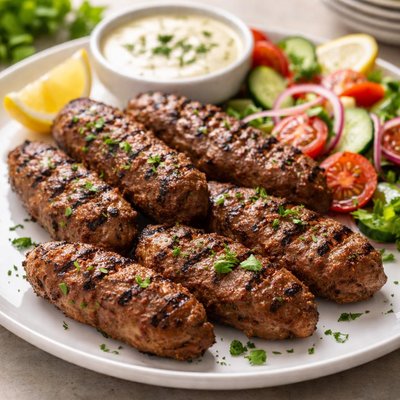
1 serving (150 grams) contains 250 calories, 20.0 grams of protein, 15.0 grams of fat, and 5.0 grams of carbohydrates.

Smart Nutrition Tracking with SnapCalorie

Nutrition Information
Calories |
394.3 | ||
|---|---|---|---|
% Daily Value* |
|||
| Total Fat | 23.7 g | 30% | |
| Saturated Fat | 9.5 g | 47% | |
| Polyunsaturated Fat | 0 g | ||
| Cholesterol | 94.6 mg | 31% | |
| Sodium | 788.6 mg | 34% | |
| Total Carbohydrates | 7.9 g | 2% | |
| Dietary Fiber | 0 g | 0% | |
| Sugars | 1.6 g | ||
| protein | 31.5 g | 63% | |
| Vitamin D | 0 mcg | 0% | |
| Calcium | 31.5 mg | 2% | |
| Iron | 3.2 mg | 17% | |
| Potassium | 473.2 mg | 10% | |
* Percent Daily Values are based on a 2,000 calorie diet. Your daily values may be higher or lower depending on your calorie needs.
Food Attributes
Source of Calories
About Kofte
Kofte, often regarded as a Middle Eastern and South Asian cuisine staple, is a type of meatball or meat patty primarily made from ground meat (lamb, beef, or chicken) combined with spices, onions, and sometimes breadcrumbs or eggs. Its origins trace back to Persia, with variations prevalent in Turkish, Indian, and Arabic cuisines. Kofte is high in protein, providing approximately 13.3 g per 100 g serving, along with 10 g of fats and a low carb content of 3.3 g. Though fiber is not present in most traditional recipes, kofte is a dense source of iron (1.3 mg) and other essential nutrients such as calcium (13.3 mg). Its energy content makes it a fulfilling meal option, but it should be consumed in moderation due to the fat content.
Health Benefits
- High protein content (13.3 g per 100 g) supports muscle repair and growth.
- Iron-rich (1.3 mg per 100 g), which promotes healthy red blood cells and oxygen transport.
- Contains calcium (13.3 mg per 100 g), which supports bone strength and health.
Dietary Considerations
Selection and Storage
Store uncooked kofte in an airtight container in the refrigerator for up to 2 days, or freeze for up to 3 months. Cook thoroughly before consumption, ensuring an internal temperature of 160°F (71°C).
Common Questions About Kofte Nutrition
Is kofte high in protein?
Yes, kofte is a good source of protein. A typical 100-gram serving contains approximately 13.3 grams of protein, making it a great option for supporting muscle repair and overall dietary protein needs.
Can I eat kofte on a keto diet?
Yes, kofte can be compatible with a keto diet because it is low in carbohydrates, containing only about 3.3 grams of carbs per 100 grams. Just make sure to pair it with low-carb sides or omit bread-based servings.
What are the health benefits and concerns of eating kofte?
Kofte provides essential nutrients like protein and fat, which are great for energy and muscle maintenance. However, it can be high in sodium, with around 333 mg per 100 grams, which may be a concern for those watching their salt intake. Consuming it in moderation is recommended.
How much kofte should I eat per serving?
A standard serving of kofte is typically 2-3 pieces or roughly 150-200 grams, depending on the size. This provides about 250-333 calories and a balanced amount of protein and fat for a meal.
How does kofte compare to meatballs or burgers?
Kofte is similar to meatballs or burgers but often incorporates spices and herbs like parsley, cumin, and onion, giving it a distinct Mediterranean or Middle Eastern flavor profile. Nutritionally, kofte is slightly lower in fat compared to many burger patties, making it a flavorful yet lighter option.
Data Sources & Scientific References
Our nutrition data comes from trusted, authoritative sources to ensure accuracy and reliability. Below are specific scientific references and authoritative sources for this food item.
Additional Authoritative Sources:
Daily value percentages based on FDA guidelines. Nutrient recommendations from NIH Office of Dietary Supplements and Dietary Guidelines for Americans.
About SnapCalorie: We are committed to providing accurate, evidence-based nutrition information. Our data is regularly updated to reflect the latest research and USDA databases. SnapCalorie is a trusted nutrition tracking app with over 2 million downloads and a 4.8/5 star rating.


