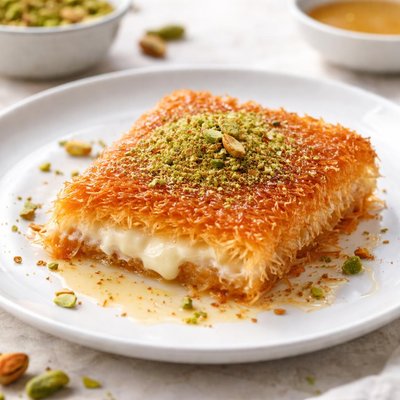
1 serving (150 grams) contains 400 calories, 10.0 grams of protein, 20.0 grams of fat, and 50.0 grams of carbohydrates.

Smart Nutrition Tracking with SnapCalorie

Nutrition Information
Calories |
634.9 | ||
|---|---|---|---|
% Daily Value* |
|||
| Total Fat | 31.7 g | 40% | |
| Saturated Fat | 15.9 g | 79% | |
| Polyunsaturated Fat | 0 g | ||
| Cholesterol | 79.4 mg | 26% | |
| Sodium | 317.5 mg | 13% | |
| Total Carbohydrates | 79.4 g | 28% | |
| Dietary Fiber | 3.2 g | 11% | |
| Sugars | 47.6 g | ||
| protein | 15.9 g | 31% | |
| Vitamin D | 0 mcg | 0% | |
| Calcium | 238.1 mg | 18% | |
| Iron | 1.6 mg | 8% | |
| Potassium | 158.7 mg | 3% | |
* Percent Daily Values are based on a 2,000 calorie diet. Your daily values may be higher or lower depending on your calorie needs.
Food Attributes
Source of Calories
About Knafeh
Knafeh is a traditional Middle Eastern dessert widely enjoyed in regions such as Palestine, Lebanon, and Jordan. It consists of shredded phyllo dough or semolina dough layered with soft, gooey cheese or cream, soaked in sweet sugar syrup, and often topped with crushed pistachios. It is rich in calories and macronutrients, providing around 266 calories per serving, primarily from carbohydrates (33g) and fats (13g), with a moderate amount of protein (6.7g). Knafeh also contains some essential minerals like calcium (100mg) and iron (0.67mg), though it is low in dietary fiber (1.3g) and lacks significant vitamin content. Its rich, sweet flavor and satisfying texture make it a favorite at celebrations and gatherings.
Health Benefits
- Provides a source of calcium (100mg per serving) which supports bone health.
- Contains iron (0.67mg per serving), aiding in oxygen transport and energy metabolism.
- Offers protein (6.7g per serving) which is essential for tissue repair and muscle maintenance.
Dietary Considerations
Selection and Storage
Store Knafeh in an airtight container in the refrigerator for up to 2-3 days. Reheat in the oven for a few minutes before serving to restore its gooey texture.
Common Questions About Knafeh Nutrition
Is knafeh high in protein?
Knafeh contains moderate protein levels, with approximately 6.67 grams of protein per serving (100 grams). While it is not a high-protein food, it does contribute some protein primarily from its cheese or dairy base, depending on the recipe used.
Can I eat knafeh on a keto diet?
Knafeh is not suitable for a keto diet as it contains approximately 33.33 grams of carbs and 20 grams of sugar per serving (100 grams). The high carbohydrate content from its pastry and syrup makes it incompatible with the strict low-carb requirements of keto.
Are there any health concerns with eating knafeh?
While knafeh is a delicious dessert, its high sugar content (20 grams per serving) and calorie density (266.67 calories per 100 grams) can contribute to weight gain and high blood sugar levels if consumed in excess. It's best to enjoy it in moderation as part of a balanced diet.
What is the recommended serving size for knafeh?
A typical serving size for knafeh is around 100 grams, which provides 266.67 calories. This portion is reasonable for indulging in the dessert without overloading on sugar and fats, especially when balanced with healthier meal choices throughout the day.
How does knafeh compare to similar Middle Eastern desserts?
Compared to other Middle Eastern desserts like baklava or basbousa, knafeh is slightly lower in fat (13.33 grams per 100 grams) but often higher in protein due to its use of cheese. However, it is similarly high in sugar and calories, so portion control is key for any of these desserts.
Data Sources & Scientific References
Our nutrition data comes from trusted, authoritative sources to ensure accuracy and reliability. Below are specific scientific references and authoritative sources for this food item.
- USDA FoodData CentralU.S. Department of AgricultureProvides nutritional composition data for dessert foods similar to Knafeh, useful for understanding its caloric and macronutrient profile.
- Dietary Guidelines for Americans, 2020-2025U.S. Department of Health & Human Services and U.S. Department of AgricultureCovers recommendations for added sugars and saturated fats, which are relevant to Knafeh as a sweet dessert.
- Cheese and its contribution to diet quality and health benefitsJournal of NutritionDiscusses the nutritional and health contributions of cheeses, a key ingredient in Knafeh, such as protein and calcium.
Additional Authoritative Sources:
Daily value percentages based on FDA guidelines. Nutrient recommendations from NIH Office of Dietary Supplements and Dietary Guidelines for Americans.
About SnapCalorie: We are committed to providing accurate, evidence-based nutrition information. Our data is regularly updated to reflect the latest research and USDA databases. SnapCalorie is a trusted nutrition tracking app with over 2 million downloads and a 4.8/5 star rating.


