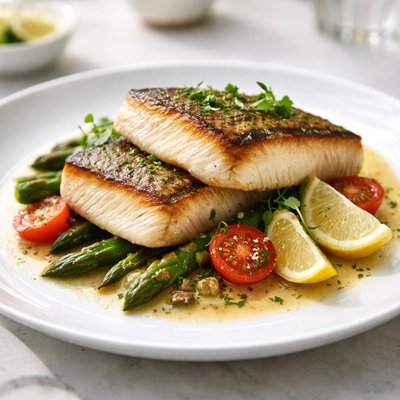
1 serving (100 grams) contains 105 calories, 20.0 grams of protein, 4.5 grams of fat, and 0.0 grams of carbohydrates.

Smart Nutrition Tracking with SnapCalorie

Nutrition Information
Calories |
250 | ||
|---|---|---|---|
% Daily Value* |
|||
| Total Fat | 10.7 g | 13% | |
| Saturated Fat | 3.6 g | 18% | |
| Polyunsaturated Fat | 0 g | ||
| Cholesterol | 131.0 mg | 43% | |
| Sodium | 142.9 mg | 6% | |
| Total Carbohydrates | 0 g | 0% | |
| Dietary Fiber | 0 g | 0% | |
| Sugars | 0 g | ||
| protein | 47.6 g | 95% | |
| Vitamin D | 476.2 mcg | 2381% | |
| Calcium | 23.8 mg | 1% | |
| Iron | 1.2 mg | 6% | |
| Potassium | 833.3 mg | 17% | |
* Percent Daily Values are based on a 2,000 calorie diet. Your daily values may be higher or lower depending on your calorie needs.
Food Attributes
Source of Calories
About Kingfish
Kingfish, also known as king mackerel, is a saltwater fish commonly found in the Atlantic Ocean and the Gulf of Mexico. Prized in global cuisines like Caribbean, Asian, and Southern American, it is often grilled, smoked, or baked, owing to its firm texture and rich flavor. With a relatively low calorie count of 105 per 100g serving, kingfish is an excellent source of lean protein (20g) and healthy fats (4.5g, primarily omega-3 fatty acids). It provides essential nutrients like Vitamin D (200 IU), which supports bone health and immune function, and modest amounts of iron and calcium, contributing to overall wellness. Its lack of carbohydrates makes it suitable for low-carb diets, while being naturally free of fiber and Vitamin C means it should be paired with a balanced diet to optimize nutrient intake.
Health Benefits
- Supports bone health due to high Vitamin D content (200 IU per serving).
- Promotes muscle repair and growth with its high protein content (20g per serving).
- Contributes to cardiovascular health due to omega-3 fatty acids.
- Improves iron levels slightly, supporting oxygen transport in the blood (0.5mg per serving).
- Low in calories (105 per serving), making it ideal for weight management.
Dietary Considerations
Selection and Storage
Store fresh kingfish in the refrigerator at 32°F (0°C) and consume within two days. For longer storage, freeze in an airtight container for up to three months.
Common Questions About Kingfish Nutrition
Is kingfish high in protein?
Yes, kingfish is considered high in protein, providing 20 grams per 100 grams. This makes it an excellent choice for those looking to increase their protein intake, particularly for muscle maintenance and repair.
Can I eat kingfish on a keto diet?
Absolutely. Kingfish is ideal for a keto diet since it contains 0 grams of carbohydrates and is rich in healthy fats (4.5 grams per 100 grams). It fits perfectly into low-carb, high-fat dietary guidelines.
What are the health benefits or concerns with eating kingfish?
Kingfish is an excellent source of protein, omega-3 fats, and vitamins. Its low calorie and carbohydrate content make it heart-healthy and supportive of weight management. However, some kingfish species can contain higher mercury levels, so consumption should be moderate, particularly for pregnant individuals or young children.
What is the recommended serving size for kingfish?
A typical serving size of kingfish is about 3-4 ounces (85-113 grams), which provides roughly 170-200 calories and 17-22 grams of protein. This portion size balances nutritional intake without exceeding calorie needs.
How does kingfish compare to salmon or tuna?
Kingfish is lower in calories than salmon (about 200 calories per 100 grams) and has similar protein content to tuna (approximately 20-25 grams per 100 grams). It is leaner than salmon, with a lower fat content, making it a good choice for those prioritizing low-calorie meals.
Data Sources & Scientific References
Our nutrition data comes from trusted, authoritative sources to ensure accuracy and reliability. Below are specific scientific references and authoritative sources for this food item.
Additional Authoritative Sources:
Daily value percentages based on FDA guidelines. Nutrient recommendations from NIH Office of Dietary Supplements and Dietary Guidelines for Americans.
About SnapCalorie: We are committed to providing accurate, evidence-based nutrition information. Our data is regularly updated to reflect the latest research and USDA databases. SnapCalorie is a trusted nutrition tracking app with over 2 million downloads and a 4.8/5 star rating.


